
A 31-year-old woman with type 1 diabetes using an insulin pump plans to take a 45-minute brisk walk after lunch and wants to avoid dropping below 70 mg/dL during activity. Which pump adjustment strategy should the diabetes care and education specialist discuss?
Select an answer to reveal the explanation.
Short Explanation
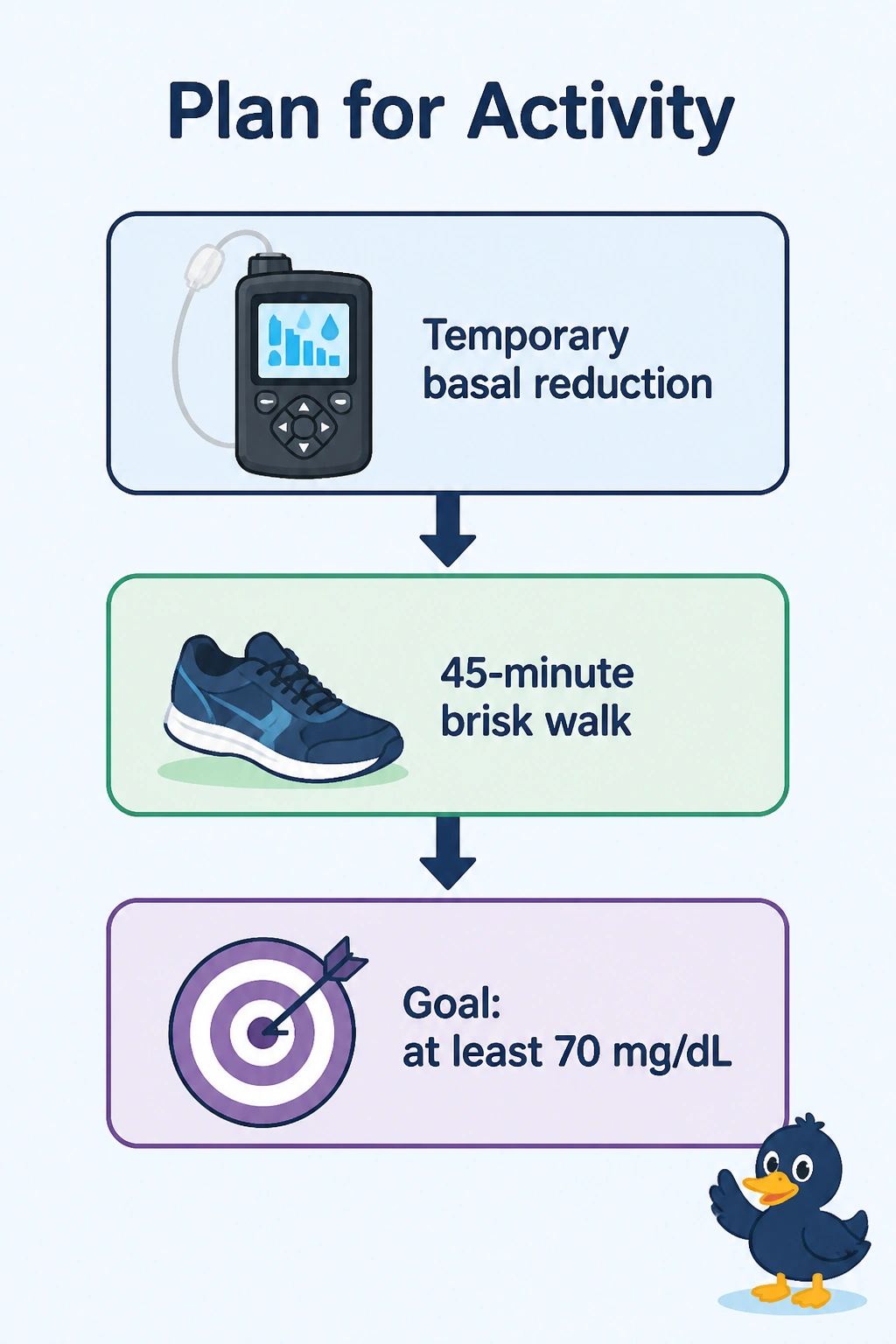
Insulin already in your bloodstream doesn’t stop working the moment you start walking. To help avoid a low, plan ahead with a temporary basal reduction or activity mode rather than waiting for symptoms.
Full Explanation
Activating a temporary basal reduction or activity mode ahead of planned exercise fits the timing of insulin action and aerobic glucose uptake. Moderate aerobic activity increases insulin-independent glucose transport into working muscles, while subcutaneous rapid-acting insulin remains active for hours. Reducing basal delivery or setting a higher temporary target in advance can lower circulating insulin before the walk increases glucose use. Suspending basal delivery only after hypoglycemia symptoms start reacts too late: insulin already infused will continue to act and may drive glucose down during the walk. Administering a full correction bolus immediately before walking adds insulin when exercise can increase insulin sensitivity, raising hypoglycemia risk. Starting activity mode only after finishing the walk misses the prevention window, because the mode needs lead time to reduce insulin delivery before exertion. A caveat is that a post-lunch walk may occur while mealtime insulin is still active, so carbohydrate preparation may also be needed alongside pump adjustments. As a practical check, review recent post-meal exercise glucose tracings and confirm she carries fast-acting carbohydrates during every walk.
Prefer to study offline? Printable PDF study book + test engine ($7.50, unofficial). These questions stay free here.