
A 44-year-old woman with type 2 diabetes eats a plain white bagel for breakfast each morning and notices her blood glucose spikes from 110 mg/dL to 225 mg/dL within 90 minutes. Which practical meal-composition strategy should the diabetes care and education specialist suggest?
Select an answer to reveal the explanation.
Short Explanation
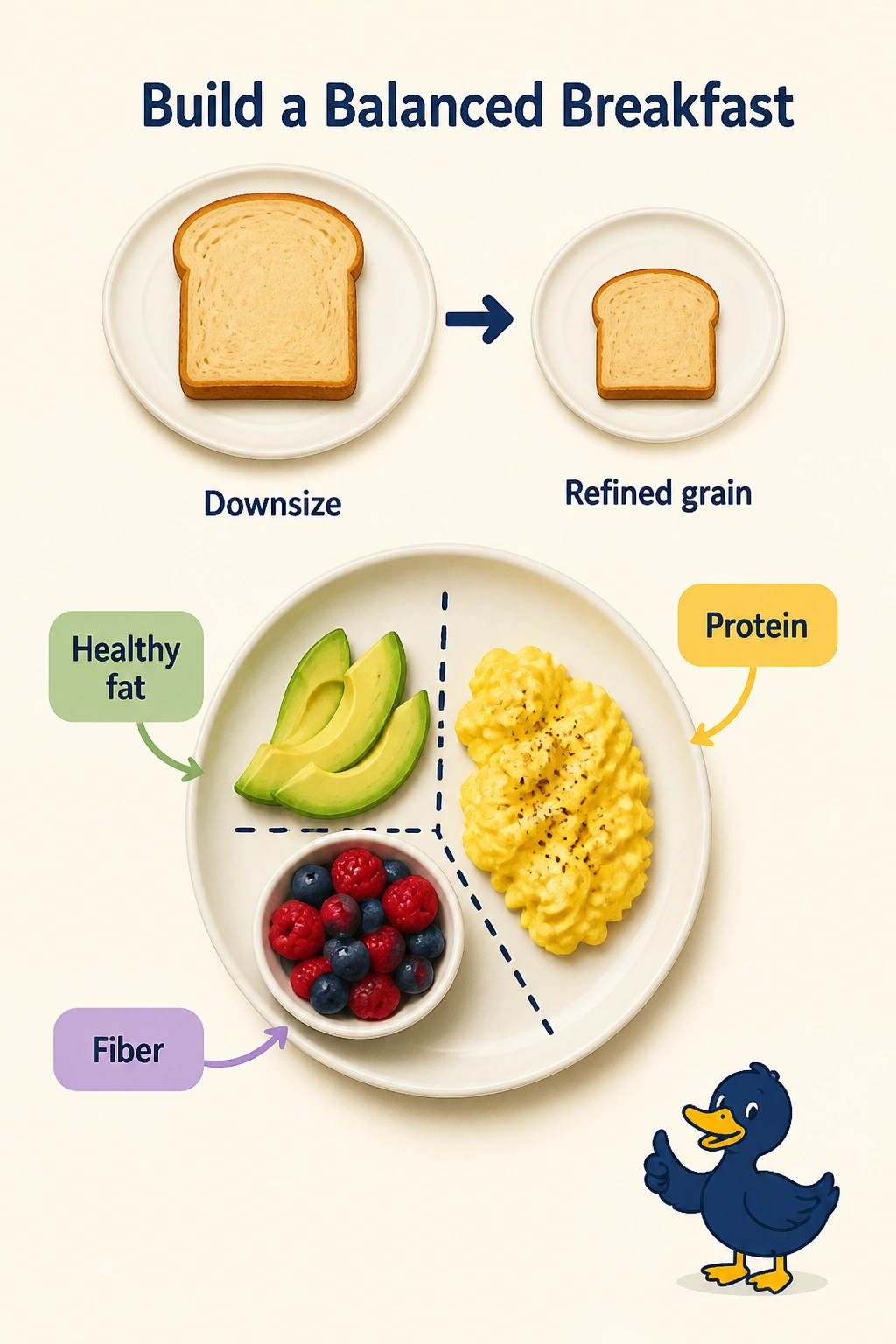
A refined carbohydrate eaten by itself can act like dry kindling, bringing a quick glucose rise. You can help tame that morning spike by downsizing the bagel portion and pairing it with protein, fiber, and healthy fat—a balanced meal. Orange juice, extra protein without accounting for the meal, or glycemic index alone won’t address the full carbohydrate load.
Full Explanation
Downsize the refined grain portion and pair it with protein, fiber, and healthy fat such as eggs and avocado. Refined grains eaten alone digest quickly and can produce sharp postprandial glucose excursions. Reducing the carbohydrate portion and combining it with protein, soluble fiber, and unsaturated fat can slow gastric emptying, blunt the post-meal glucose peak, and improve satiety. Replacing the bagel with two glasses of orange juice is not a reliable way to reduce the meal’s glycemic load: juice still supplies substantial carbohydrate, even if liquid carbohydrates empty from the stomach faster. Protein does not cancel carbohydrate, so increasing the bagel portion is not justified by adding protein. Glycemic index compares responses to a standardized carbohydrate amount; the number does not determine an appropriate food portion or replace carbohydrate assessment. Caveat: monitor overall energy intake and medication timing, especially with sulfonylureas or mealtime insulin. Practical check: encourage paired pre-breakfast and 90-minute post-breakfast glucose checks for several days to evaluate the new meal.
Prefer to study offline? Printable PDF study book + test engine ($7.50, unofficial). These questions stay free here.