
A 52-year-old man has completed his initial four-part diabetes self-management education series, met his short-term walking goal, and asks how to stay motivated over the coming year. Which follow-up intervention best aligns with person-centered care?
Select an answer to reveal the explanation.
Short Explanation
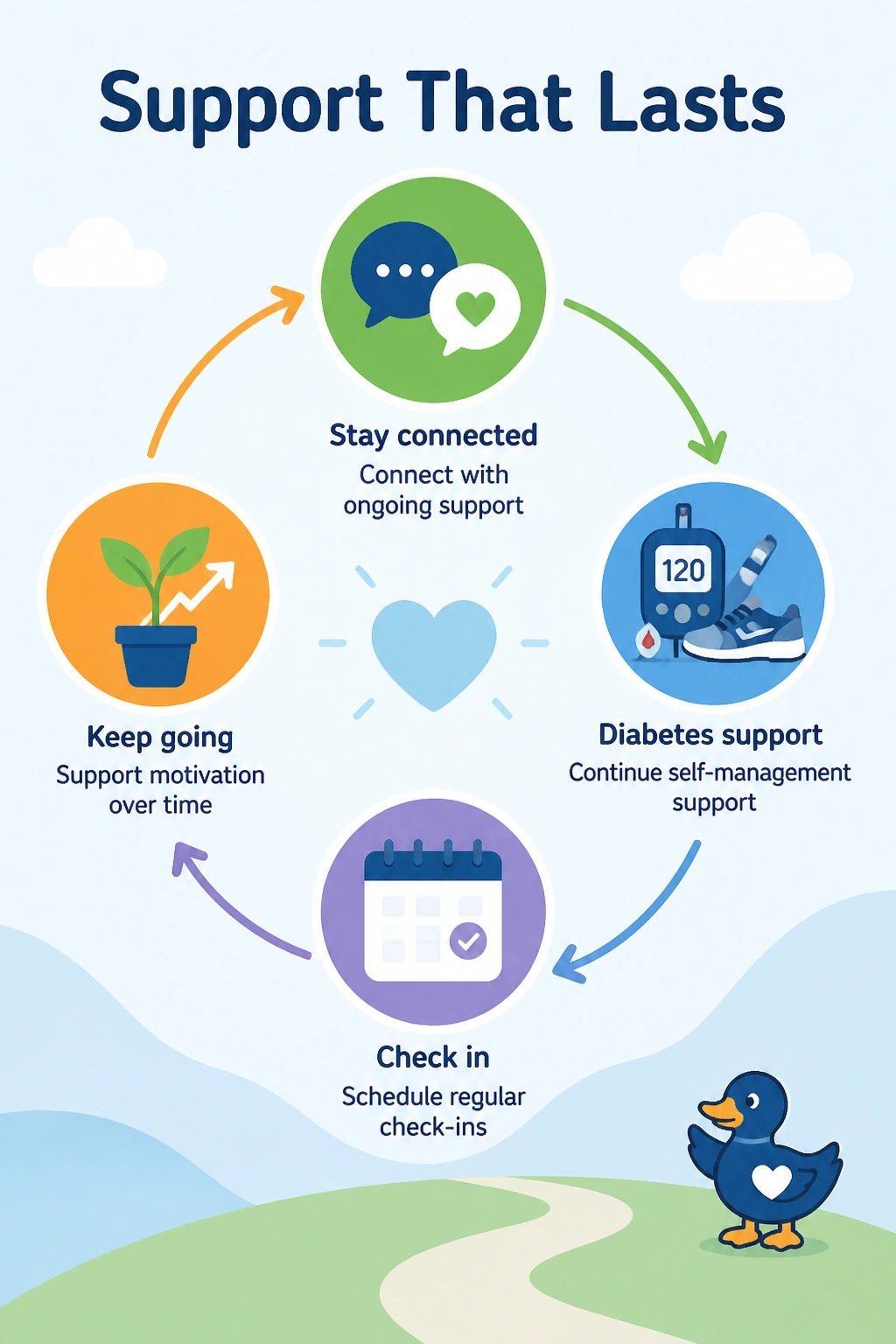
You’ve met your walking goal, and staying motivated over the year is easier with support that continues as your needs change. Ongoing check-ins build on your progress and help keep your goals personal and practical.
Full Explanation
Connecting him with ongoing diabetes self-management support and scheduled check-ins reflects the distinction between initial skills training and the continuing behavioral, clinical, and psychosocial support needed to sustain self-care. Regular contact lets the team recognize progress, address new barriers, and adapt goals as his circumstances change, keeping care centered on his priorities. Offering support only after a large A1C rise delays preventive help until glycemic control worsens, rather than supporting motivation throughout the year. Repeating introductory classes without reassessing goals or barriers overlooks what he has already learned and may leave his current needs unaddressed. Tracking weight alone narrows success to one measure and ignores the behaviors he chose and the support he needs. As a caveat, ongoing support should be suited to his preferences and circumstances; scheduled contact should not become a rigid or burdensome requirement. As a practical check, document the support plan he agrees to and confirm the date of the next check-in before he leaves.
Prefer to study offline? Printable PDF study book + test engine ($7.50, unofficial). These questions stay free here.