
A 52-year-old man with type 2 diabetes wants to check his post-meal blood glucose to see how dinner affects his levels, but he is unsure when to test. Which timing instruction should the diabetes care and education specialist provide?
Select an answer to reveal the explanation.
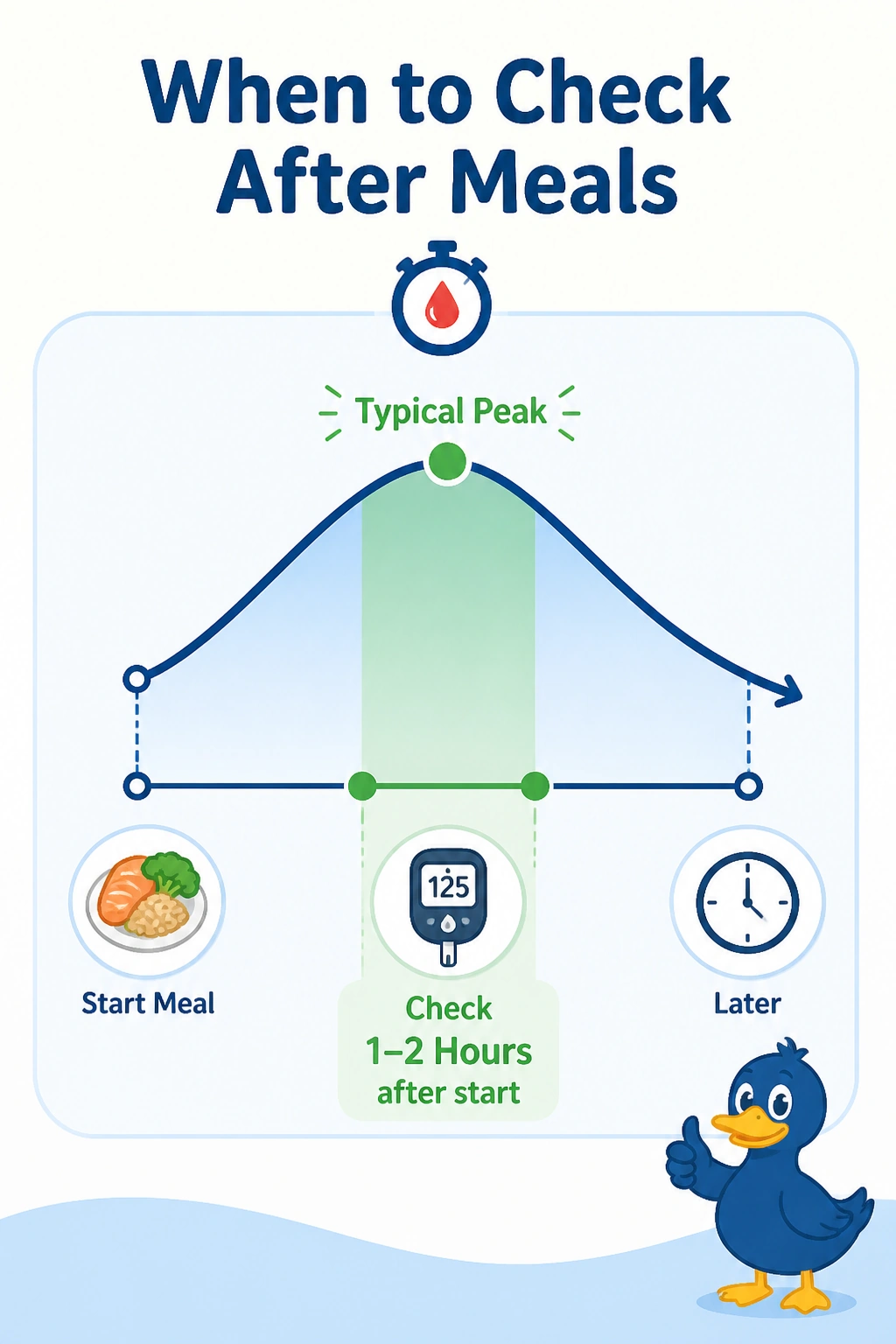
Short Explanation
Timing a post-meal check is a lot like timing a pot of water—check too early and it has not boiled yet, check too late and you miss the peak. You should teach checking one to two hours after the first bite, not after finishing the plate. The trap is counting from the end of a long dinner or waiting four hours, which misses the standard postprandial window.
Full Explanation
Check blood glucose one to two hours after the start of the meal to capture the typical peak. In most nonpregnant adults, capillary glucose reaches its postprandial peak roughly one to two hours after beginning to eat, which aligns with the standard target of below 180 mg/dL. Measuring from the start of the meal creates a consistent benchmark even when meals take 30 to 45 minutes to eat. Check blood glucose immediately after finishing the last bite of dinner to capture the earliest rise. Testing right at the end of a meal often catches glucose while carbohydrates are still absorbing, underestimating the true peak. Check blood glucose four hours after starting dinner so delayed fat digestion is fully reflected. While very high-fat meals can delay gastric emptying, waiting four hours for routine checks misses the standard postprandial peak for typical mixed meals. Measure two hours after the end of the meal regardless of its duration. Counting from the end creates inconsistent intervals for prolonged meals, so the standard monitoring window is anchored to the start of the meal for consistency. Caveat: individualized post-meal targets differ in pregnancy and older adults, so confirm the clinician's specific goal. Operational check: review paired pre-meal and one-to-two-hour post-meal logs at the next visit to verify consistent timing.
Prefer to study offline? Printable PDF study book + test engine ($7.50, unofficial). These questions stay free here.