
A 62-year-old man with type 2 diabetes on basal-bolus insulin recently started a beta-blocker for hypertension and heart disease. What key safety point should the diabetes care and education specialist teach him about recognizing hypoglycemia?
Select an answer to reveal the explanation.
Short Explanation
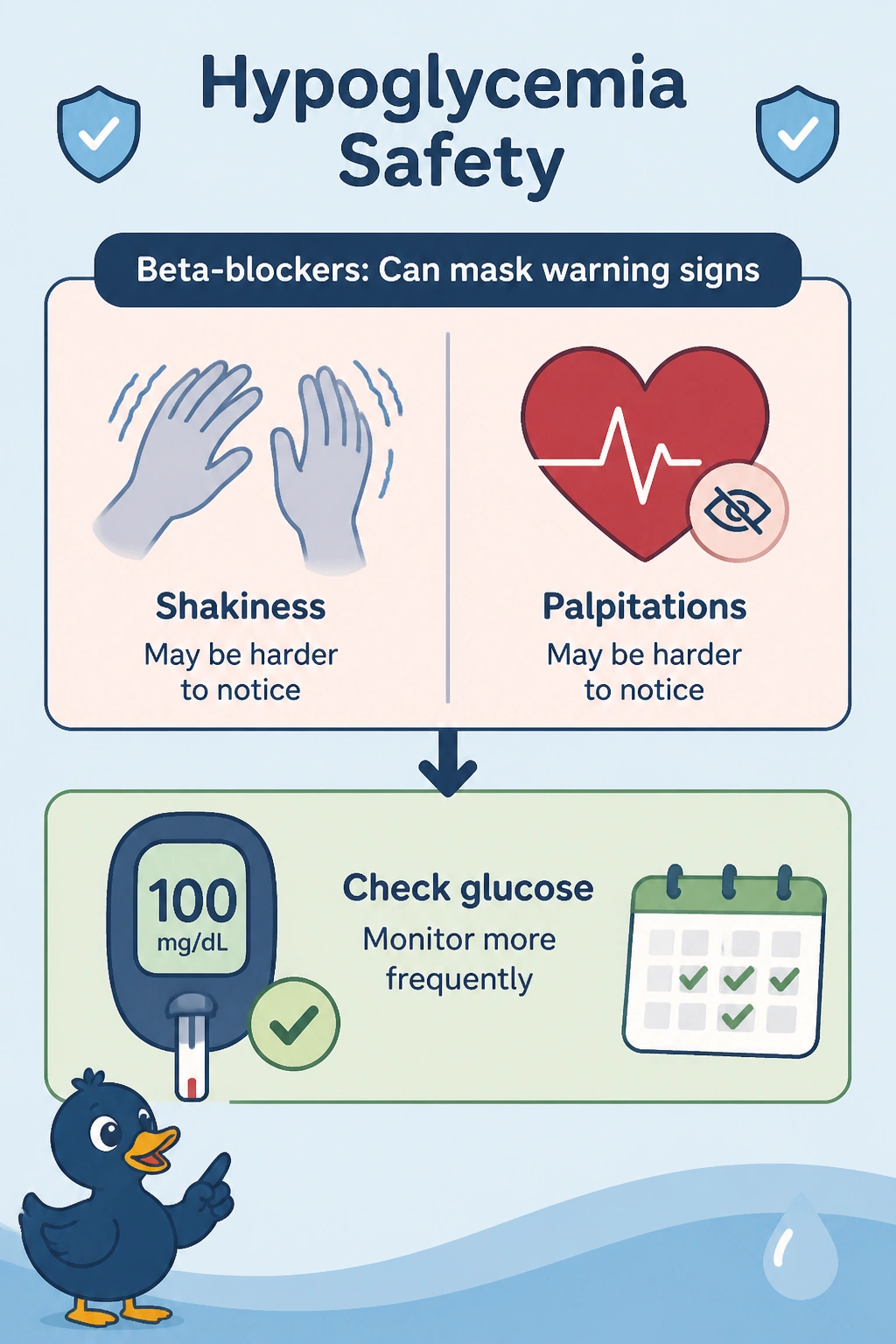
Beta-blockers quiet the body's alarm bells, so you cannot rely on a racing pulse to warn you of a low. The trap is waiting to feel shaky before checking, which can let blood glucose slip dangerously low without notice.
Full Explanation
Beta-blockers blunt the sympathetic nervous system's adrenergic response to falling blood glucose, muting classic early warning signs such as tachycardia and tremor. Consequently, Monitoring glucose more frequently because beta-blockers can mask shakiness and palpitations—especially before driving, exercise, or bedtime—helps catch downward trends early; sweating, which is cholinergically mediated, often remains as a clue. Expecting tremors and racing heartbeats to intensify earlier during mild lows describes the opposite of beta-blocker pharmacology and gives false reassurance. Stopping the blood pressure medication whenever glucose drops below target is unsafe because abrupt discontinuation can trigger rebound hypertension or cardiac ischemia. Relying exclusively on physical symptoms before checking a fingerstick reading is dangerous when adrenergic cues are blunted and neuroglycopenic symptoms may appear abruptly. A key caveat is that continuous glucose monitoring with low-glucose alerts can offer an extra safety net for insulin users taking beta-blockers. As an operational check, confirm the patient carries fast-acting carbohydrate and can name non-masked warning signs like sweating or sudden confusion.
Prefer to study offline? Printable PDF study book + test engine ($7.50, unofficial). These questions stay free here.