
Six weeks after starting insulin for newly diagnosed type 1 diabetes, a 22-year-old man notices his daily insulin needs have dropped sharply and asks if his diabetes is resolving. Which education message should the diabetes care and education specialist provide?
Select an answer to reveal the explanation.
Short Explanation
A sudden drop in insulin needs can feel like a cure, so you want to frame this honeymoon phase clearly before someone puts their pens in a drawer. The trap is stopping insulin altogether, which leaves the door wide open for ketoacidosis.
Full Explanation
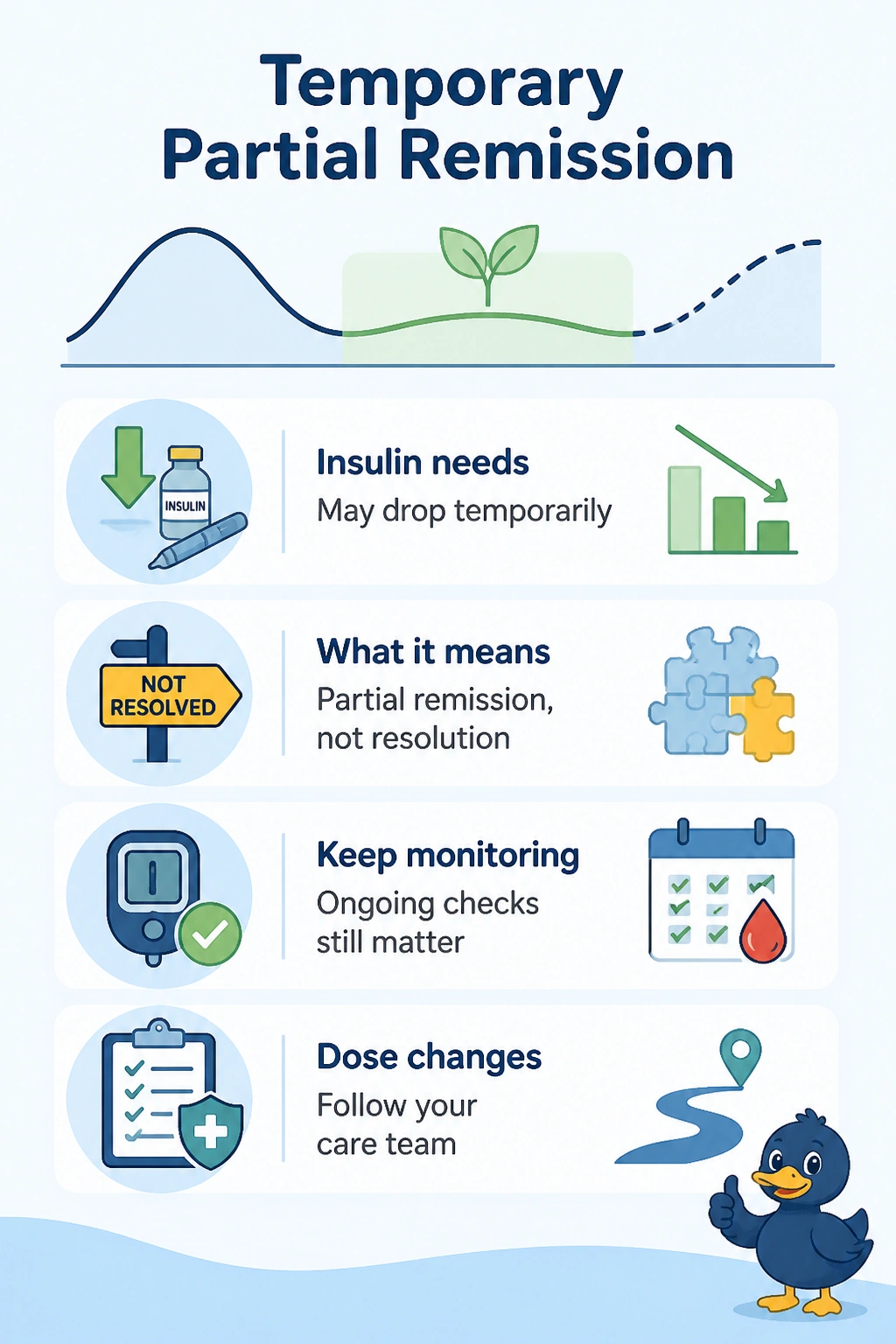
Shortly after initiating insulin therapy in type 1 diabetes, reduced glucotoxicity can allow remaining beta cells to temporarily recover some endogenous insulin secretion, a phase known as partial remission or the honeymoon period. Explaining that temporary partial remission still requires ongoing monitoring and team-guided dosing prepares the patient for lower insulin needs without risking dangerous interruption of care. Stopping all insulin permanently once daily dose requirements fall can precipitate diabetic ketoacidosis as residual beta-cell function inevitably declines. Keeping the original insulin doses unchanged despite repeated lower glucose readings risks recurrent hypoglycemia and misses the need for team-guided dose reduction with frequent glucose review. Assuming the initial type 1 diabetes diagnosis was a laboratory error fosters denial and delays timely dose adjustments when insulin requirements rise again. One caveat is that partial remission varies widely in duration and intensity, so frequent communication with the care team is essential to prevent both hypoglycemia and rebound hyperglycemia. As an operational check, confirm the patient knows how to contact their prescriber for dose reductions and can state when to check ketones.
Prefer to study offline? Printable PDF study book + test engine ($7.50, unofficial). These questions stay free here.