
A 48-year-old woman with type 2 diabetes keeps steady glucose readings Monday through Friday, yet her weekend post-dinner readings consistently climb above 220 mg/dL. Which problem-solving approach should the diabetes care and education specialist use with her?
Select an answer to reveal the explanation.
Short Explanation
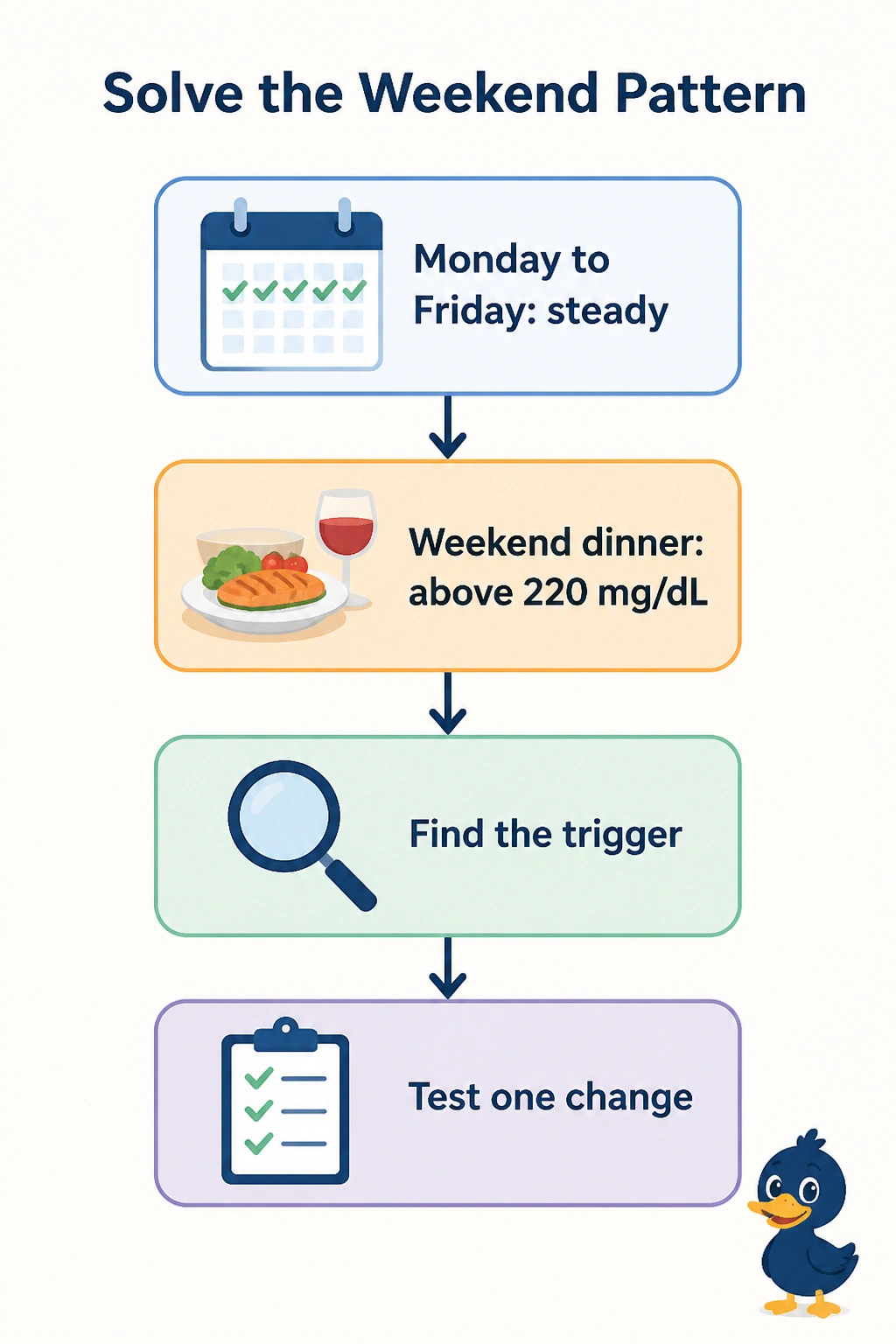
When your weekend post-dinner readings keep climbing, you need a small, testable experiment—not a lecture. Problem-solving starts by finding what differs on weekends, rather than imposing bans, changing the meal plan without asking, or collecting more readings without changing habits.
Full Explanation
Structured problem-solving is a core self-care behavior that empowers you to analyze barriers and test practical solutions. Identifying the root trigger and testing one realistic adjustment—such as exploring restaurant portions, the timing of evening walks, or missed weekend doses, then piloting one manageable change—builds sustainable self-efficacy. Instructing you to avoid all social dining on weekends is overly restrictive, harms quality of life, and rarely succeeds long term. Changing the meal plan before asking what differs on weekends skips assessment and prescribes a generic fix without identifying the portions, timing, or habits driving the pattern. Recommending extra fingerstick checks without changing daily habits collects more data without helping you translate numbers into action. As a caveat, evaluate only one or two changes at a time so you can clearly see what worked. For a practical check, review the agreed-upon weekend experiment at your next follow-up visit and compare weekend post-dinner records from before and after the adjustment.
Prefer to study offline? Printable PDF study book + test engine ($7.50, unofficial). These questions stay free here.