
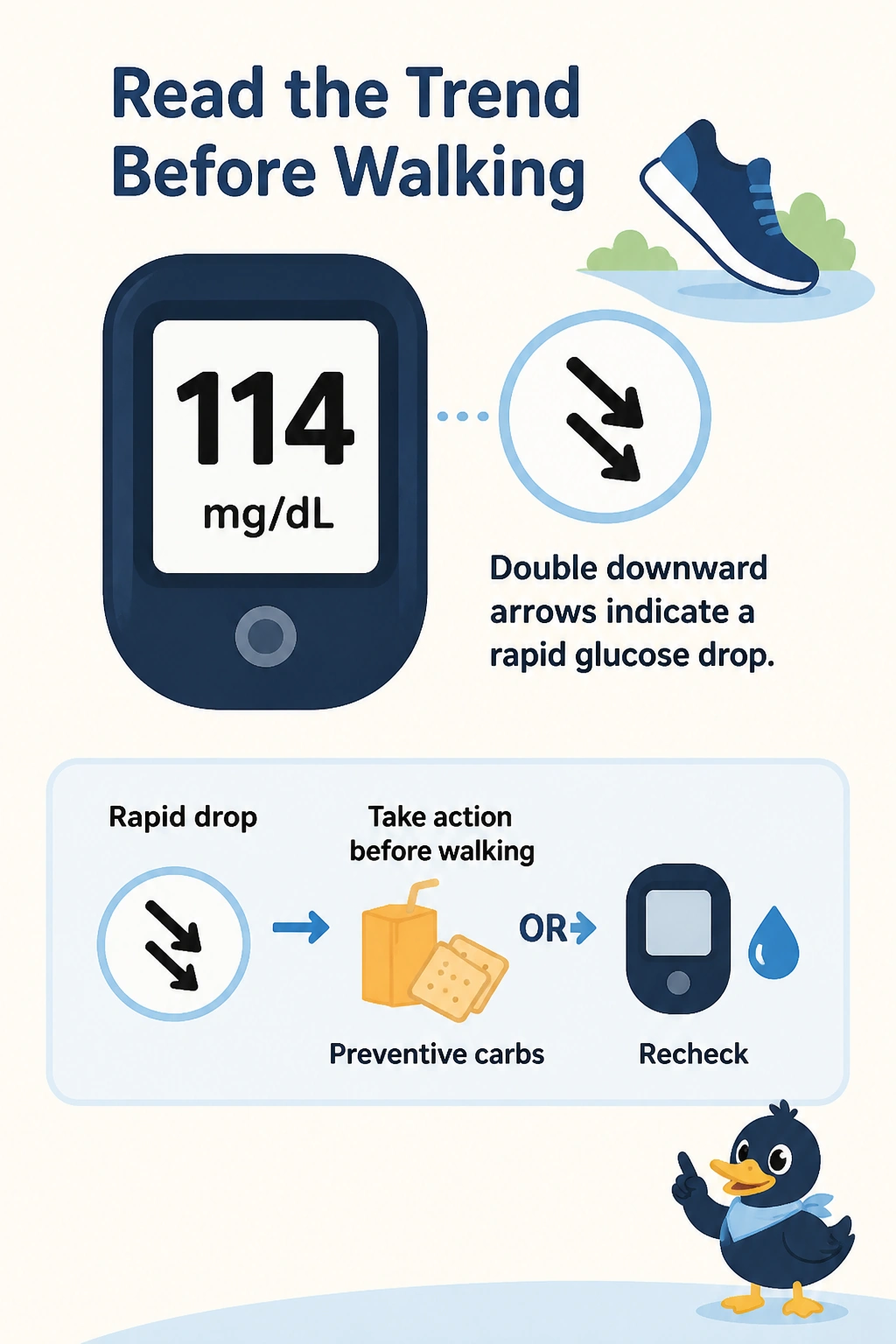
A 36-year-old woman with type 1 diabetes using a continuous glucose monitor checks her receiver before starting a brisk walk and sees 114 mg/dL with a double downward arrow. She assumes the number is safe to start walking without checking further. What should the specialist teach her about this display?
Select an answer to reveal the explanation.
Short Explanation
You can feel reassured by 114 mg/dL, but you also need to respect what the double downward arrow is telling you. Think of it like starting a walk downhill fast — you would want a recheck or a little preventive carbohydrate first.
Full Explanation
Continuous glucose monitor trend arrows add rate-of-change information to the current value, turning a static number into actionable foresight before exercise. Teaching that rapid decline signaled by double downward arrows warrants preventive carbohydrate or a confirmatory recheck helps anticipate impending hypoglycemia, especially since aerobic activity accelerates glucose uptake and insulin sensitivity. Assessing current glucose together with rapid decline and insulin on board supports preventive action before walking rather than starting on a seemingly safe 114 mg/dL alone. Assuming that exceeding 100 mg/dL requires no pre-exercise action despite the trend ignores velocity and risks symptomatic hypoglycemia mid-walk. Limiting arrows to postexercise dose review misses their purpose for real-time start-or-delay and carbohydrate decisions. Waiting to give carbohydrate until the reading crosses 70 mg/dL allows a rapidly falling value to reach hypoglycemia during exertion when prevention would have been safer. One caveat is that interstitial readings lag behind blood glucose during rapid swings, so a fingerstick check helps confirm the true value when decisions are urgent. As an operational check, pair the number with its trend arrow and active insulin before exercise, and verify recovery if symptoms arise.
Prefer to study offline? Printable PDF study book + test engine ($7.50, unofficial). These questions stay free here.