
An adult with type 1 diabetes on multiple daily injections frequently administers extra rapid-acting correction doses every 90 minutes when post-meal glucose remains above 200 mg/dL, leading to severe late-afternoon hypoglycemia. Which concept should the diabetes care and education specialist emphasize?
Select an answer to reveal the explanation.
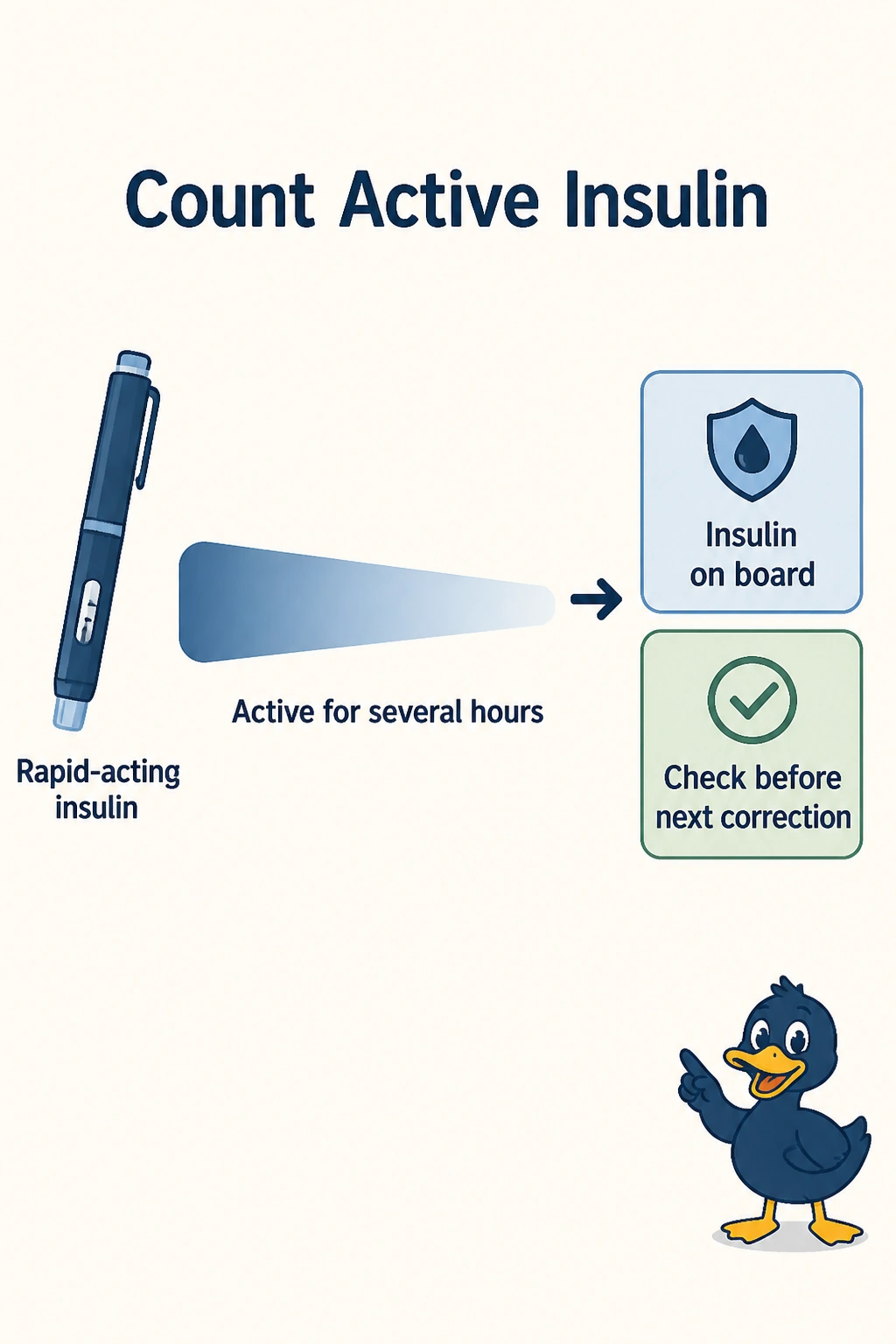
Short Explanation
When you give correction doses too close together, they can pile up and cause a severe drop hours later. A high reading 90 minutes after a dose does not mean that dose is gone; rapid-acting insulin can remain active for several hours. Teach yourself to account for insulin on board before correcting again.
Full Explanation
Rapid-acting insulin analogs commonly remain active for roughly three to five hours, so a glucose check 90 minutes after a correction may occur near the prior dose’s peak effect, not after it has finished working. Accounting for active insulin on board prevents insulin stacking: considering the amount of a prior dose still active helps explain how repeated corrections can accumulate and cause severe delayed hypoglycemia. The claim that rapid-acting insulin finishes working completely within 45 minutes confuses early action with the full duration of effect. Giving a full correction whenever the meter remains above target, regardless of recent boluses, ignores residual insulin and can directly promote stacking and a late glucose drop. Basing correction timing on peak action alone rather than total duration also overlooks the remaining action after the peak, so another dose may overlap with the first. A caveat is that insulin action time varies among people and can be affected by dose size, injection site, and physical activity. As a practical check, review the insulin action time set in the person’s dosing tools with their prescriber, and follow the individualized care plan for when another correction is appropriate.
Prefer to study offline? Printable PDF study book + test engine ($7.50, unofficial). These questions stay free here.