
A 54-year-old man with type 2 diabetes asks how he can feel fuller after meals and reduce post-meal glucose spikes without buying expensive specialty foods. Which nutrition strategy should the diabetes care and education specialist recommend?
Select an answer to reveal the explanation.
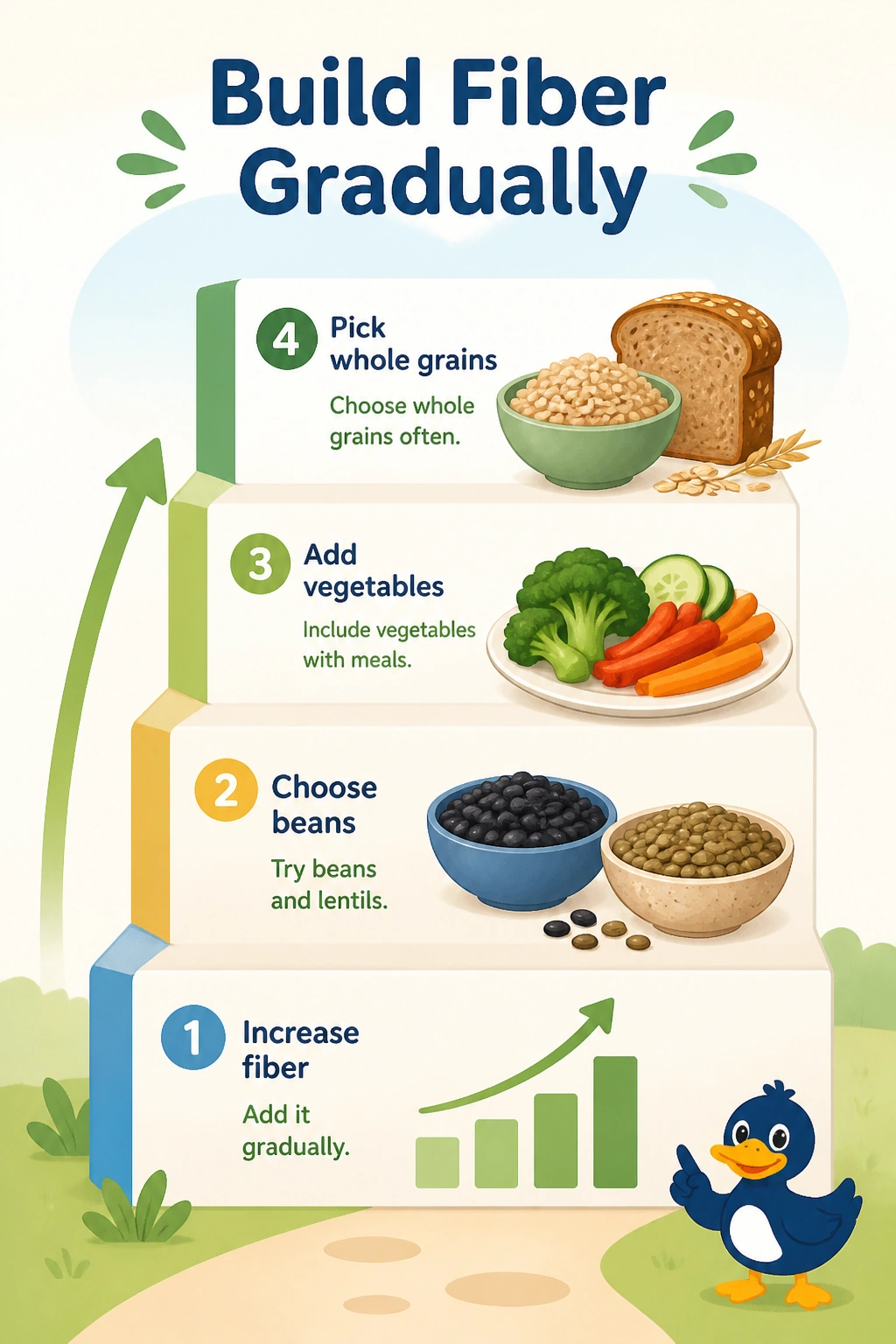
Short Explanation
Think of dietary fiber as a natural speed bump in your digestive tract that slows down how fast glucose enters your bloodstream. A common trap is picking foods by a low-fat label alone or relying on juice and refined grains, which lack the fiber you need to blunt spikes and stay satisfied. Choosing affordable, fiber-rich whole plant foods helps you feel fuller and supports steadier post-meal glucose and heart health.
Full Explanation
The best approach is to Gradually increase dietary fiber using beans, lentils, vegetables, and whole grains. Soluble and viscous fibers slow gastric emptying and delay glucose absorption in the small intestine, which blunts postprandial glucose excursions, increases satiety, and helps lower LDL cholesterol with affordable staples. Increasing fiber gradually alongside adequate hydration also minimizes bloating and gas. By contrast, advising to Choose carbohydrate foods by a low-fat label without reviewing fiber content is misleading because a low-fat claim does not ensure adequate fiber, whole grains, or limited added sugars, so checking fiber and total carbohydrate remains important. Choosing to Replace whole fruits with unsweetened fruit juices to speed up nutrient absorption removes intact fiber, causing faster glucose absorption and less fullness despite natural sugars. Telling someone to Use refined grains as the main carbohydrate source and add fiber only through supplements worsens post-meal spikes because refined grains are stripped of bran and germ. Refined grains plus fiber supplements do not provide the full nutrient and food-pattern benefits of beans, vegetables and whole grains. Some fiber supplements can improve glycemia or satiety depending on type and dose, so they should not be dismissed as incapable of those effects. Individualize fiber advice in gastroparesis rather than routinely recommending bulky high-fiber foods, as tolerance varies. As an operational check, review a 24-hour recall and identify one affordable high-fiber swap daily, such as adding canned rinsed black beans to a familiar meal.
Prefer to study offline? Printable PDF study book + test engine ($7.50, unofficial). These questions stay free here.