
A 43-year-old woman with type 1 diabetes using a continuous glucose monitor brings her 14-day report showing a Glucose Management Indicator (GMI) of 6.8%, but her laboratory A1C drawn the same week is 7.5%, and she asks if her sensor is broken. Which explanation should the diabetes care and education specialist provide?
Select an answer to reveal the explanation.
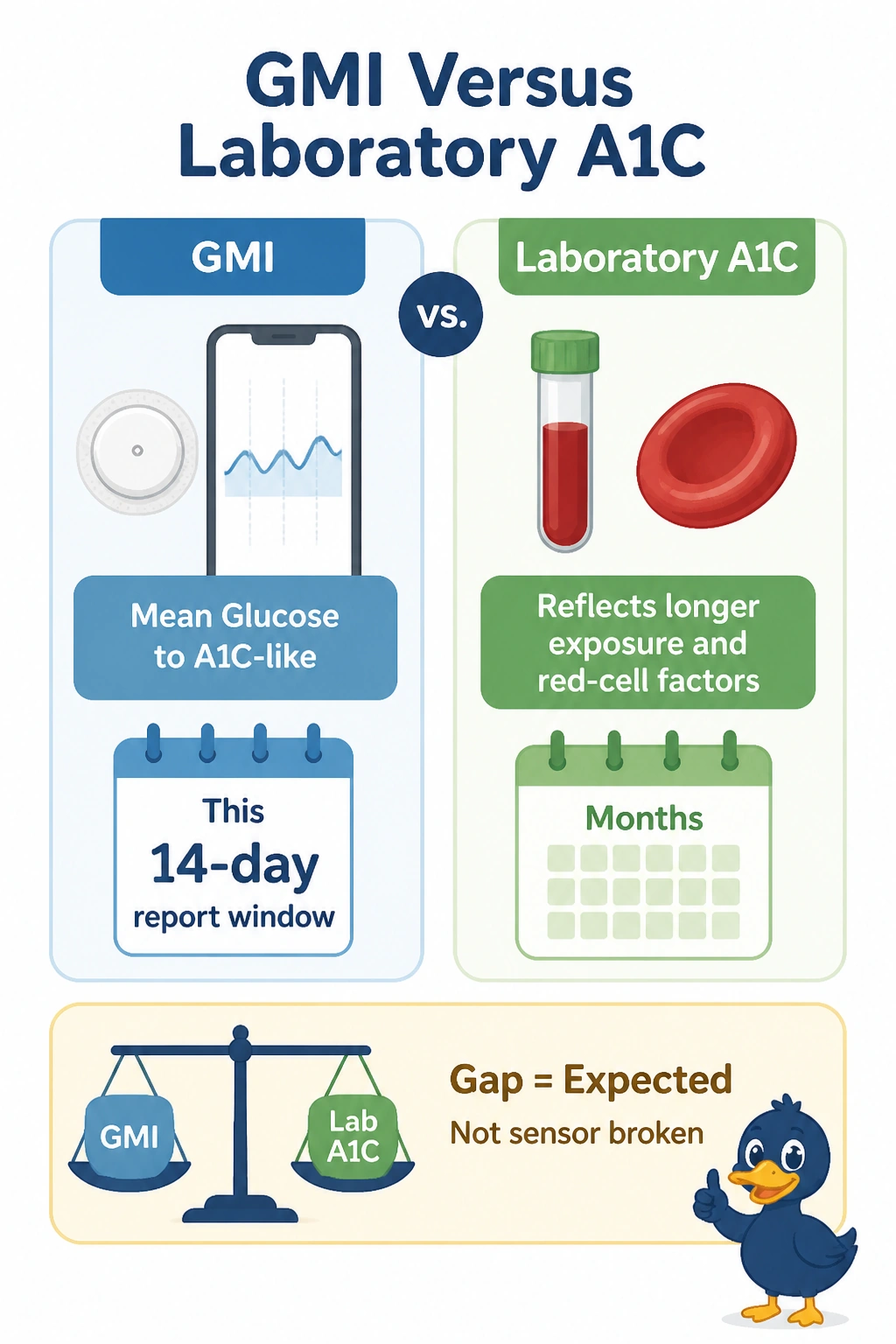
Short Explanation
You can reassure her that different time windows explain this gap — GMI translates this 14-day mean sensor glucose into an A1C-like number, while lab A1C reflects longer exposure plus red-cell factors. Don't fall for the trap that any mismatch means a broken sensor; you are comparing a short-term estimate to a longer-term measure.
Full Explanation
The correct explanation is that GMI converts mean glucose from this 14-day sensor report to an A1C-like estimate; laboratory A1C reflects longer exposure and red-cell factors. GMI is calculated from mean sensor glucose over the report period and expressed on an A1C scale for comparison, not a direct measurement of glycated hemoglobin. Laboratory A1C integrates glycemia over approximately 2-3 months and is also influenced by red blood cell lifespan, turnover, anemia, hemoglobin variants, and individual differences in glycation. A recent change in therapy, illness, or improvement limited to the last two weeks can therefore create an expected gap without sensor malfunction. Stating that A1C reflects only fasting morning values while GMI averages mealtime peaks is false because A1C integrates both fasting and postprandial glucose over months. Describing GMI as determined primarily by glucose variability rather than mean sensor glucose is incorrect because the GMI equation uses mean glucose; variability informs time in range and hypoglycemia risk but does not drive GMI. Suggesting that a recent improvement should immediately produce the same change in laboratory A1C misunderstands kinetics, since A1C changes gradually as older red cells are replaced. Persistent large discordance should still prompt review of sensor wear time and confirmatory fingerstick data.
Prefer to study offline? Printable PDF study book + test engine ($7.50, unofficial). These questions stay free here.