
A 57-year-old man with type 2 diabetes and elevated triglycerides asks his diabetes care and education specialist whether he should cut out all dietary fats, including olive oil and avocados, to protect his heart. Which nutrition guidance should the specialist emphasize?
Select an answer to reveal the explanation.
Short Explanation
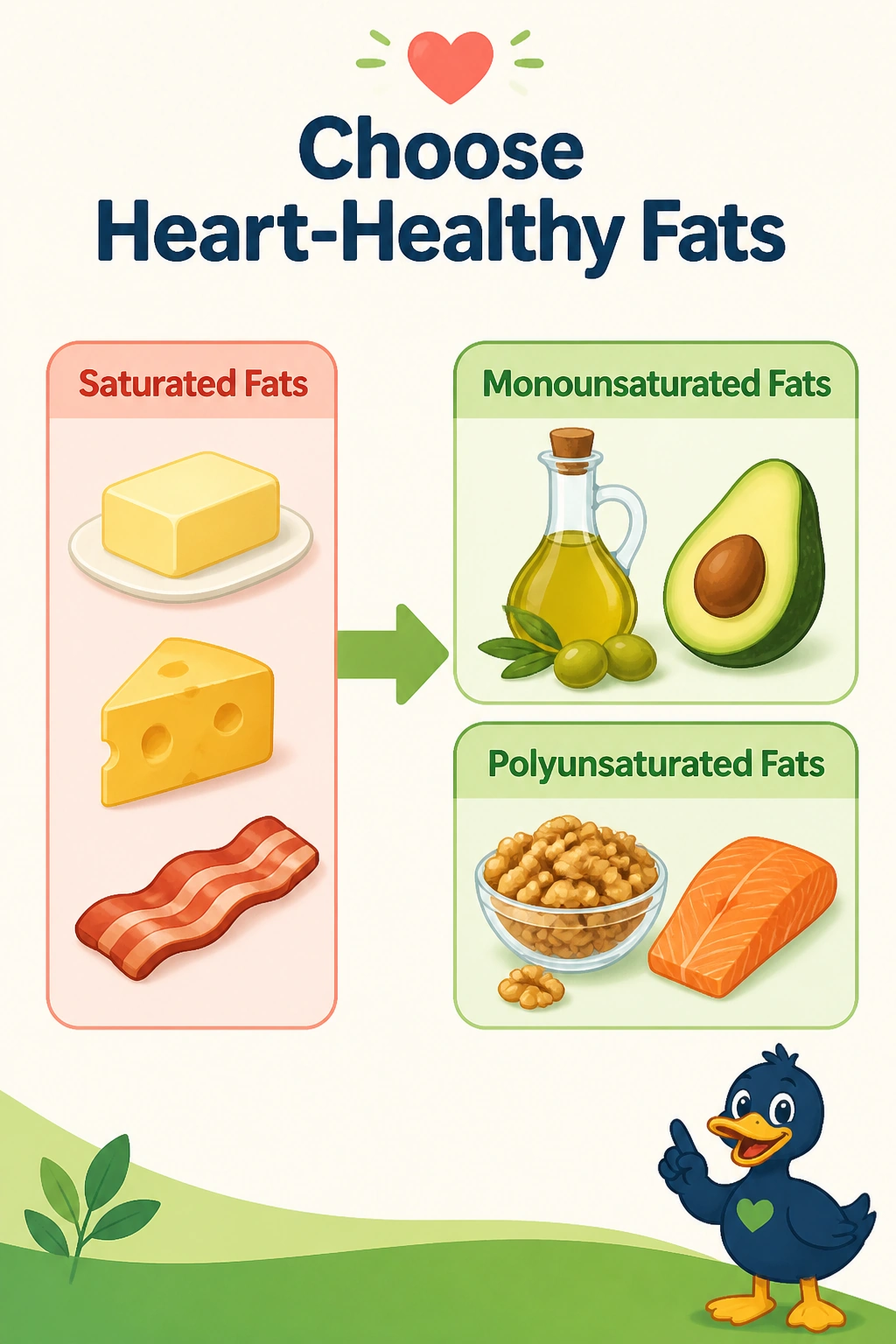
Think of dietary fat like fuel quality rather than a single villain: your body and heart actually benefit from unsaturated fats found in olive oil, avocados, nuts, and fatty fish. The trap is cutting out all fat and leaning on fat-free processed foods, which often pack extra refined carbohydrates that drive triglycerides higher. Guiding people to swap saturated fats for unsaturated sources supports cardiovascular health without sacrificing satisfying meals.
Full Explanation
Evidence-based nutrition therapy for diabetes emphasizes fat quality rather than blanket fat elimination, so the specialist should advise the person to Replace saturated fats with monounsaturated and polyunsaturated fats. Replacing saturated and trans fats with unsaturated sources such as olive oil, avocados, walnuts, and omega-3-rich fish improves lipid profiles and supports cardiovascular risk reduction, as seen in Mediterranean-style eating patterns. Advising to Replace saturated fat mainly with refined starch rather than unsaturated fat is unhelpful because high refined carbohydrate intake can worsen glycemic control and raise triglycerides without improving cardiovascular risk. Suggesting to Reduce total fat without considering whether the replacement foods contain added sugar is misleading because fat-free processed foods often contain added sugars and refined starches that increase calories and triglycerides. Recommending to Choose foods by low-fat labeling alone rather than fat quality and overall eating pattern ignores that overall eating pattern and unsaturated fat quality matter more than label claims for heart health. As a caveat, even heart-healthy unsaturated fats are energy-dense, so portion awareness remains important when weight management is a goal. During follow-up, ask the person to walk through a typical day of cooking oils, spreads, and snacks to identify one practical swap from butter or fatty meats to an unsaturated option.
Prefer to study offline? Printable PDF study book + test engine ($7.50, unofficial). These questions stay free here.