
A 52-year-old man newly started on immediate-release metformin for type 2 diabetes calls the clinic reporting mild nausea and loose stools after taking his morning pill on an empty stomach. Which self-management guidance should the diabetes care and education specialist provide first?
Select an answer to reveal the explanation.
Short Explanation
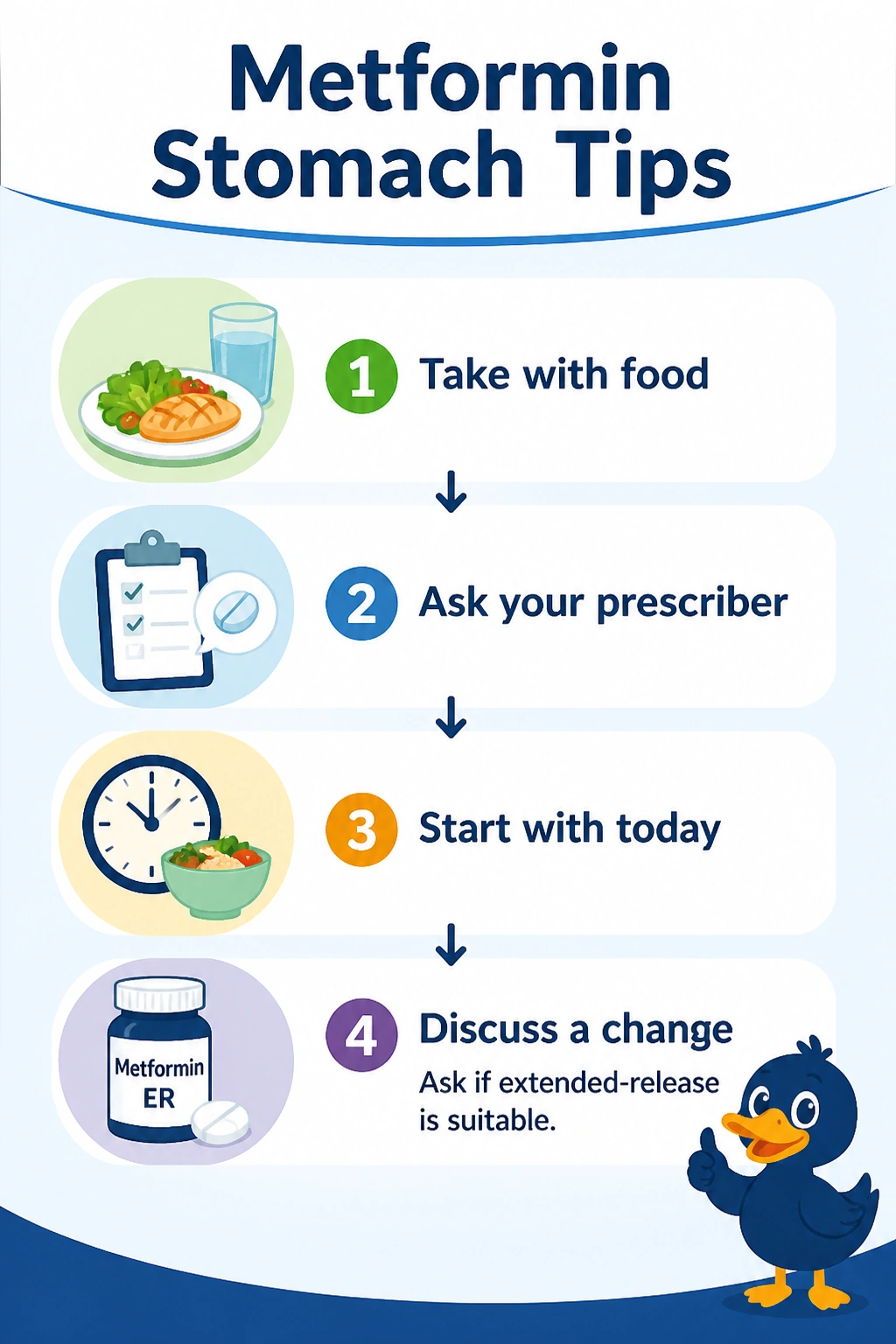
If you feel queasy after starting metformin, you are not alone—mild nausea and loose stools are common at first. Taking metformin with meals and asking your prescriber about extended-release tablets can improve gastrointestinal tolerability; the precise cause of symptoms is multifactorial, and stopping abruptly can leave your glucose unmanaged.
Full Explanation
Nausea and loose stools are common when you start immediate-release metformin, especially if you take it on an empty stomach. Taking metformin with food and asking the prescriber about extended-release tablets fits a practical approach for mild symptoms while helping maintain glucose control. Gradual dose titration and, when prescribed, extended-release treatment can improve gastrointestinal tolerability; the precise cause of symptoms is multifactorial. Stopping metformin immediately until all symptoms resolve is premature for mild symptoms and risks rebound hyperglycemia without medical input. Switching to the full daily dose at bedtime consolidates the dose into a single timing, which can worsen tolerability and does not follow prescribed titration. Adding an over-the-counter antacid before each tablet does not improve tolerability and adds unnecessary medication. As an exam caveat, persistent severe vomiting, diarrhea, or dehydration warrants prompt medical evaluation because volume depletion can increase lactic acidosis risk. During follow-up, confirm whether symptoms improved with meals and whether the prescriber adjusted the formulation.
Prefer to study offline? Printable PDF study book + test engine ($7.50, unofficial). These questions stay free here.