
An adult with type 1 diabetes who counts carbohydrates accurately notices that after eating pizza or a high-fat restaurant meal, their blood glucose stays in range for the first two hours but rises sharply four to five hours later. Which nutrition-related education point should the diabetes care and education specialist explain?
Select an answer to reveal the explanation.
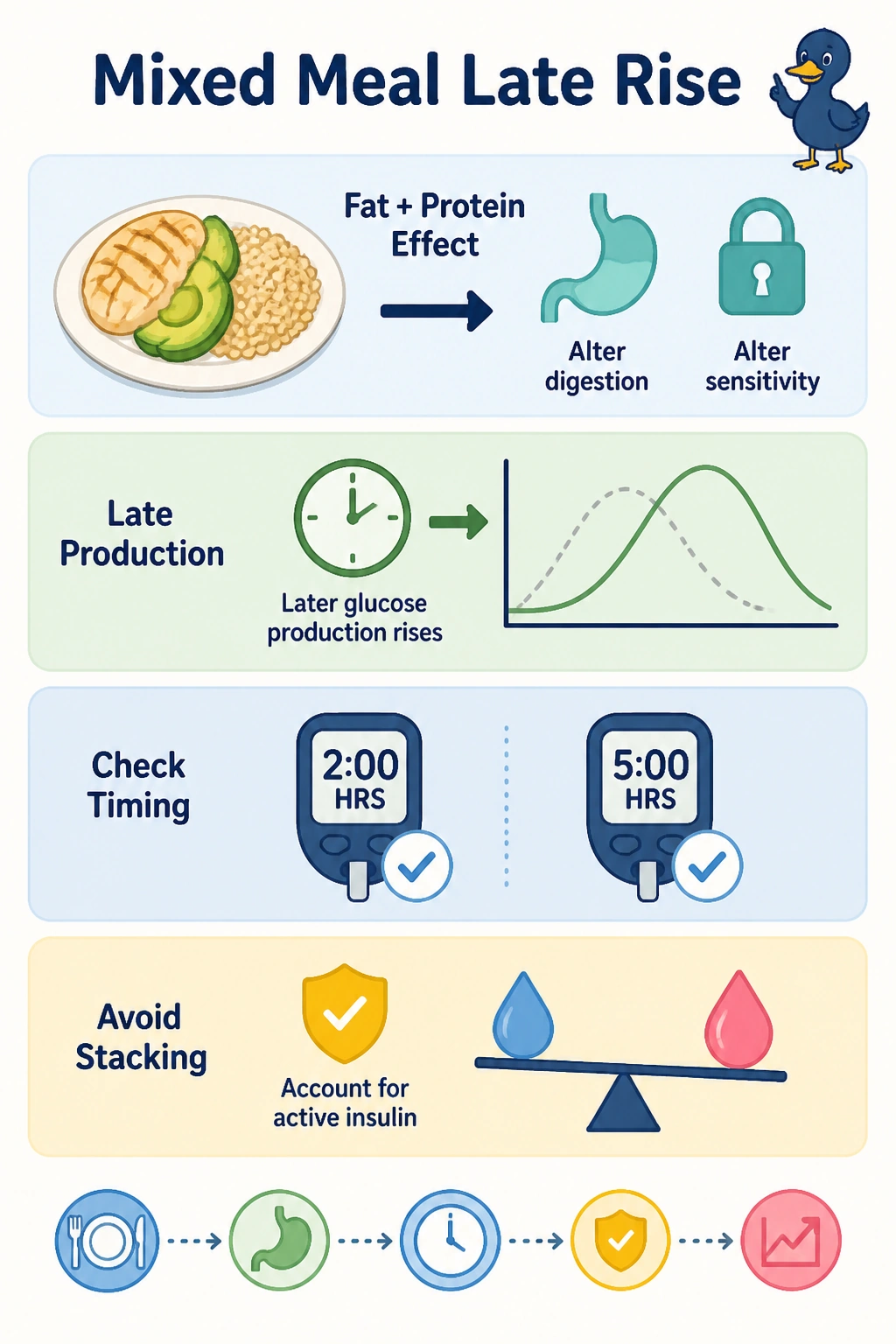
Short Explanation
Pizza can give you a sneaky two-act glucose plot: your level stays calm for the first couple of hours, then rises later. Even when you count carbs accurately, fat and protein can change digestion, insulin action, and later glucose production. Track your pattern at two and four to five hours and review it with your team.
Full Explanation
Macronutrient composition can shape post-meal glucose timing even when you count carbohydrate accurately. Fat and protein can alter digestion, insulin sensitivity, and later glucose production, producing delayed postmeal rises; this explains why the full effect of a high-fat meal may appear after the first two hours. The claim that dietary fat and protein convert directly into glucose within 15 minutes is physiologically false and would suggest an immediate rather than delayed rise. Dosing solely for carbohydrate and disregarding later glucose patterns after mixed meals is inadequate because reviewing those patterns helps you and your care team guide individualized future adjustments. Giving repeated full correction doses every hour before accounting for active insulin is unsafe: correction stacking can cause hypoglycemia. One caveat is that responses to fat and protein vary widely, and insulin adjustments require prescriber-approved parameters. As a practical check, log glucose at two and four to five hours after high-fat meals and review the pattern with your care team.
Prefer to study offline? Printable PDF study book + test engine ($7.50, unofficial). These questions stay free here.