
Four weeks after setting a goal to walk after dinner and adjust evening snacks, a 65-year-old man with type 2 diabetes returns with minimal change in post-dinner glucose and says evening arthritis pain stopped his walks. Which follow-up step should the diabetes care and education specialist take?
Select an answer to reveal the explanation.
Short Explanation
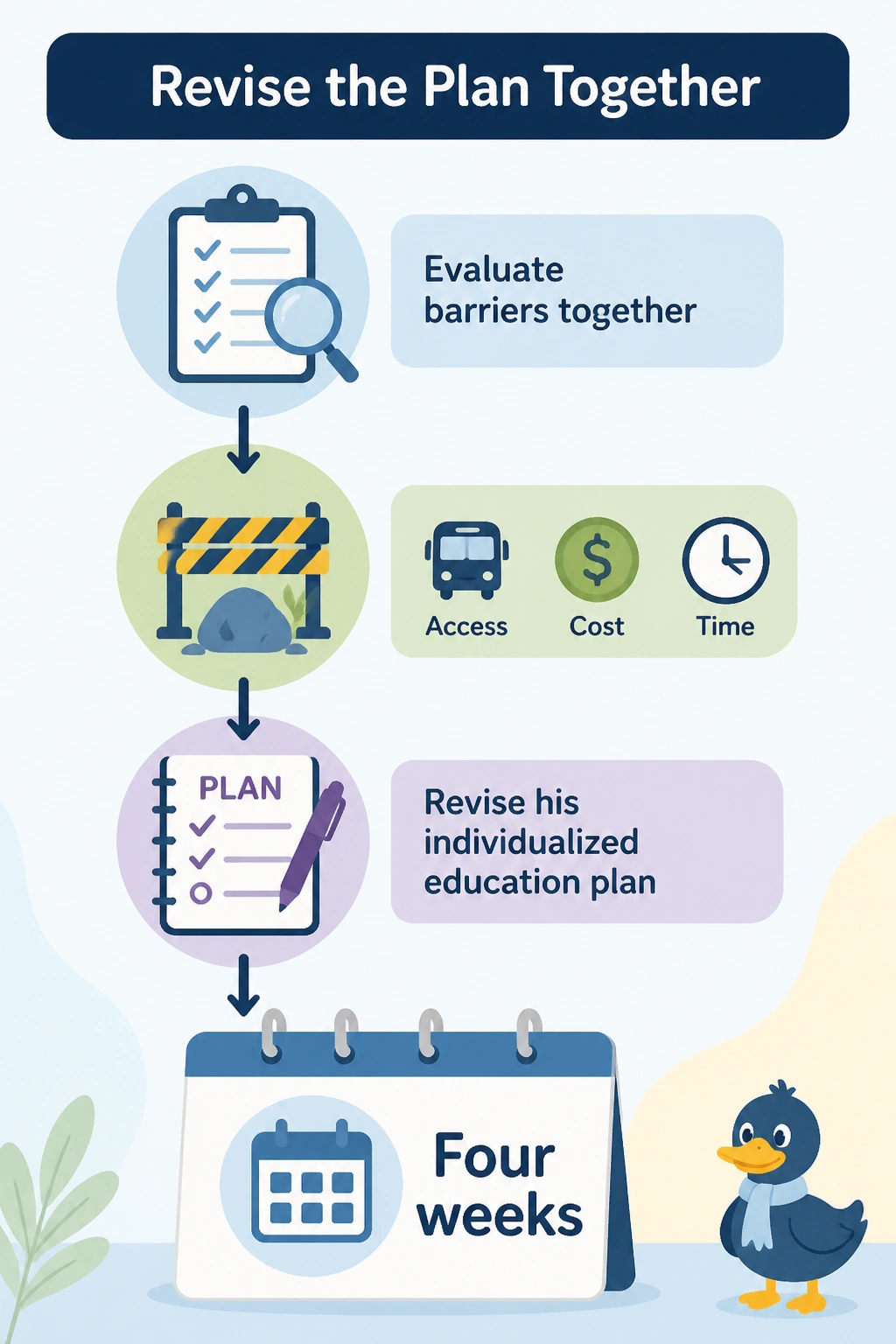
Your individualized education plan is a living roadmap, not a one-time contract. When arthritis pain blocks your evening walk, you can evaluate the barrier together and revise the plan to support follow-through.
Full Explanation
Evaluate barriers together and revise his individualized education plan reflects the ongoing evaluation and follow-up standard in DSMES. When arthritis pain blocks a behavioral goal, the specialist collaborates with the person to understand the barrier and adapt the plan, then updates the documented goals. Repeating the exact same walking handout without modifying the original plan ignores the barrier he shared and risks repeated frustration. Keeping the walking goal unchanged and evaluating success by A1C alone leaves the pain unaddressed; A1C reflects an average over roughly 2 to 3 months and cannot capture post-dinner change at four weeks. Adding a second activity goal without addressing the pain that blocked the first increases burden without solving the problem and may reduce sustained follow-through. An exam caveat is that DSMES evaluation pairs clinical data with behavioral progress to guide iterative plan updates and care-team communication. As a practical check, document the arthritis barrier, the revised movement goal, and a follow-up check-in date in the shared health record.
Prefer to study offline? Printable PDF study book + test engine ($7.50, unofficial). These questions stay free here.