
A 44-year-old man with type 2 diabetes and an A1C of 7.3% smokes half a pack of cigarettes daily and asks whether quitting smoking meaningfully changes his diabetes outlook. Which education message should the diabetes care and education specialist emphasize?
Select an answer to reveal the explanation.
Short Explanation
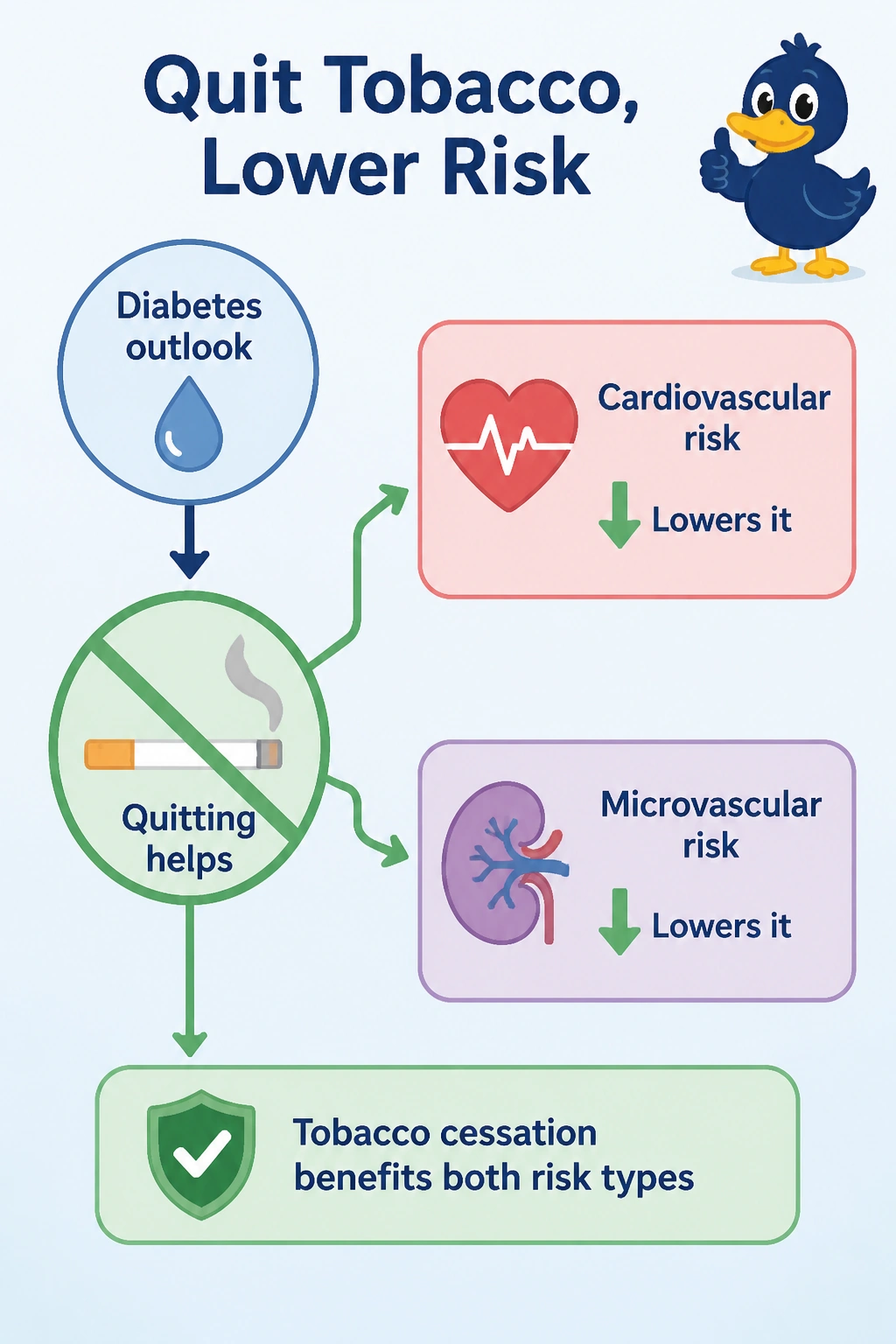
Tobacco and elevated glucose team up to compound vascular risk, which is why quitting smoking is one of the highest-impact moves you can support. Even with a near-target A1C, stopping tobacco protects both large arteries and tiny kidney and eye vessels. The trap is treating e-cigarettes as harmless or postponing cessation.
Full Explanation
Quitting tobacco lowers cardiovascular and microvascular risk in diabetes because nicotine and combustion toxins accelerate endothelial dysfunction, worsen insulin resistance, and compound the risk of heart attack, stroke, nephropathy, and neuropathy. Smoking cessation is a core pillar of comprehensive diabetes risk reduction alongside glycemic, blood pressure, and lipid management. Smoking cessation improves lung function but has minimal impact on vascular risk is false; cardiovascular risk drops substantially after quitting. Switching from cigarettes to nicotine e-cigarettes eliminates cardiovascular harm is inaccurate because nicotine and aerosolized compounds still carry vascular and addictive risks and are not recommended as a safe alternative. Prioritizing A1C reduction and postponing discussion of cessation until the next annual review delays one of the most impactful preventive interventions available today. As an exam caveat, routine diabetes care includes advising all patients not to use cigarettes, other tobacco products, or e-cigarettes, and offering cessation support. As an operational check, assess his readiness to quit and connect him with behavioral counseling or quitline resources.
Prefer to study offline? Printable PDF study book + test engine ($7.50, unofficial). These questions stay free here.