
A 58-year-old man with type 2 diabetes and newly diagnosed hypertension asks how his everyday food choices can help lower his blood pressure alongside his prescribed medication. Which nutrition focus should the diabetes care and education specialist recommend?
Select an answer to reveal the explanation.
Short Explanation
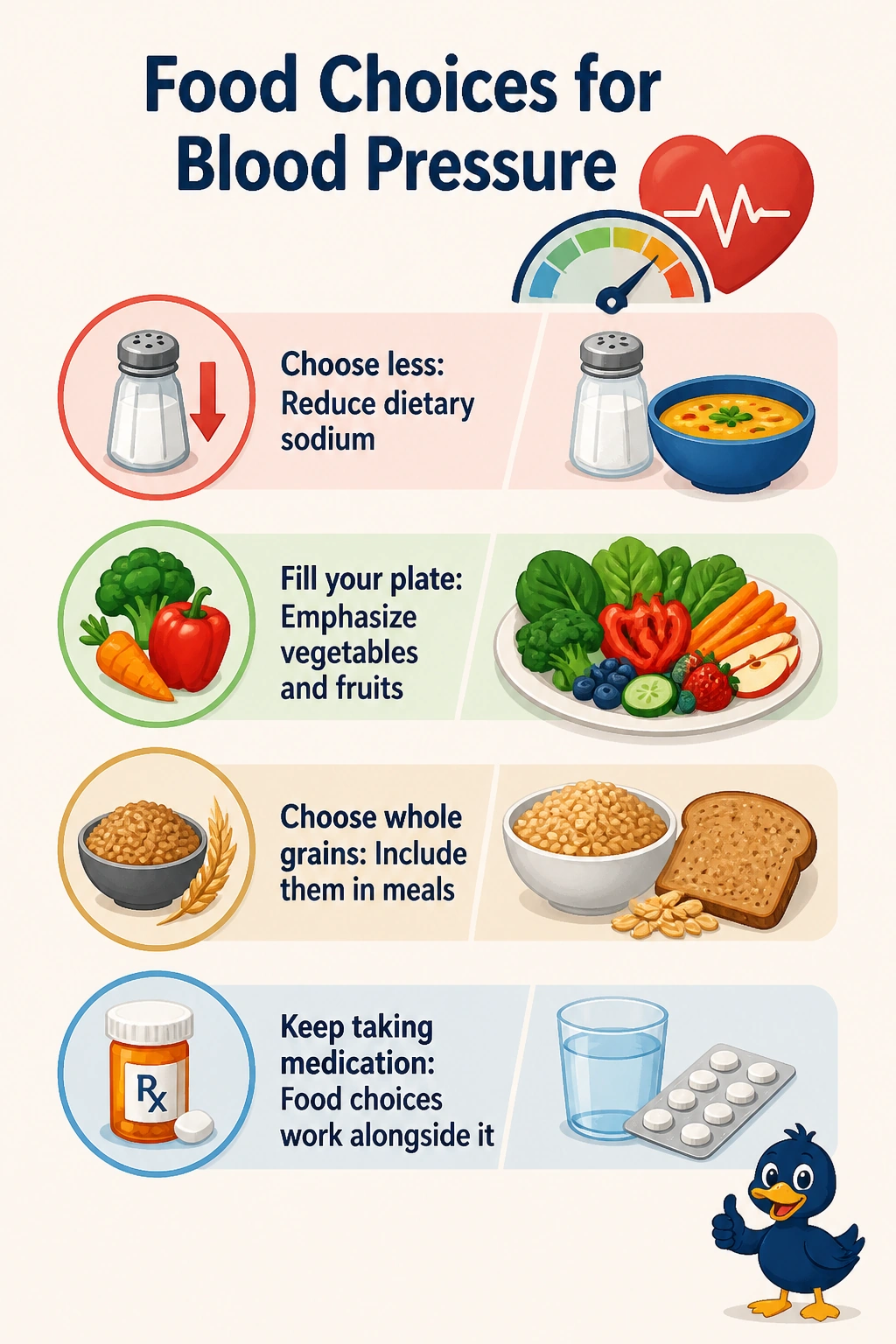
Managing blood pressure is about total sodium, not just the salt shaker — you help most by crowding out hidden sodium with vegetables, fruits, and whole grains. Watch out for traps like swapping to sea salt in the same amount or trusting low-fat labels without checking sodium.
Full Explanation
Cardiovascular risk reduction in diabetes pairs blood pressure medication with eating patterns modeled on DASH principles, which lower systolic and diastolic pressure while supporting glycemic stability. Advising the client to Reduce dietary sodium and emphasize vegetables, fruits, and whole grains targets major sources of hidden sodium in processed foods while supplying fiber, potassium, and magnesium that support vascular function. Focusing on carbohydrate grams while leaving sodium intake unchanged addresses glucose tracking but ignores the dominant dietary driver of hypertension, so blood pressure benefit is missed. Replacing table salt with sea salt in the same quantity to substantially lower sodium intake reflects a common misconception, as sea salt and table salt contain comparable sodium by weight and do not meaningfully reduce intake without reducing total amount. Using packaged low-fat foods without checking their sodium content is misleading because fat reduction is often accompanied by added sodium for flavor, leaving hidden sodium high. For an operational check, review nutrition labels on two packaged foods the client buys weekly to identify lower-sodium swaps.
Prefer to study offline? Printable PDF study book + test engine ($7.50, unofficial). These questions stay free here.