
A 35-year-old delivery driver with type 1 diabetes using multiple daily insulin injections had a mild hypoglycemic episode last week and asks how to stay safe behind the wheel. Which driving safety practice should the diabetes care and education specialist reinforce?
Select an answer to reveal the explanation.
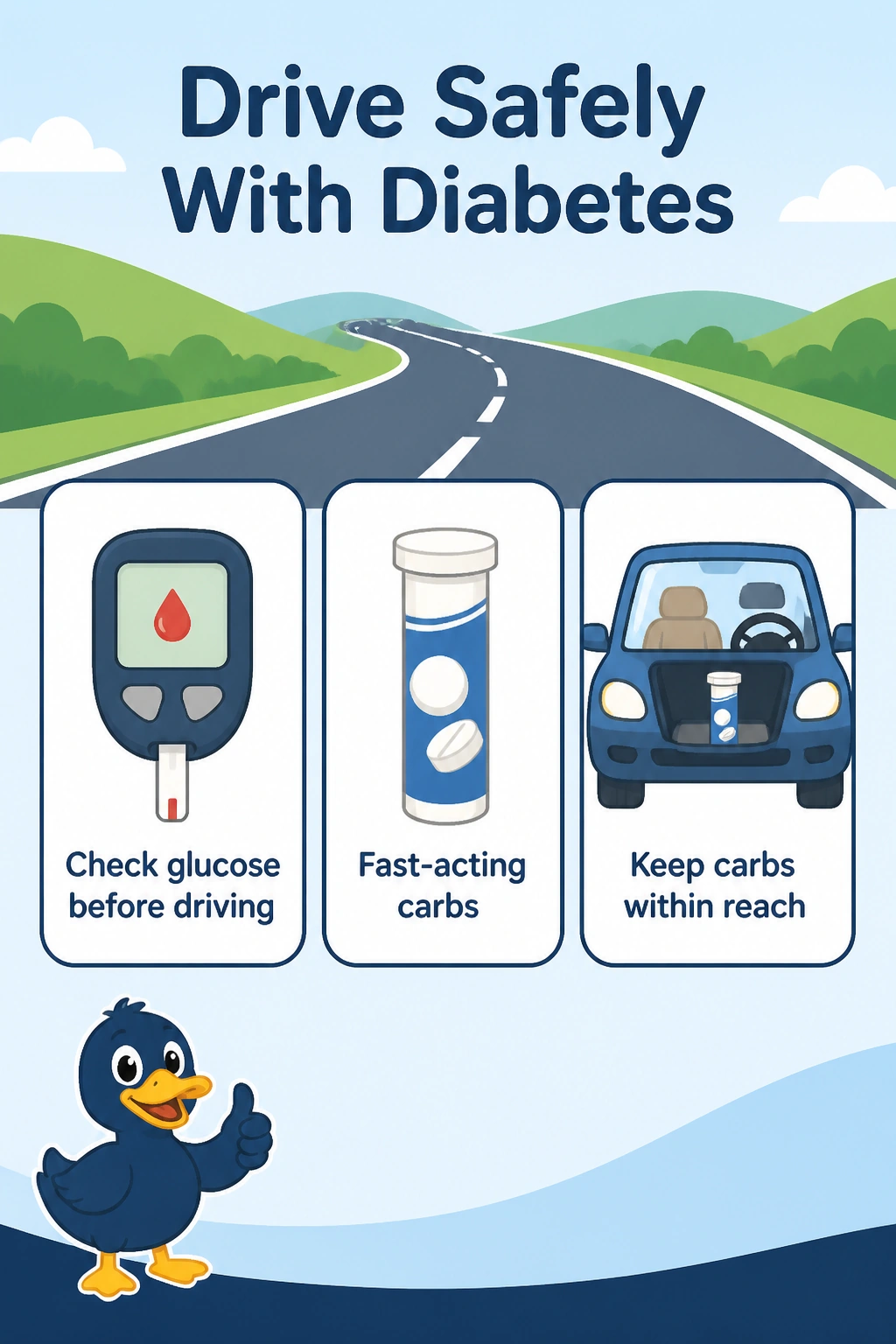
Short Explanation
You can protect yourself and others by checking your glucose before you drive and keeping fast-acting carbohydrates within easy reach. Preparation matters because symptoms may not warn you before low glucose affects your thinking or reactions. If symptoms begin while driving, pull over safely and treat the low rather than continuing to the next exit.
Full Explanation
Checking glucose before driving and keeping fast-acting carbohydrates within easy reach helps prevent neuroglycopenic impairment behind the wheel and lets you treat a low promptly. If you use insulin or insulin secretagogues, verifying a safe glucose level before driving and rechecking on longer trips is a critical safety habit. Relying only on physical symptoms is dangerous because symptoms can be blunted or mistaken for fatigue until cognition is already impaired. Aiming for glucose above 250 mg/dL before every shift trades acute driving safety for chronic hyperglycemia and ketosis risk; instead, use a safe, individualized pre-driving threshold. Continuing slowly to the next exit when symptoms start risks a severe crash. Pull over safely as soon as possible, treat the low, and wait until glucose and cognition recover before resuming. As an exam caveat, review local commercial driving regulations if applicable. As a practical check, ask where you currently store glucose tablets or juice in your delivery vehicle.
Prefer to study offline? Printable PDF study book + test engine ($7.50, unofficial). These questions stay free here.