
A 74-year-old woman with type 2 diabetes lives with her daughter, who asks when severe high blood glucose becomes a medical emergency if urine ketone strips remain negative or trace. Which warning sign of hyperosmolar hyperglycemic state should the specialist emphasize?
Select an answer to reveal the explanation.
Short Explanation
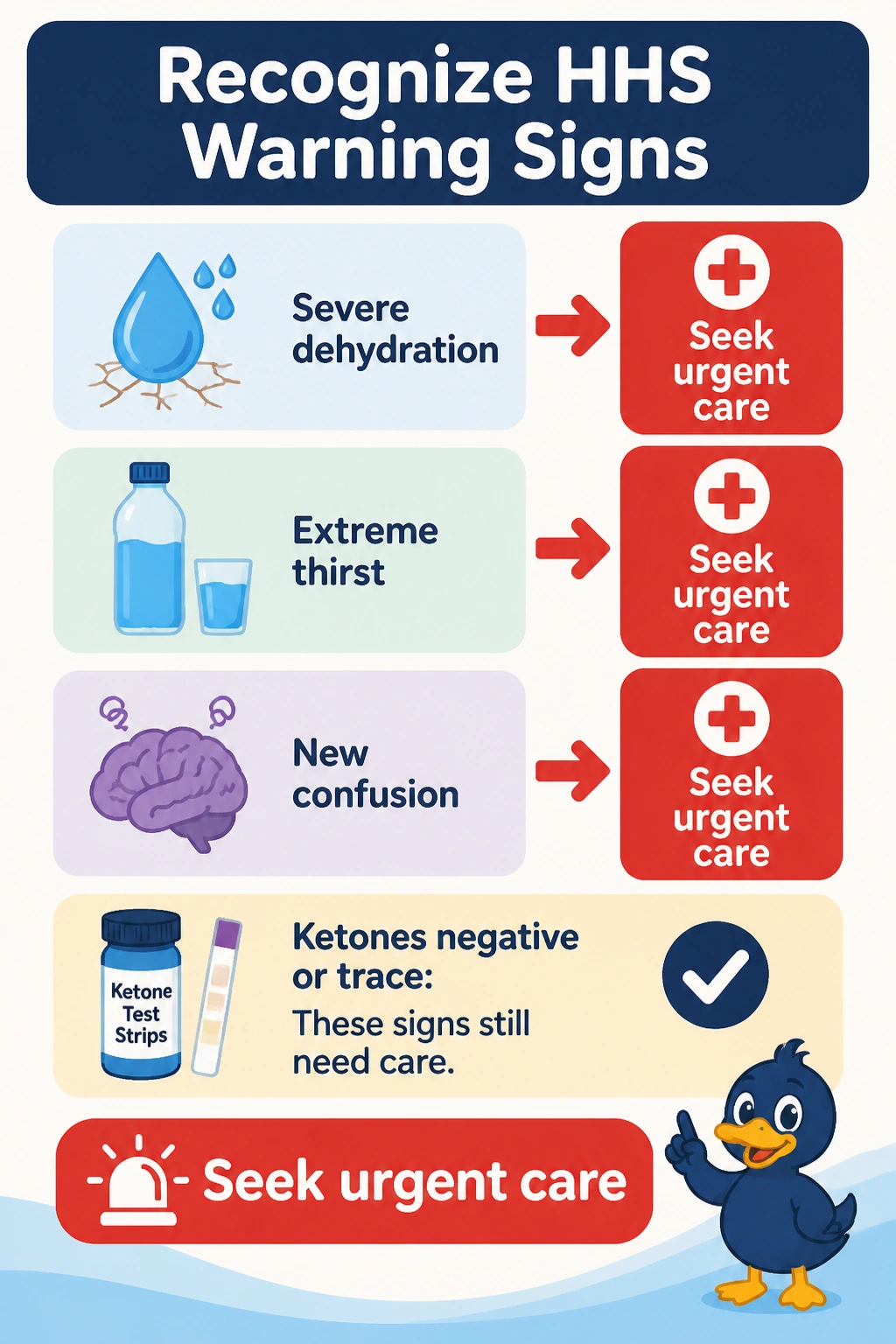
Hyperosmolar hyperglycemic state can sneak up on older adults like a silent drought, drying out the body without triggering ketones. Teaching caregivers to seek urgent care for severe dehydration, extreme thirst, or new confusion protects your patient before coma develops. The trap is waiting for ketones or normal breathing to change while dangerous dehydration worsens.
Full Explanation
Hyperosmolar hyperglycemic state (HHS) occurs primarily in older adults with type 2 diabetes who retain enough endogenous insulin to suppress lipolysis and ketone formation while developing extreme hyperglycemia and profound volume depletion. Teaching the caregiver to Seek urgent care for severe dehydration, extreme thirst, or new confusion ensures rapid medical intervention for intravenous fluids and electrolyte management. Advising them to Wait until moderate urine ketones appear before contacting emergency medical care is dangerous because significant ketosis is typically absent in HHS, delaying lifesaving treatment. Suggesting to Use the absence of nausea and abdominal pain to defer evaluation until the next day is unsafe because nausea, vomiting and abdominal pain are features of diabetic ketoacidosis rather than HHS, so their absence does not exclude HHS. Suggesting to Use normal breathing as reassurance that severe hyperglycemia can be observed at home confuses HHS with diabetic ketoacidosis, where Kussmaul respirations are a hallmark sign, while HHS can progress to obtundation without warning. As a caveat, infections such as urinary tract infections or pneumonia frequently precipitate HHS in older adults, so monitor closely during illness. For an operational check, provide a written sick-day action plan listing emergency symptoms and clinic contact numbers.
Prefer to study offline? Printable PDF study book + test engine ($7.50, unofficial). These questions stay free here.