
A 44-year-old woman using a continuous glucose monitor treats a symptomatic low of 55 mg/dL with 15 grams of glucose tablets. Ten minutes later, her CGM still reads 52 mg/dL with a downward arrow, and she wants to eat an entire box of crackers. What should the specialist explain?
Select an answer to reveal the explanation.
Short Explanation
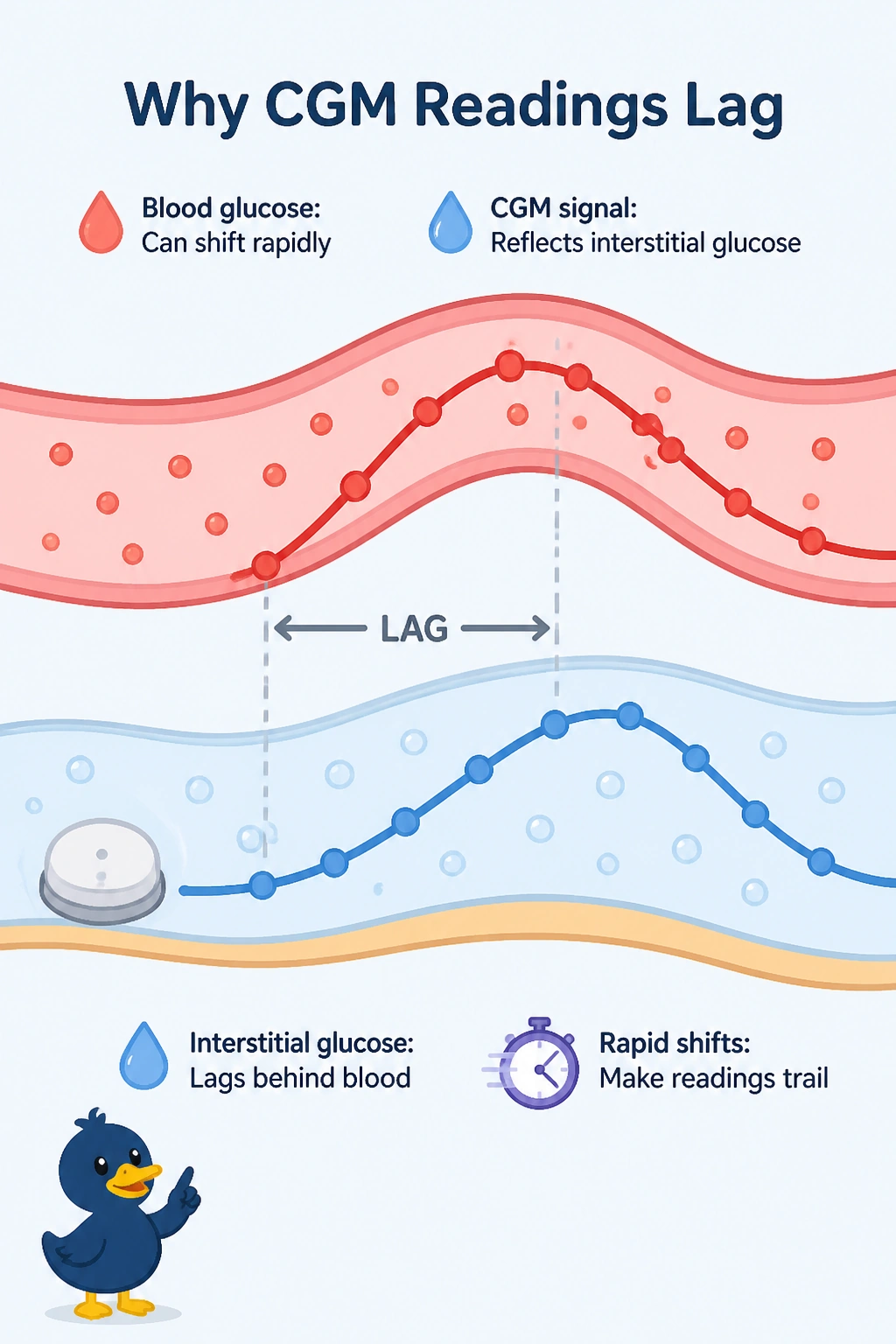
A CGM during a fast glucose swing is like watching the caboose after the engine has turned the corner. Explain that interstitial glucose lags behind capillary blood glucose, so you should confirm an uncertain low rather than panic and over-treat it based on a ten-minute sensor reading.
Full Explanation
Interstitial glucose lags behind blood glucose during rapid shifts, which helps explain why a continuous glucose monitor may still show a low with a downward arrow even as blood glucose is recovering. CGMs measure interstitial rather than capillary glucose, creating a physiological lag of roughly 5 to 15 minutes during rapid rises or falls. A CGM value that has not risen within ten minutes therefore does not prove that glucose tablets failed; ten minutes can still fall within the lag window. Likewise, a persistent downward arrow does not prove that another full carbohydrate dose is immediately needed: it reflects a lagging interstitial trend, not necessarily current blood glucose, and automatic full retreatment risks rebound hyperglycemia. Do not dismiss ongoing hypoglycemia as sensor lag or wait if symptoms worsen. Repeating fingerstick checks is not unhelpful during acute hypoglycemia; a capillary check at 15 minutes is specifically recommended when CGM values conflict with symptoms or may be lagging during treatment. As an exam caveat, the sensor trend alone cannot establish whether hypoglycemia persists. Practically, reassess the response around 15 minutes and confirm capillary glucose promptly if symptoms persist or the reading is uncertain; eating an entire box of crackers can cause prolonged rebound hyperglycemia.
Prefer to study offline? Printable PDF study book + test engine ($7.50, unofficial). These questions stay free here.