
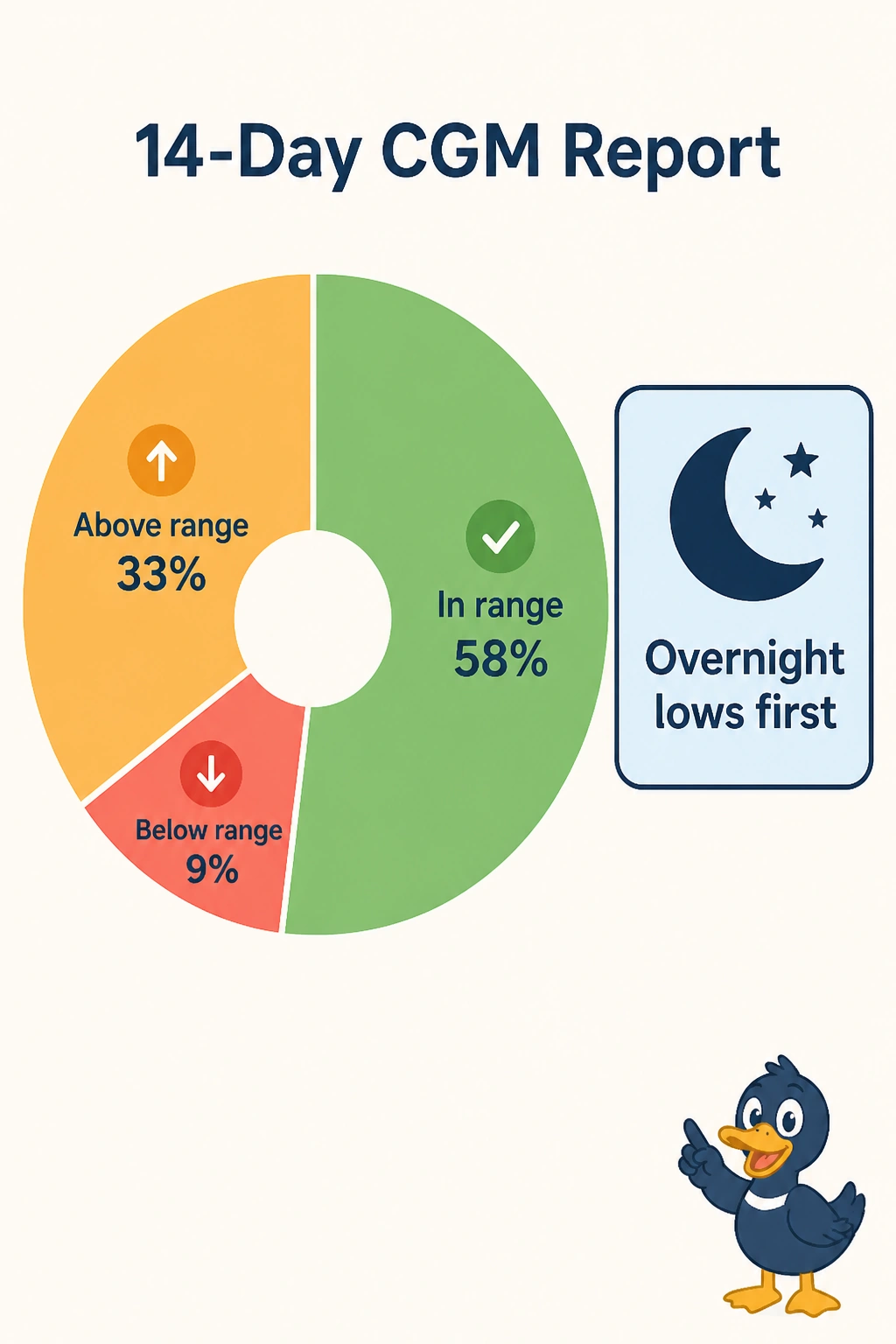
While reviewing a 14-day Ambulatory Glucose Profile report with a 39-year-old woman with type 1 diabetes, the specialist notes Time in Range is 58%, Time Above Range is 33%, and Time Below Range (<70 mg/dL) is 9%, with repeated overnight dips. Which clinical priority should guide the action plan first?
Select an answer to reveal the explanation.
Short Explanation
When an AGP report shows both highs and frequent lows, safety always takes the front seat before chasing tighter averages. You will fall into a common trap if you push insulin doses up to fix afternoon highs while overnight lows are already happening. Tame the Time Below Range first, then work upward.
Full Explanation
Standard CGM interpretation prioritizes reducing hypoglycemia before attempting to lower hyperglycemia, because Time Below Range carries immediate safety risks and often drives rebound eating that worsens glucose swings. With 9% Time Below Range and overnight dips, the specialist should Address the overnight hypoglycemia first to reduce Time Below Range safely in collaboration with the patient and prescriber. Choosing to Increase her basal insulin rate immediately to bring Time Above Range below 25% would deepen the overnight lows and raise the risk of severe nocturnal hypoglycemia. Trying to Focus exclusively on raising Time in Range above 70% by tightening mealtime ratios overlooks the urgent overnight safety signal and can worsen post-meal lows. Choosing to Address daytime postmeal highs before analyzing the repeated overnight lows reverses the correct safety order and leaves nocturnal hypoglycemia unaddressed. As a clinical caveat, fingerstick confirmation is required for discordance or suspected inaccuracy, not automatically for every rapid change with a device cleared for treatment decisions. As an operational check, review overnight basal timing, evening alcohol or exercise patterns, and confirm low-alert thresholds are set appropriately.
Prefer to study offline? Printable PDF study book + test engine ($7.50, unofficial). These questions stay free here.