
A 27-year-old man with type 1 diabetes plans to attend a friend's wedding where he expects to drink two glasses of wine with dinner and dance afterward. Which self-management guidance should the diabetes care and education specialist emphasize to reduce his risk of delayed hypoglycemia?
Select an answer to reveal the explanation.
Short Explanation
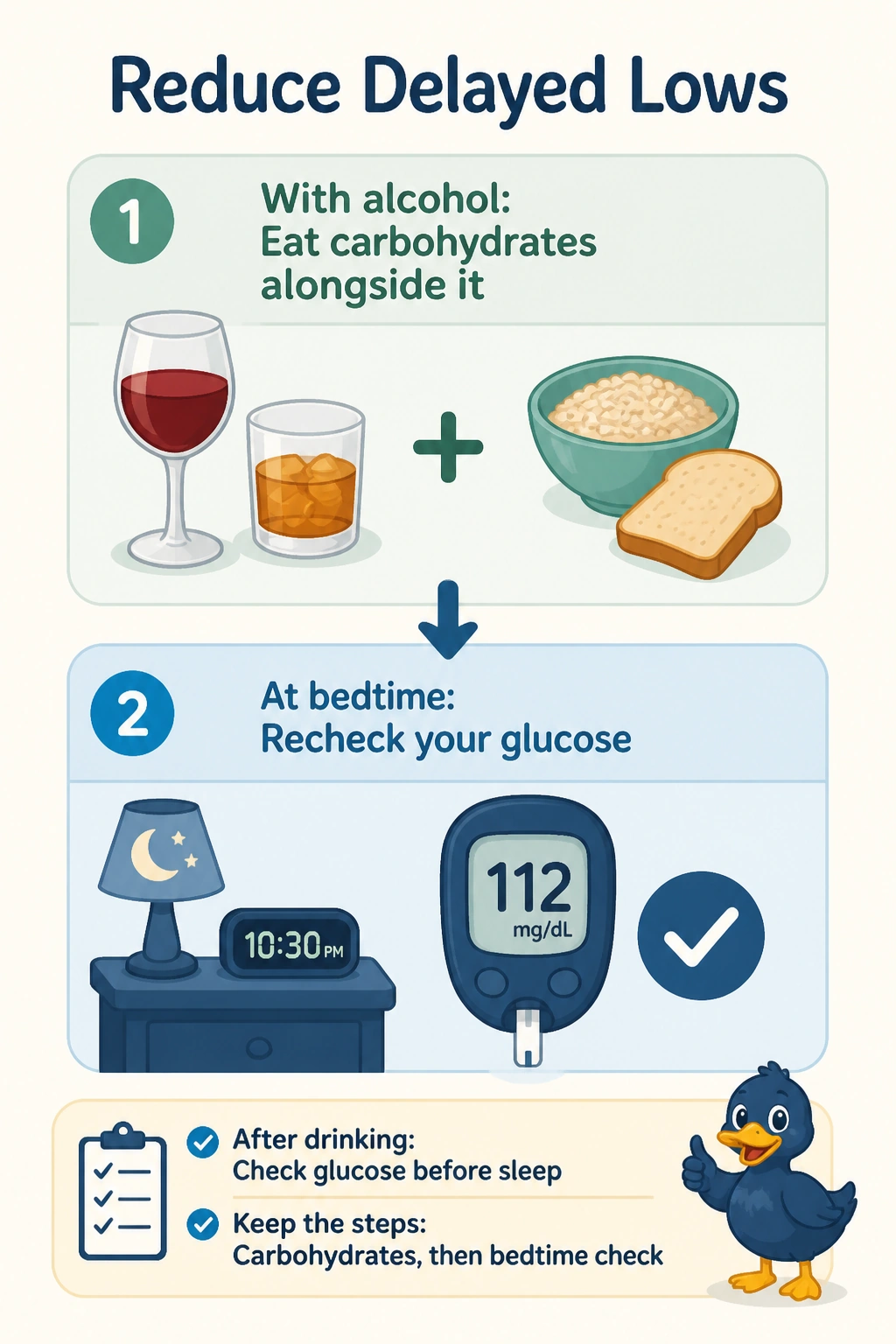
Remember that gluconeogenesis produces new glucose; alcohol can suppress this process and increase delayed hypoglycemia risk. You should steer learners away from the trap of skipping basal insulin or ignoring bedtime checks when alcohol and dancing combine. Pairing alcohol with carbohydrates and checking glucose before sleep helps prevent dangerous overnight lows.
Full Explanation
When a person with type 1 diabetes drinks alcohol, the liver prioritizes metabolizing ethanol and gluconeogenesis produces new glucose; alcohol can suppress this process and increase delayed hypoglycemia risk. Combining alcohol with physical activity such as dancing further increases insulin sensitivity and glucose uptake, creating a high risk for delayed nocturnal hypoglycemia. Therefore, the specialist should advise the patient to Eat carbohydrates alongside the alcohol and recheck glucose at bedtime so a downward trend can be caught early. Telling the patient to Skip his basal insulin dose on the evening of the wedding reception is unsafe because basal insulin is still needed to suppress ketogenesis and prevent diabetic ketoacidosis in type 1 diabetes. Advising him to Use bedtime glucose alone to rule out delayed lows after drinking and dancing is unsafe because a single bedtime value cannot exclude later lows, so individualized monitoring and follow-up checks remain needed. Finally, instructing him to Avoid eating any snacks at bedtime so overnight glucose stays predictable removes a key safeguard when bedtime readings are borderline or trending downward. As a clinical caveat, alcohol intoxication can mimic hypoglycemia symptoms, so wearing medical identification and alerting a trusted companion is essential. As an operational check, review the patient's bedtime glucose target and confirm he has fast-acting carbohydrates plus a complex carbohydrate snack ready before the event.
Prefer to study offline? Printable PDF study book + test engine ($7.50, unofficial). These questions stay free here.