
A 67-year-old woman who has taken metformin for nine years reports new tingling in her toes and mild fatigue, though her A1C has remained stable at 6.8%. Which clinical factor should the diabetes care and education specialist discuss with her and her care team?
Select an answer to reveal the explanation.
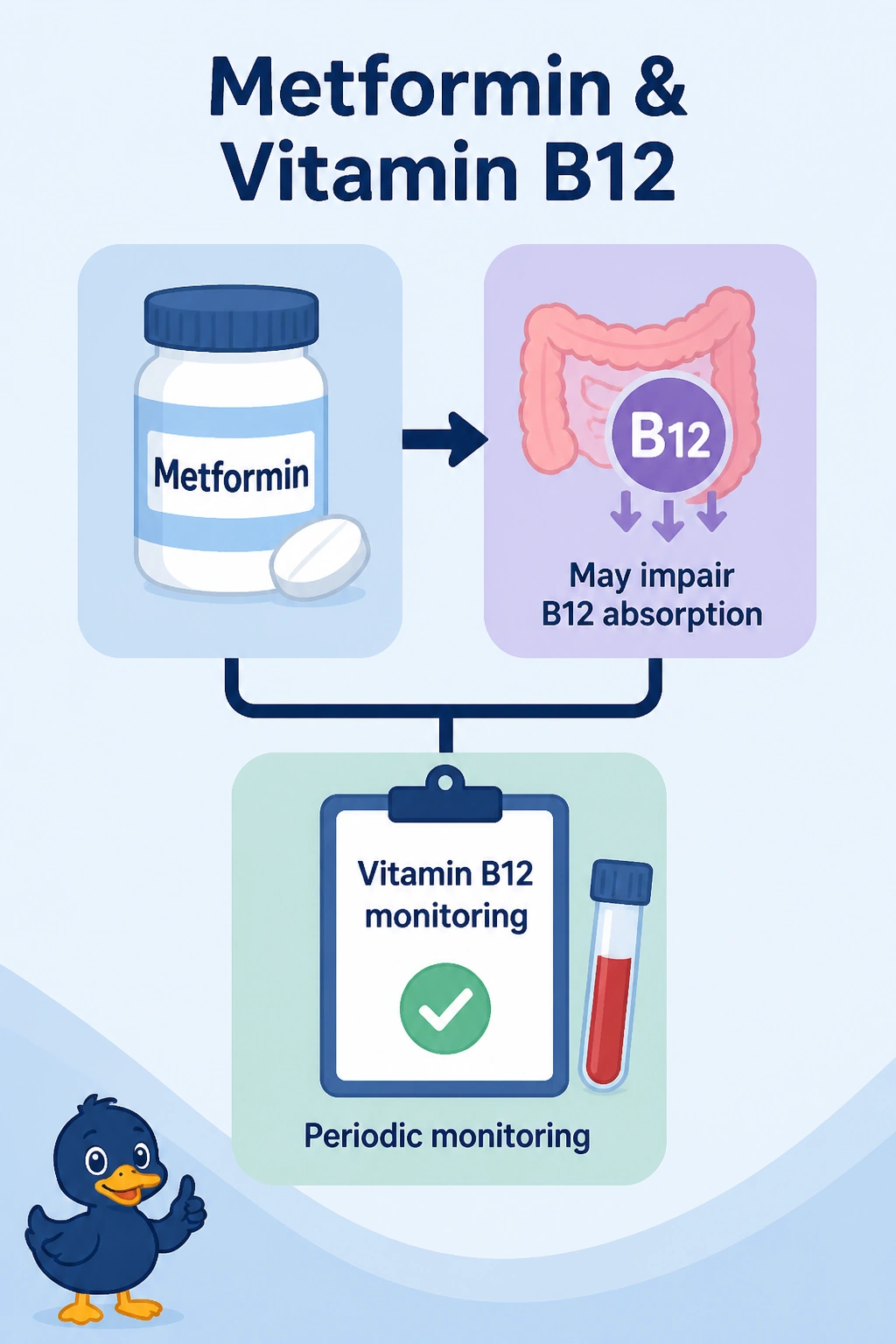
Short Explanation
Think of long-term metformin like a quiet roommate who slowly uses up your vitamin B12 stash. When you see years of therapy with new toe tingling and fatigue, you want to check B12 status even if A1C is stable. The trap is blaming diabetes alone or treating empirically without evaluating B12 and other neuropathy causes.
Full Explanation
Periodic vitamin B12 level monitoring because long-term metformin therapy can impair B12 absorption is supported by diabetes care guidelines, especially when peripheral neuropathy symptoms or anemia appear. Long-term metformin can reduce B12 absorption and levels; several mechanisms have been proposed, and correcting a deficiency can prevent worsening nerve injury. Assuming a stable A1C excludes a medication-related nutritional cause is incorrect because glycemic stability does not prevent nutrient depletion, and B12 deficiency can cause tingling and fatigue despite on-target A1C. Attributing the tingling to diabetes alone without checking B12 status risks missing a treatable contributor, since diabetic peripheral neuropathy can coexist with B12 deficiency and evaluation complements rather than replaces a thorough foot exam. Treating the symptoms empirically without evaluating B12 or other neuropathy causes is unsafe because empiric therapy can delay diagnosis and appropriate supplementation. Operational check: verify the date of the most recent serum vitamin B12 laboratory result and flag the need for testing and potential supplementation to the prescribing clinician.
Prefer to study offline? Printable PDF study book + test engine ($7.50, unofficial). These questions stay free here.