
An adult with type 2 diabetes on basal insulin notices fasting morning glucose readings around 175 mg/dL despite bedtime readings near 115 mg/dL, and overnight continuous glucose monitor tracings show a steady rise starting around 4:00 a.m. without any readings below 70 mg/dL. What should the diabetes care and education specialist explain is the most likely mechanism behind this morning pattern?
Select an answer to reveal the explanation.
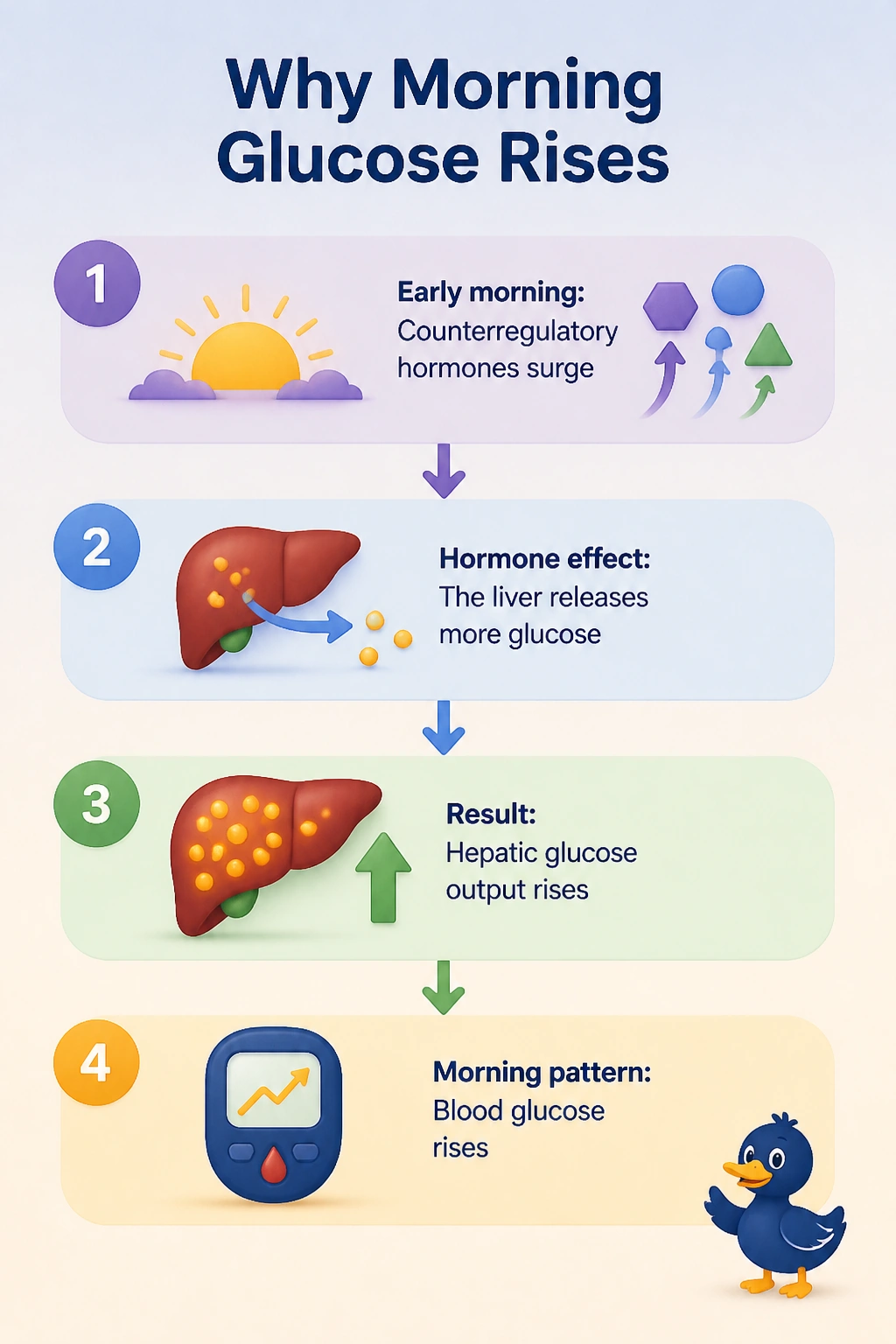
Short Explanation
Picture your liver setting an early alarm clock before you even wake up. When overnight glucose stays normal and climbs steadily toward dawn, your care team is looking at the dawn phenomenon rather than a rebound low. The classic trap is assuming every morning high comes from an overnight crash and cutting basal insulin prematurely.
Full Explanation
The dawn phenomenon occurs when An early-morning surge of counterregulatory hormones increasing hepatic glucose output drives fasting hyperglycemia despite stable overnight levels. Hormones such as cortisol and growth hormone rise in the early morning hours, prompting the liver to release stored glucose while insulin sensitivity temporarily dips. Rebound hyperglycemia triggered by an unrecognized overnight hypoglycemic episode during sleep describes the Somogyi effect, which is ruled out here because the overnight continuous glucose monitor tracing shows no readings below 70 mg/dL. Delayed gastric emptying causing supper carbohydrates to absorb after midnight would typically produce a prolonged post-dinner plateau or erratic overnight swings rather than a clean rise starting around 4:00 a.m. Acute dehydration from overnight urination concentrating morning capillary blood does not explain a consistent pre-dawn upward trend in interstitial glucose readings. Caveat: occasional nocturnal lows can still occur on nights with extra activity or alcohol, so one calm tracing does not guarantee every night looks identical. Operational check: review several consecutive nights of overnight sensor trends alongside bedtime snack and basal timing records before recommending any regimen adjustment.
Prefer to study offline? Printable PDF study book + test engine ($7.50, unofficial). These questions stay free here.