
A 51-year-old man with type 2 diabetes for four years tells his diabetes care and education specialist that he skipped his ophthalmology referral because his vision feels sharp and he recently updated his reading glasses at a retail store. Which point should the specialist emphasize?
Select an answer to reveal the explanation.
Short Explanation
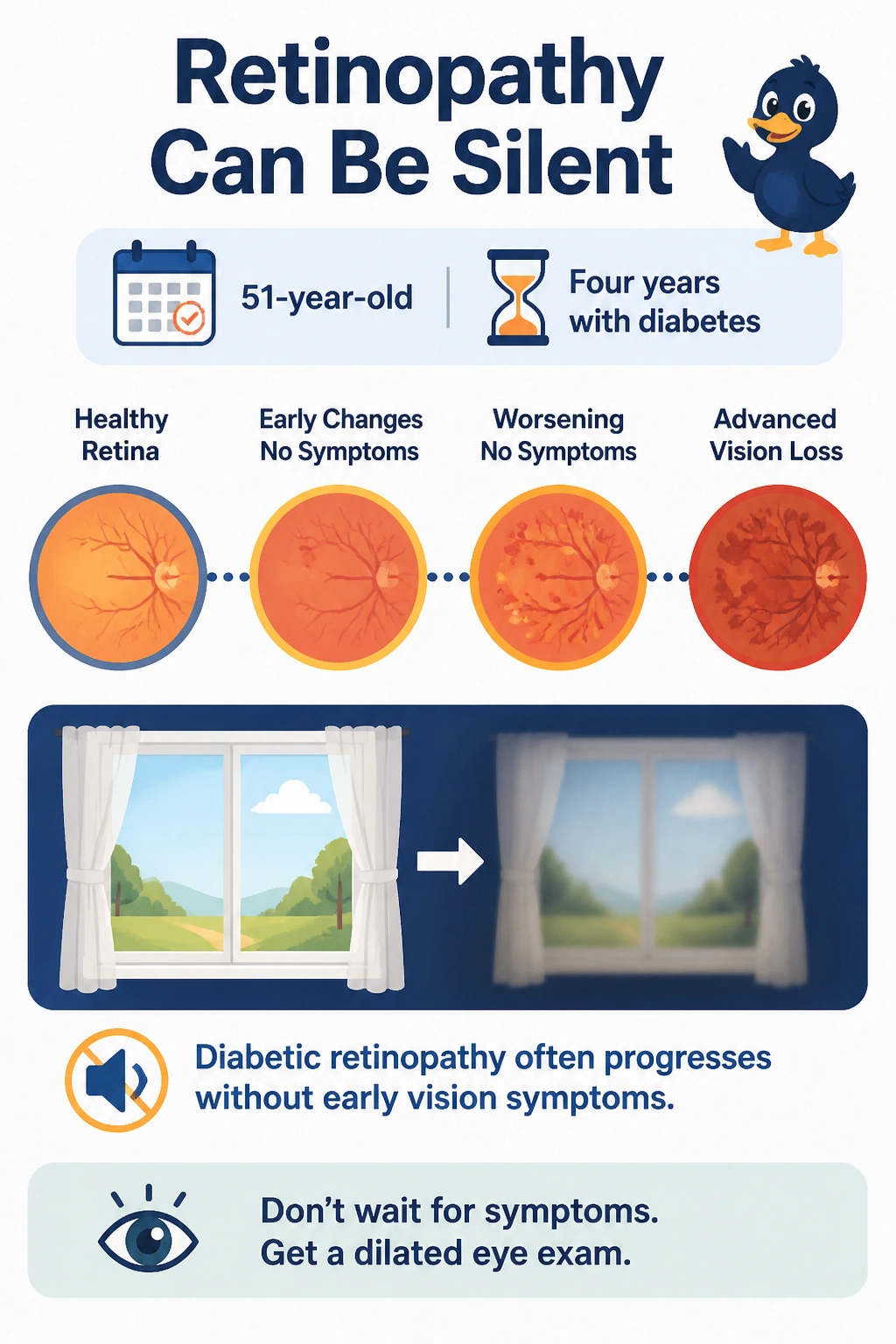
Waiting for blurry vision before seeing an eye specialist is like waiting for a roof to leak before checking for missing shingles. You should emphasize that diabetic retinopathy progresses silently in its early stages, making dilated eye exams essential even when sight feels sharp. The trap is treating a routine glasses check as a substitute for retinal screening.
Full Explanation
Emphasizing that Diabetic retinopathy often progresses without early vision symptoms helps the person understand why routine dilated eye exams are critical even when eyesight feels normal. Microvascular damage to the retina develops silently for years before affecting central vision, and early detection allows timely treatments that preserve sight. A visual-acuity or refraction check alone reliably excludes diabetic retinopathy is incorrect because acuity and refraction only measure sharpness and lens prescription and do not inspect the dilated retina. Retail location does not determine exam quality; an optometrist may perform a full diabetic eye exam. Eye exams are only necessary once blurred vision or floaters appear is dangerous because waiting for symptoms often means retinopathy has already reached an advanced, sight-threatening stage. A recent on-target A1C removes the need for a retinal assessment is incorrect. Improved glycemia does not immediately reverse retinal disease, and rapid reductions can transiently worsen existing retinopathy. As a clinical caveat, adults with type 2 diabetes should have a comprehensive dilated eye exam at diagnosis and regularly thereafter as recommended by their eye care provider. An operational check is to verify the date of the last dilated retinal exam in the medical record and help schedule the ophthalmology or optometry referral before checkout.
Prefer to study offline? Printable PDF study book + test engine ($7.50, unofficial). These questions stay free here.