
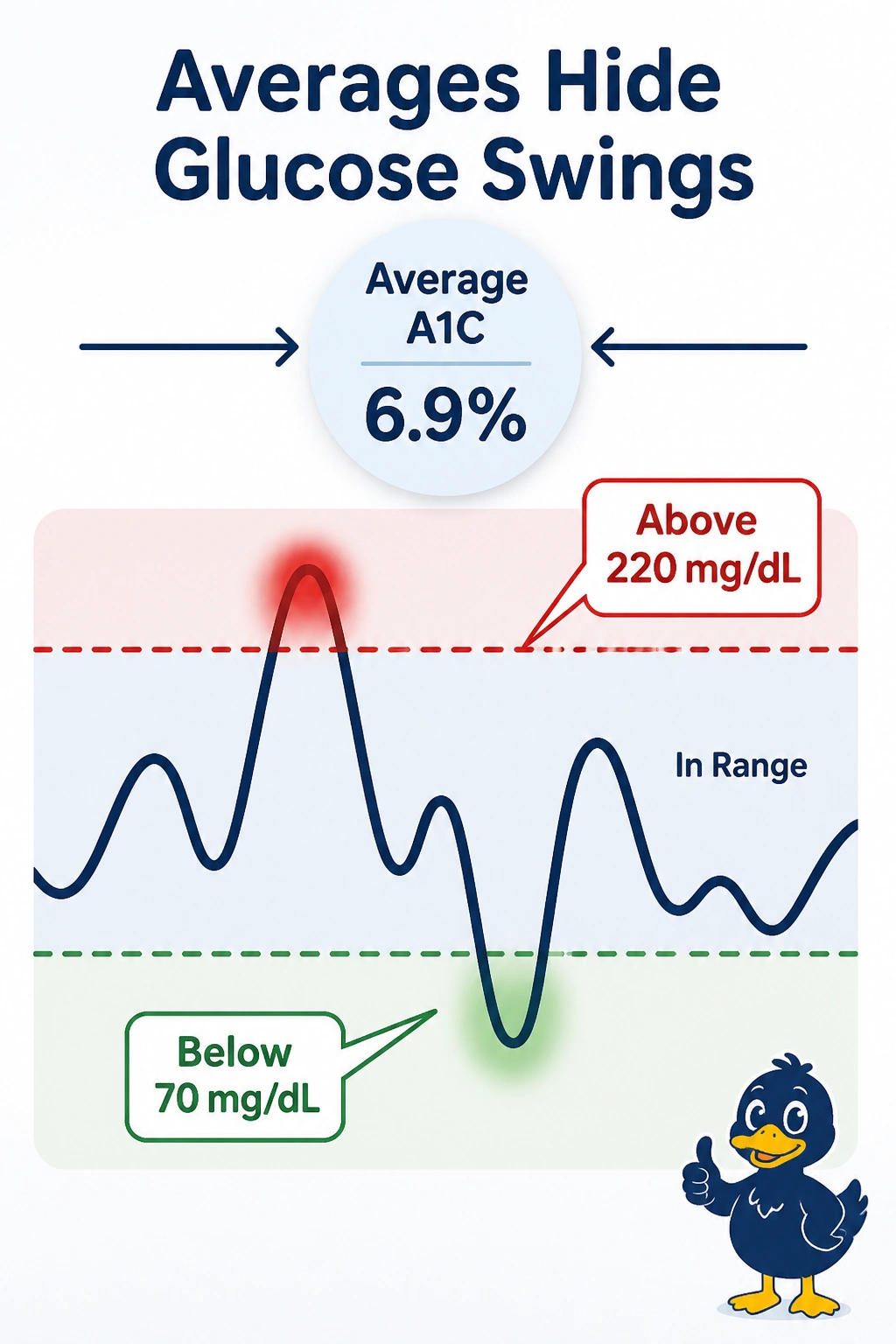
A 55-year-old with type 2 diabetes on basal-bolus insulin has an A1C of 6.9%, yet their continuous glucose monitor summary shows frequent overnight readings below 70 mg/dL balanced by afternoon spikes above 220 mg/dL. What does this pattern indicate to the specialist?
Select an answer to reveal the explanation.
Short Explanation
An A1C under 7% looks great on paper, like a calm lake on a postcard, until you look underneath and see wild waves. The trap is trusting that average number alone when your CGM data reveal dangerous overnight lows canceling out afternoon highs.
Full Explanation
This clinical picture demonstrates that "Marked glycemic variability and hypoglycemia are masked by the average A1C". Because A1C reflects mean blood glucose over roughly two to three months, frequent hypoglycemic excursions below 70 mg/dL mathematically offset postprandial hyperglycemia above 220 mg/dL, creating a misleadingly reassuring average while exposing the person to acute neuroglycopenia overnight and oxidative stress from wide glucose swings. Choosing to "The A1C confirms that overnight glucose levels are safe and stable" overlooks documented nocturnal hypoglycemia that requires timely clinical attention. Choosing to "An on-target A1C rules out a need to review Time Below Range." is unsafe because an average cannot exclude hypoglycemia, and Time Below Range and Time in Range from the ambulatory glucose profile must still guide safer regimen adjustments. Choosing to "The afternoon highs should be treated before evaluating the overnight lows." reverses safety priorities because hypoglycemia risk must be addressed promptly before intensifying therapy for hyperglycemia. Caveat: confirm nocturnal sensor lows with a fingerstick blood glucose check if compression artifacts from sleeping on the sensor are suspected. Operational check: review the Time Below Range percentage and overnight ambulatory glucose profile curve with the client and share findings with the prescriber.
Prefer to study offline? Printable PDF study book + test engine ($7.50, unofficial). These questions stay free here.