
A 64-year-old with longstanding type 2 diabetes and bilateral peripheral neuropathy asks how to care for their feet at home after noticing a minor callus. Which self-care practice should the diabetes care and education specialist recommend?
Select an answer to reveal the explanation.
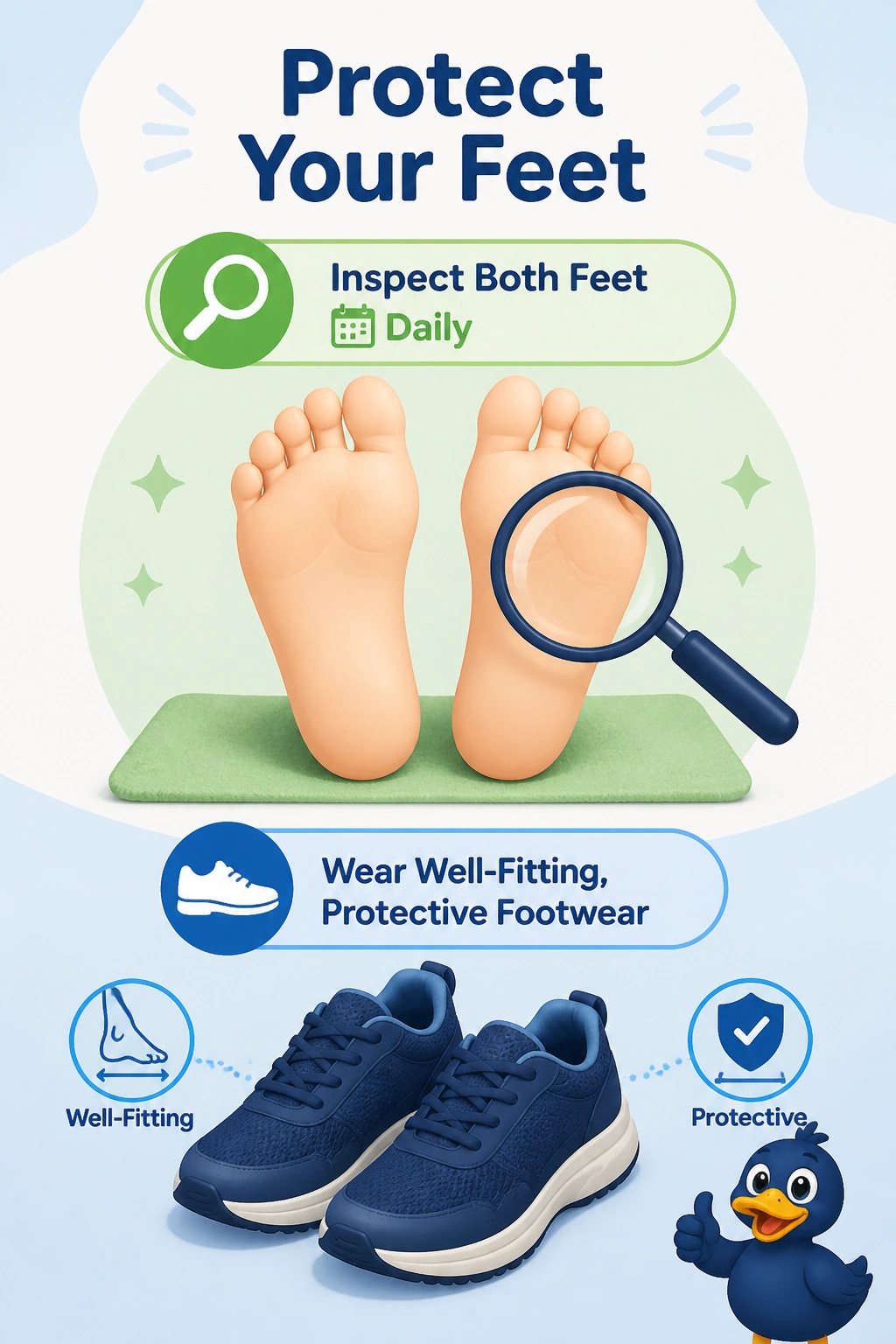
Short Explanation
When neuropathy numbs your feet, you cannot count on pain to warn you that a shoe is injuring your skin. Daily visual checks and well-fitting protective shoes help you catch damage early, rather than waiting for pain or an unusually long walk.
Full Explanation
For a person with diabetic peripheral neuropathy, the cornerstone of home prevention is to inspect both feet daily and wear well-fitting, protective footwear. Loss of protective sensation can mask pain from friction, pressure, or minor trauma, so daily visual inspection can catch redness, blisters, or cracks early. Properly fitted shoes help redistribute plantar pressure and shield against injury; a callus should be assessed by a trained professional rather than treated at home. Relying on pain during walking to identify shoe injury fails because neuropathy impairs pain perception, allowing tissue damage to continue unnoticed until ulceration occurs. Inspecting feet only after an unusually long walk also fails: ulcers can develop during routine activity and from unnoticed shoe pressure, so check daily, including the soles and between the toes. Applying over-the-counter medicated corn removers to soften thick skin is unsafe because harsh keratolytic acids can cause chemical burns and ulceration in neuropathic tissue. Caveat: if reduced vision or limited flexibility makes inspection difficult, use a long-handled mirror or ask a caregiver to help with daily checks. Practical check: have the client demonstrate checking the soles and between the toes, and inspect shoes for worn spots or tight toe boxes.
Prefer to study offline? Printable PDF study book + test engine ($7.50, unofficial). These questions stay free here.