
A hospitalized patient preparing for discharge with type 1 diabetes asks what to do with basal insulin if they develop a viral stomach illness and cannot eat solid food at home. Which instruction should the specialist emphasize?
Select an answer to reveal the explanation.
Short Explanation
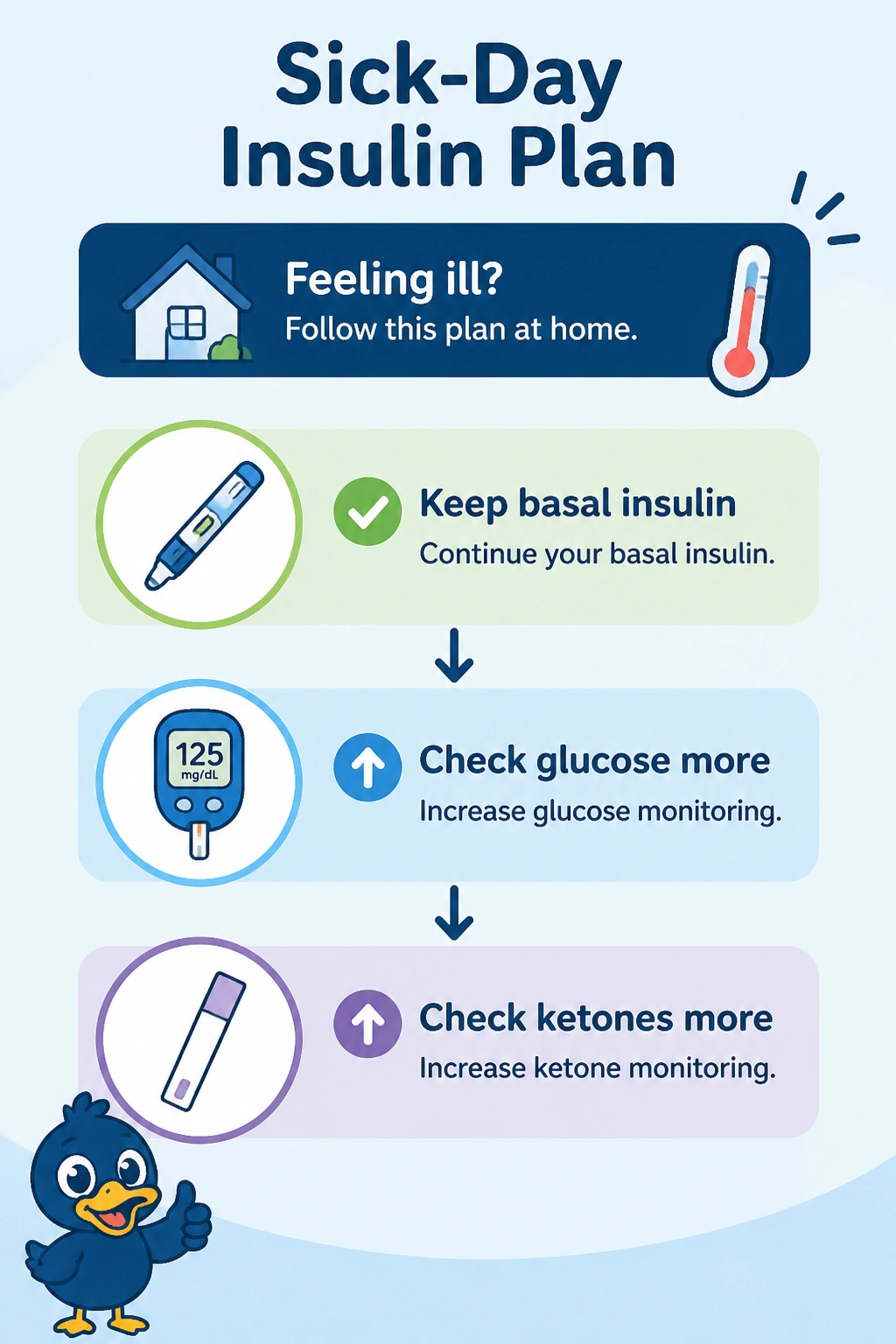
When someone cannot keep food down, the gut instinct is to skip insulin—and that is the exact trap you must help them avoid. Illness floods the body with stress hormones that raise blood sugar even during fasting, so basal insulin stays on board while monitoring ramps up.
Full Explanation
During acute illness in type 1 diabetes, the essential instruction is to "Continue basal insulin and increase glucose and ketone monitoring". Even when solid food intake drops, illness stimulates counterregulatory hormones—cortisol, epinephrine, and glucagon—that drive hepatic gluconeogenesis and lipolysis; withholding basal insulin removes the brake on ketogenesis and rapidly precipitates diabetic ketoacidosis. Basal dose adjustment may be needed under the sick-day plan, but basal insulin must not simply be stopped. Choosing to "Hold all basal insulin doses until normal solid food intake resumes" treats basal insulin as if it only covers meals rather than continuous metabolic needs. Choosing to "Monitor glucose only at the usual times without adding ketone checks during illness" leaves monitoring at baseline when risk is highest, missing rising hyperglycemia and early ketosis. Choosing to "Use hydration alone to manage rising glucose and ketones while waiting for appetite to return" relies on fluids alone, which cannot suppress ketogenesis or replace insulin, monitoring, and correction guidance. Caveat: mealtime rapid-acting doses may need adjustment based on carbohydrate intake and sick-day correction orders.
Prefer to study offline? Printable PDF study book + test engine ($7.50, unofficial). These questions stay free here.