
A 54-year-old man with a 10-year history of type 2 diabetes and hypertension mentions briefly at the end of a routine assessment that he has been feeling distant from his spouse lately. Which assessment approach should the diabetes care and education specialist take next?
Select an answer to reveal the explanation.
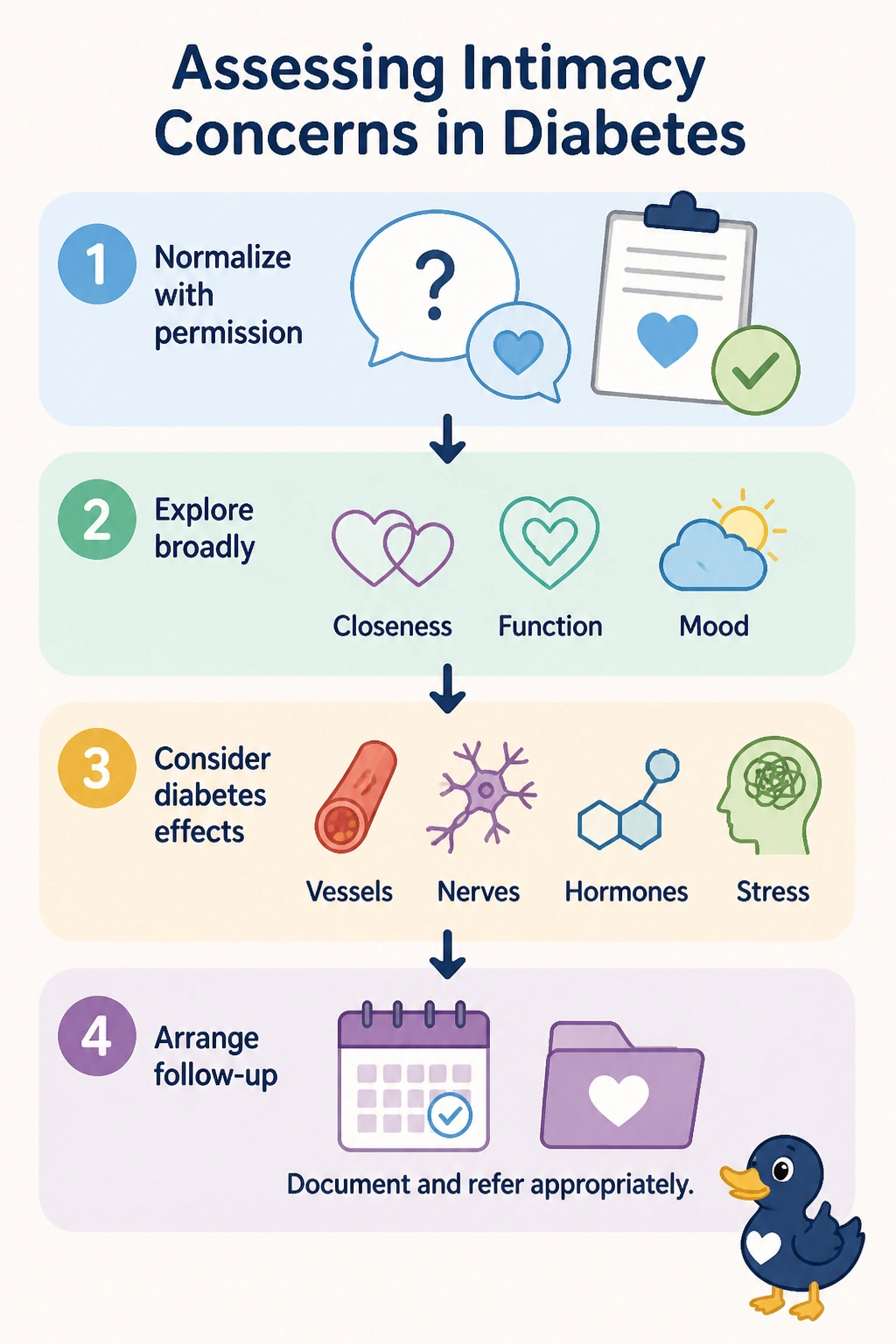
Short Explanation
You can normalize this topic with permission so you don't assume distance means one specific problem. You open the door with a gentle, open-ended question and explore relationship, mood and physical factors together.
Full Explanation
Diabetes frequently affects sexual function through microvascular disease, autonomic neuropathy, hormonal shifts and psychosocial stress, so normalizing sexual health as routine diabetes care with permission is essential. Asking 'Would you like to discuss whether emotional closeness, sexual function or other concerns are contributing?' avoids assuming that feeling distant from a spouse establishes erectile dysfunction and invites open-ended exploration of relationship, mood and physical factors. Erectile dysfunction can also serve as an early marker of endothelial dysfunction and cardiovascular risk, making timely, nonjudgmental assessment vital with medical follow-up as needed. Deferring discussion until explicit request for urology referral misses the opportunity to screen, because many adults feel too embarrassed to initiate the topic themselves. Focusing exclusively on A1C trends and blood pressure logs to avoid embarrassment leaves an important quality-of-life and vascular cue unaddressed. Assuming the concern is solely medication-related before asking about relationship, mood or physical factors prematurely narrows the assessment and risks missing depression, relational strain, neuropathy, vascular disease or hormonal issues that require a broader workup.
Prefer to study offline? Printable PDF study book + test engine ($7.50, unofficial). These questions stay free here.