
A 63-year-old woman with type 2 diabetes is referred for diabetes self-management education, and the clinic offers a smartphone app for tracking meals, activity, and blood glucose. Before recommending the app as her primary tracking tool, which learning assessment should the diabetes care and education specialist conduct?
Select an answer to reveal the explanation.
Short Explanation
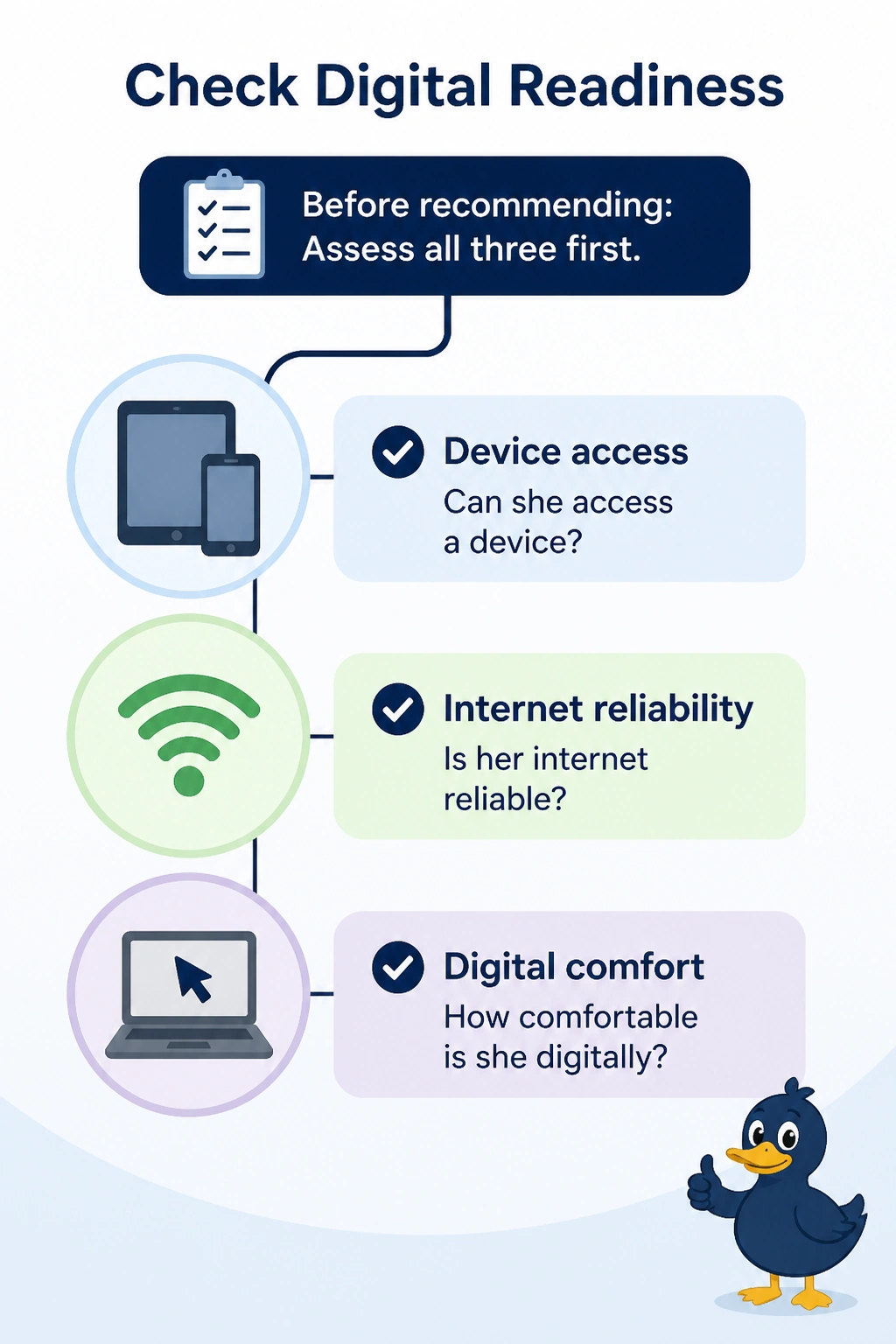
The slickest diabetes app only helps if it fits your daily life and phone setup. Checking your technology access and digital comfort up front helps you avoid frustrating roadblocks and choose a tracking tool that works for you.
Full Explanation
Technology-enabled diabetes tools can improve self-monitoring and data sharing, but only when they align with a person’s resources, skills, and preferences. Assessing her device access, internet reliability, and digital comfort helps ensure the tracking method is feasible, prevent technology-related frustration, and identify whether paper logs or simpler alternatives may be needed. Requiring her to download and configure the app before scheduling intake creates an unnecessary barrier to care if she lacks a compatible smartphone, data plan, or technical support. Testing her ability to calculate carbohydrate-to-insulin ratios without a calculator assesses advanced numeracy, which is unrelated to basic app readiness or her current type 2 diabetes tracking needs. Selecting an app for its tracking features before checking usability prioritizes functions over fit and risks recommending a tool she cannot navigate, afford, or sustain. One caveat is that smartphone ownership alone does not establish readiness; visual acuity, touch-screen dexterity, and language availability also matter. As a practical check, ask her to open a familiar app on her phone during the visit or confirm whether she prefers a large-print paper logbook.
Prefer to study offline? Printable PDF study book + test engine ($7.50, unofficial). These questions stay free here.