
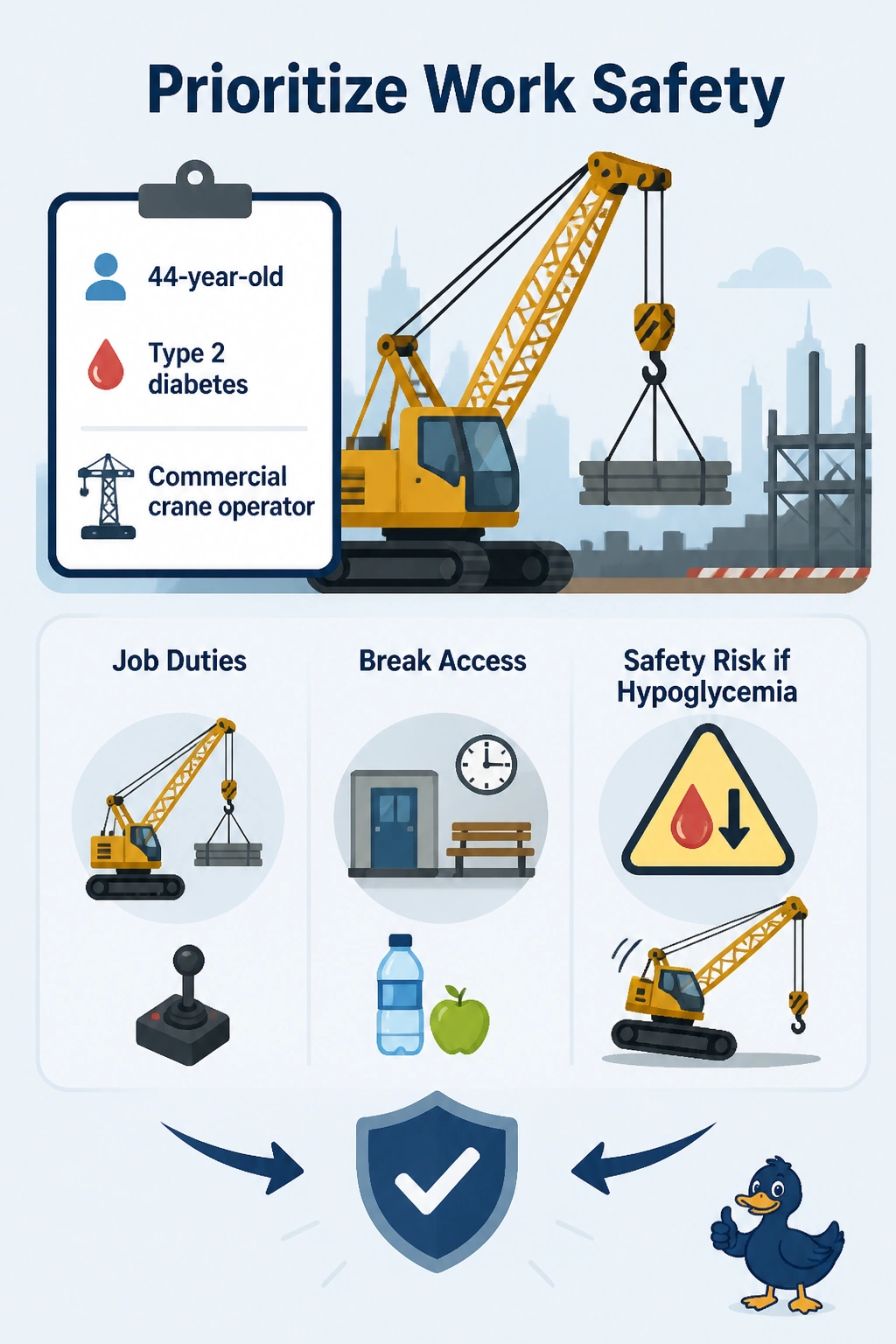
A 44-year-old commercial crane operator with type 2 diabetes is referred for diabetes education after his primary care clinician discussed adding a sulfonylurea or basal insulin to metformin. Which assessment area should the diabetes care and education specialist prioritize during the intake interview?
Select an answer to reveal the explanation.
Short Explanation
When someone operates heavy machinery high above the ground, safety comes before any handout or meal-plan preference. The trap is jumping straight into routine education topics before assessing how your patient's job duties and break schedule interact with hypoglycemia risk. Identifying safety-sensitive work early helps the team tailor a safe monitoring and treatment plan.
Full Explanation
Before initiating or teaching a regimen that carries hypoglycemia risk, such as a sulfonylurea or insulin, the specialist must assess occupational safety. Prioritizing His specific job duties, break access, and safety-sensitive risks if hypoglycemia occurs at work reveals whether the person can step away to check glucose, carry fast-acting carbohydrates, or face regulatory restrictions for commercial equipment operation. If hypoglycemia occurred while operating a crane, even mild cognitive slowing could endanger the worker and coworkers. Whether his employer offers an on-site cafeteria with low-carbohydrate meal options during weekday shifts is secondary to immediate workplace safety and break access. Whether he prefers reading printed nutrition booklets or watching short educational videos on a tablet is a helpful learning assessment later, but it does not address acute occupational hazard. Whether his extended family members have a history of microvascular complications from longstanding diabetes may inform health beliefs, yet it does not guide immediate hypoglycemia safety at work. As a caveat, some safety-sensitive roles have specific medical certification rules regarding insulin or severe hypoglycemia. For an operational check, document the patient's job demands, ability to carry rescue glucose on the job, and communicate any safety concerns promptly with the prescribing clinician.
Prefer to study offline? Printable PDF study book + test engine ($7.50, unofficial). These questions stay free here.