
A 75-year-old man with type 2 diabetes arrives for an in-person group diabetes education class, leans forward repeatedly during check-in, and asks the specialist to repeat basic registration questions. Which assessment step should the diabetes care and education specialist take before the class begins?
Select an answer to reveal the explanation.
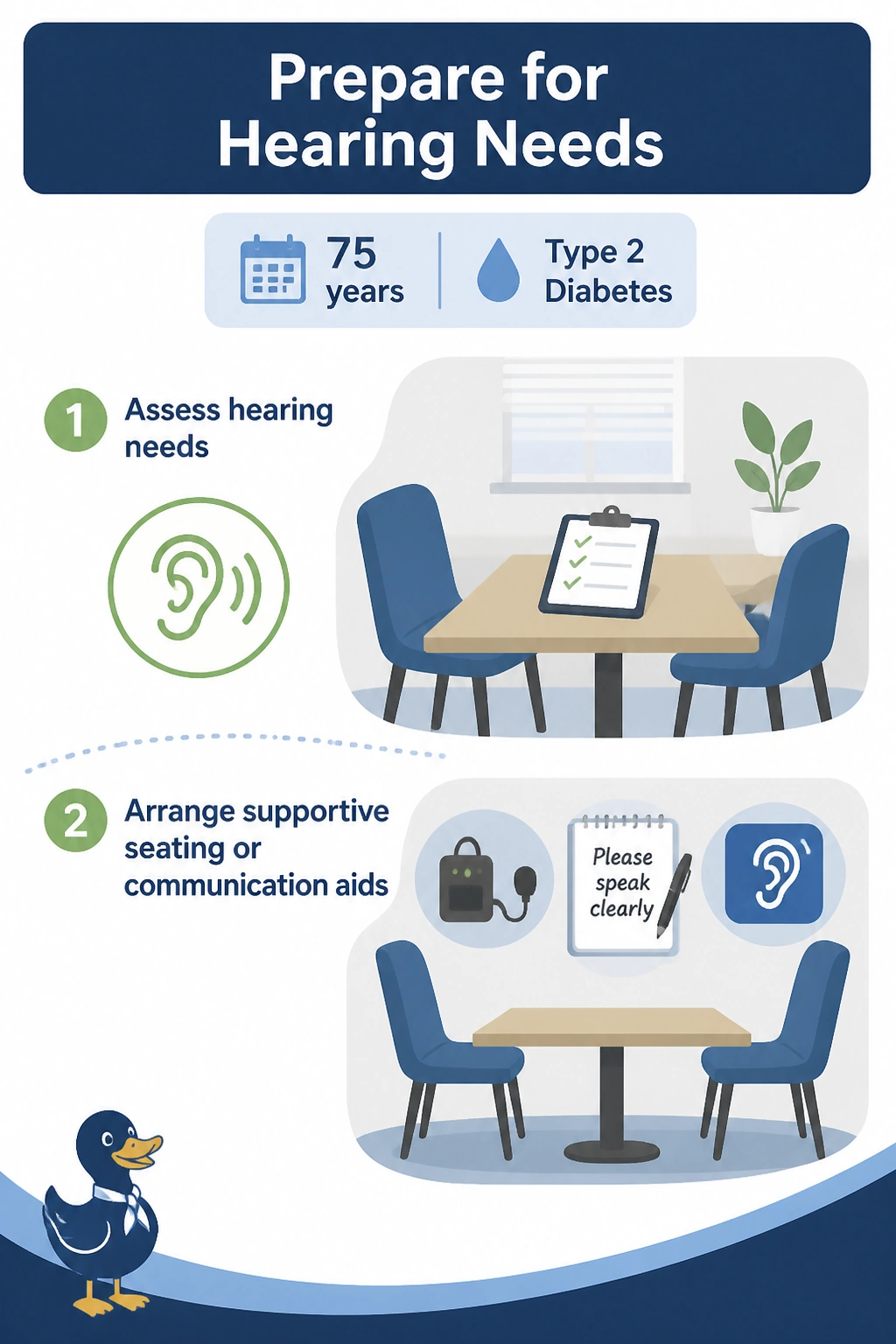
Short Explanation
When someone leans in and asks you to repeat simple check-in questions, you have an assessment cue you should not brush past. Assessing his hearing needs and arranging supportive seating or communication aids before class can help him stay fully engaged. Giving him a transcript without asking about his supports or seating him at the back would miss the chance to support his participation.
Full Explanation
An effective learning assessment includes identifying sensory barriers before instruction begins: assess his hearing needs and arrange supportive seating or communication aids. Unaddressed hearing loss in a group setting can lead to missed safety instructions, frustration, and poor retention of self-management information. Simple adaptations—such as asking whether he uses hearing aids, seating him near the educator with a clear view of facial expressions for lip-reading, minimizing background noise, and providing clear visual handouts—can preserve group participation and dignity. Giving him a written transcript without asking which hearing supports he uses skips individualized assessment and may provide a format he cannot use effectively without confirming preferences. Seating him at the back where there is less distraction from the instructor increases distance from the speaker, reduces ability to lip-read, and exposes him to more background noise. Asking another class participant to sit beside him and interpret the content compromises privacy, burdens another learner, and risks inaccurate relay of clinical information. Caveat: if severe hearing loss still limits group comprehension despite accommodations, individual sessions with assistive listening or captioning tools may be appropriate. Practical check: discreetly ask about hearing preferences during check-in, then use teach-back to confirm that key concepts were heard and understood.
Prefer to study offline? Printable PDF study book + test engine ($7.50, unofficial). These questions stay free here.