
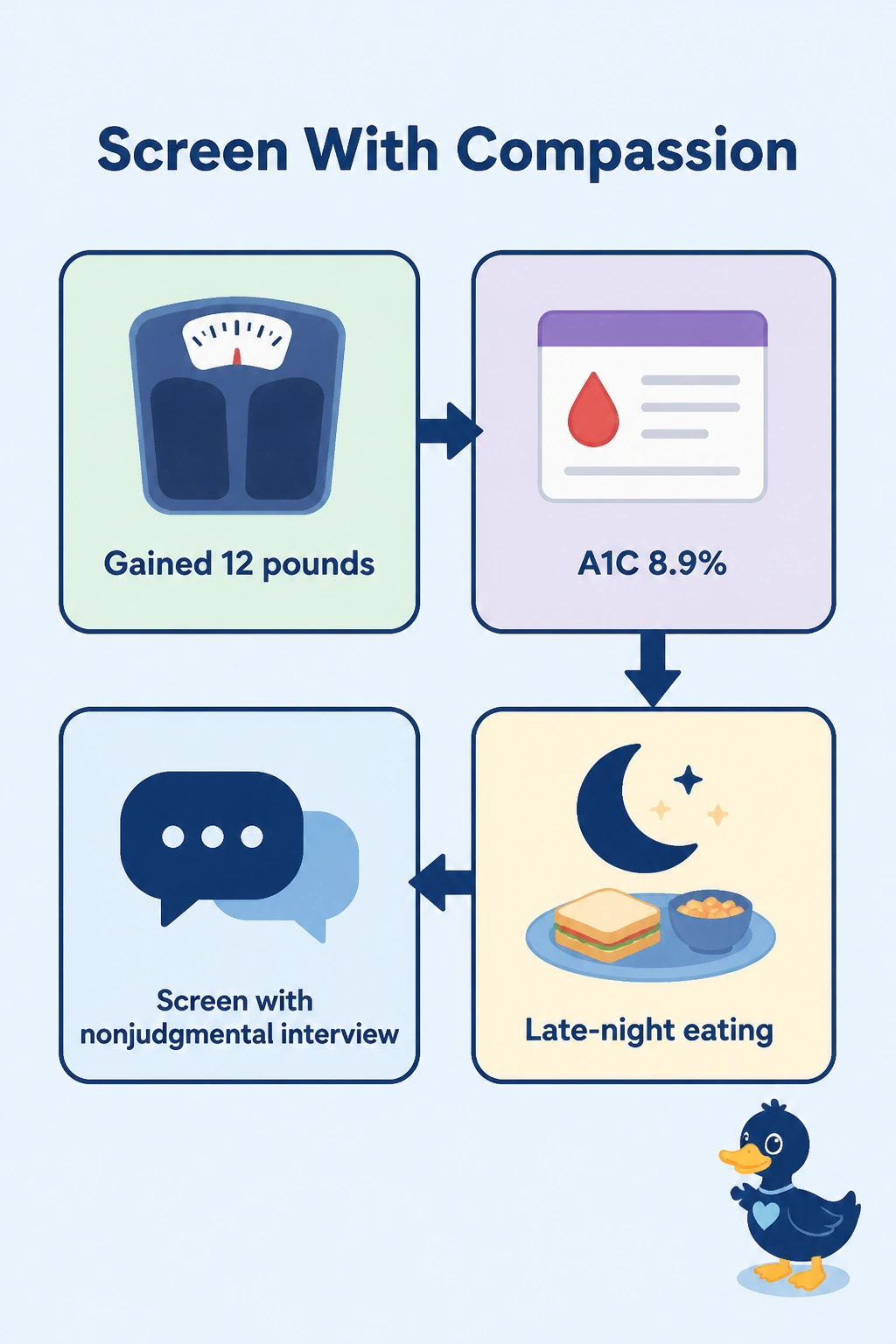
A 49-year-old man with type 2 diabetes has an A1C of 8.9% and gained 12 pounds over six months despite reporting balanced daytime meals, and he mentions feeling out of control while eating large amounts of food late at night. Which assessment priority should the diabetes care and education specialist address?
Select an answer to reveal the explanation.
Short Explanation
When your daytime meals seem balanced but your weight and A1C keep rising, distress around eating may be part of the picture. Rather than focusing on portion control, you can gently screen for binge-eating and night-eating behaviors with a nonjudgmental interview. This opens the door to meaningful behavioral support.
Full Explanation
Adults with type 2 diabetes experience higher rates of disordered eating, particularly binge-eating and night-eating patterns, which may appear as unexplained weight gain, elevated A1C, and a feeling of loss of control around food. The priority is screening for binge-eating and night-eating behaviors using a nonjudgmental interview: shame and stigma can prevent people from volunteering these episodes unless you ask empathetically. Evaluating for celiac disease malabsorption with a food diary does not fit this presentation, since malabsorption typically causes weight loss, bloating, and erratic lows rather than steady weight gain. Checking for gastroparesis by asking about early satiety addresses delayed gastric emptying, which causes fullness after small bites rather than large late-night intake. Testing for latent autoimmune diabetes in adults with autoantibodies is misaligned because LADA typically presents in leaner adults with progressive insulin deficiency. As an exam caveat, avoid framing questions around willpower or dieting rules, which can worsen binge cycles. As a practical check, review validated screening questions and confirm a warm referral pathway to behavioral health and a registered dietitian nutritionist.
Prefer to study offline? Printable PDF study book + test engine ($7.50, unofficial). These questions stay free here.