
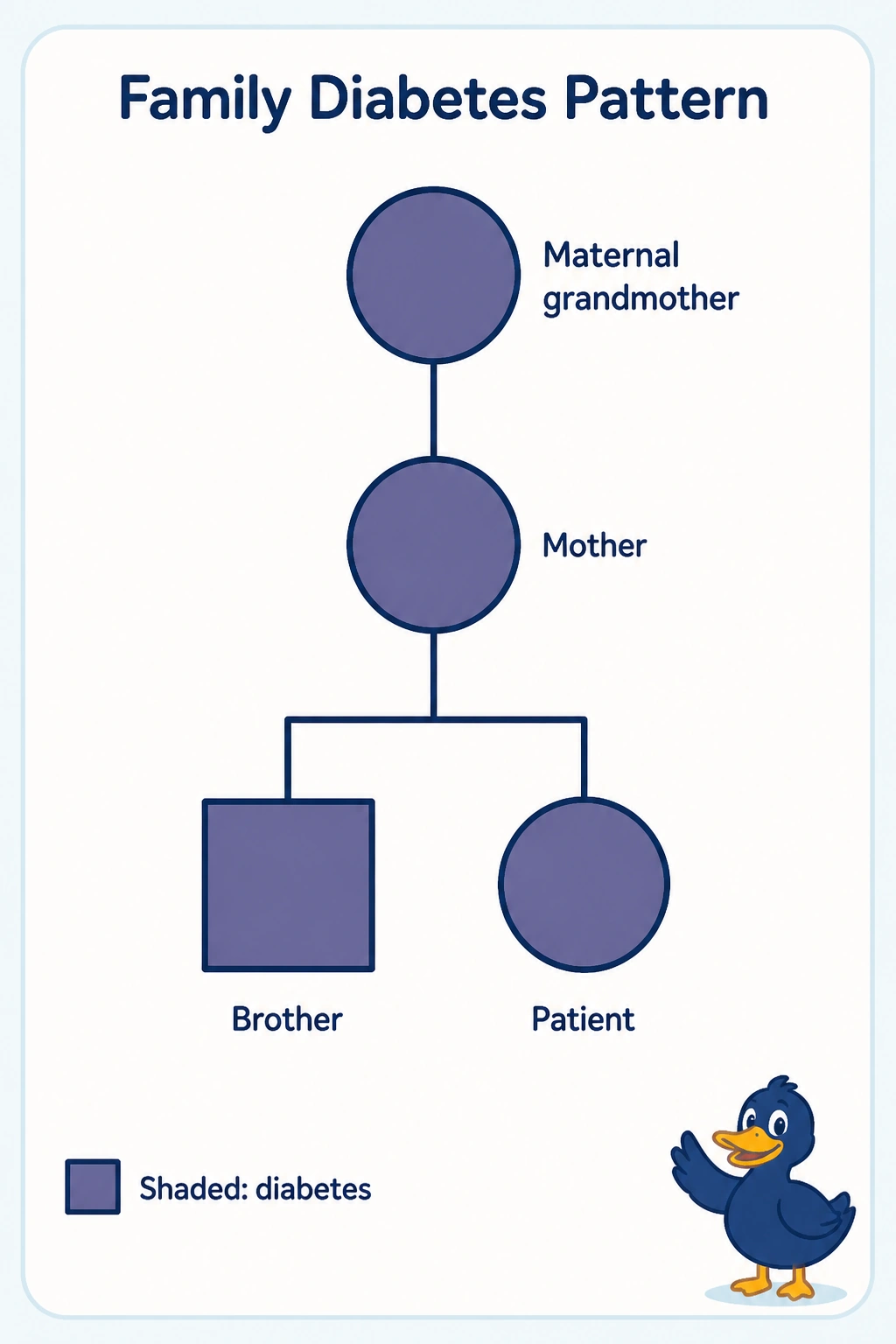
A 26-year-old woman with a body mass index of 21 kg/m2 was recently diagnosed with type 2 diabetes and reports that her mother, maternal grandmother, and brother all developed mild diabetes in their twenties without needing insulin. Which assessment priority should the diabetes care and education specialist pursue?
Select an answer to reveal the explanation.
Short Explanation
When you see mild diabetes in a young, lean adult across several generations, your assessment radar should light up. That autosomal dominant pattern suggests monogenic diabetes rather than typical type 2 diabetes, so exploring the family history can help the care team pursue accurate testing.
Full Explanation
The priority is to explore the multi-generational family diabetes history and potential monogenic diabetes cues. Monogenic diabetes, often called maturity-onset diabetes of the young (MODY), results from a single-gene defect affecting beta-cell function. It typically presents before age 25 to 35 in non-obese individuals, with an autosomal dominant family history across multiple generations and negative islet autoantibodies. Recognizing these cues supports referral for genetic evaluation, which can change treatment substantially: some subtypes respond well to low-dose sulfonylureas or require no medication. Screening immediately for severe insulin resistance and metabolic syndrome misses the lean body habitus and strong single-gene inheritance pattern. Evaluating for steroid-induced hyperglycemia from recent asthma inhalers overlooks the multi-generational family history; inhaled corticosteroids rarely cause sustained familial diabetes. Assessing for acute pancreatitis and chronic alcohol-related malabsorption points toward secondary pancreatogenic diabetes, not an inherited pattern of mild hyperglycemia. Caveat: monogenic diabetes is often misclassified as type 1 or type 2 diabetes, delaying targeted care. Practical check: document a three-generation family pedigree, including age at diagnosis and insulin use, and share it with the prescribing clinician.
Prefer to study offline? Printable PDF study book + test engine ($7.50, unofficial). These questions stay free here.