
A 63-year-old man newly prescribed a mealtime insulin pen tells his diabetes care and education specialist during intake that he learns best by practicing tasks with his hands rather than reading printed booklets. Which assessment finding should guide the specialist's teaching plan?
Select an answer to reveal the explanation.
Short Explanation
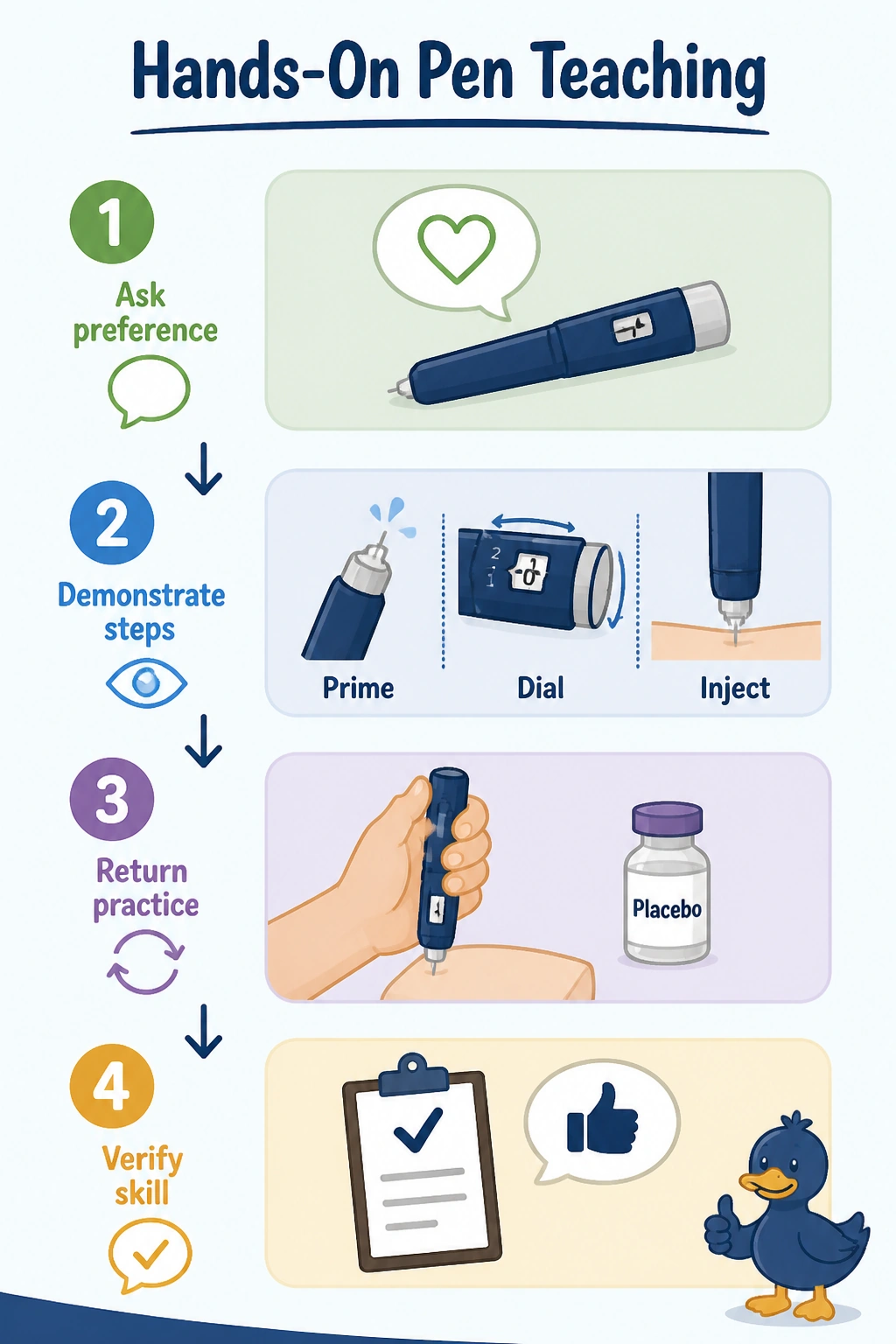
You avoid wasted handouts when you listen to how he prefers to practice a new skill. Respect his preference and use demonstration with return demonstration to verify the actual injection skill; do not assign a fixed learning-style category.
Full Explanation
During intake the patient clearly states he prefers practicing with his hands over reading booklets. Respect his preference and use demonstration with return demonstration to verify the actual injection skill; do not assign a fixed learning-style category. For a practical psychomotor task such as pen priming, dialing, and injecting, live demonstration with a placebo pen followed by supervised return demonstration and teach-back confirms safe technique regardless of style labels. Assuming underlying cognitive impairment requiring full caregiver-managed injections confuses a stated communication preference with cognitive decline and inappropriately removes autonomy without evidence of impaired decision-making or function. Concluding lack of readiness needing motivational interviewing misreads active engagement as resistance; describing how he learns best shows participation, not amotivation. Requiring written carbohydrate worksheets before practicing injection technique prioritizes literacy-based work that he said is less helpful and delays mastery of the urgent safety skill of correct insulin dosing and administration. Visual acuity, manual dexterity, and health literacy still require separate assessment to ensure safe dosing, but they do not override honoring his stated preference for hands-on training.
Prefer to study offline? Printable PDF study book + test engine ($7.50, unofficial). These questions stay free here.