
During an initial assessment, a 22-year-old woman with obesity and irregular menstrual cycles presents for prediabetes education, and the specialist notices dark, velvety skin patches along the back of her neck and axillae. Which underlying clinical pattern should the specialist recognize and address in the assessment?
Select an answer to reveal the explanation.
Short Explanation
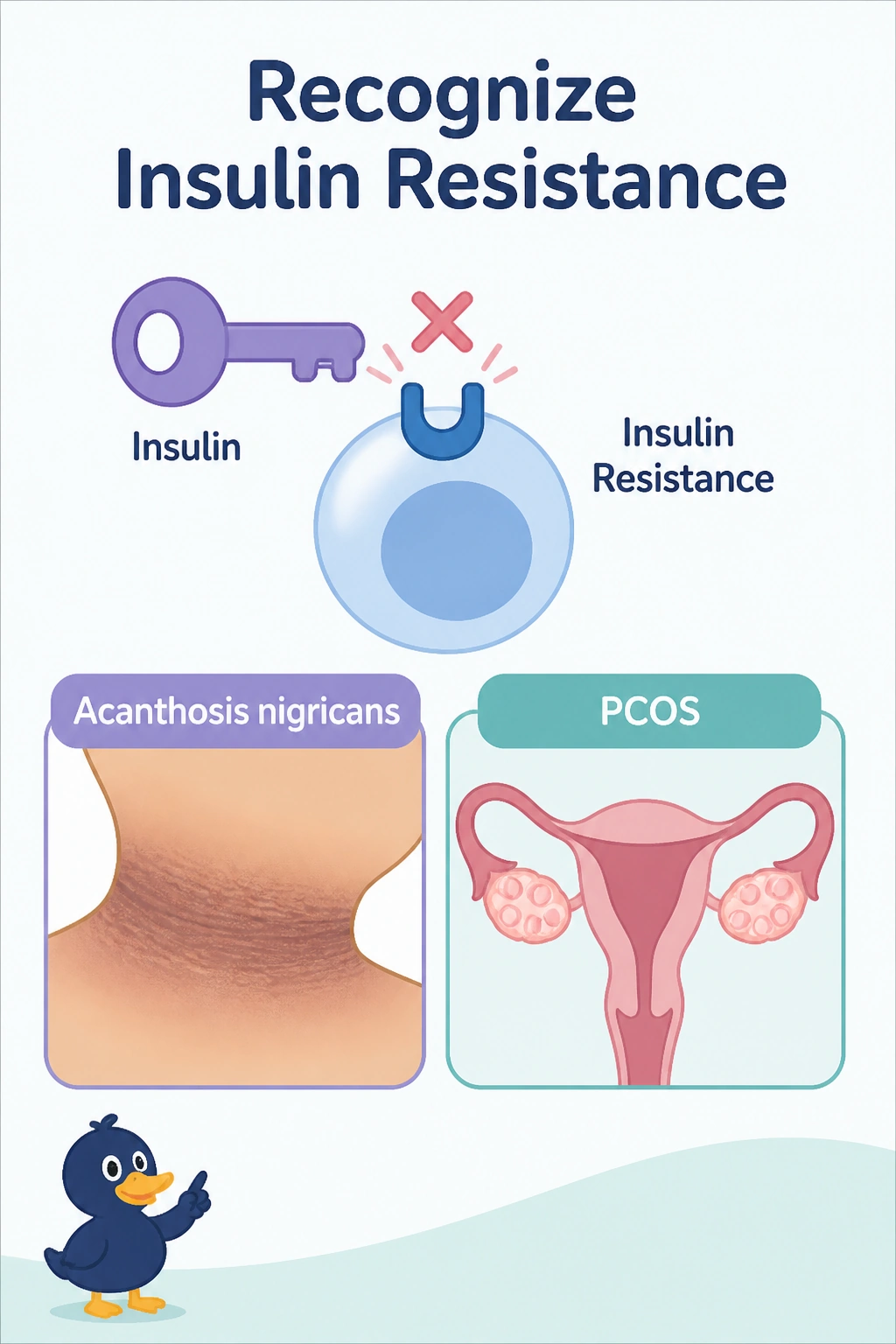
Those dark, velvety skin folds are a visible clue to what may be happening with your patient’s metabolism. You should recognize insulin resistance associated with acanthosis nigricans and PCOS, connecting her skin changes with her irregular cycles and metabolic risk. Catching this pattern early helps guide your assessment.
Full Explanation
Acanthosis nigricans appears as hyperpigmented, velvety plaques in flexural areas such as the posterior neck and axillae. Hyperinsulinemia stimulates epidermal keratinocytes and dermal fibroblasts, so obesity, irregular menses, and these plaques point to insulin resistance associated with acanthosis nigricans and PCOS. Autoimmune beta-cell destruction consistent with early type 1 diabetes is a poorer fit: type 1 diabetes involves insulin deficiency, not the hyperinsulinemia that drives these skin changes. Chronic glucocorticoid deficiency requiring urgent adrenal evaluation is also not the best explanation; primary adrenal insufficiency can cause diffuse mucocutaneous hyperpigmentation, unlike the characteristic velvety plaques of acanthosis nigricans. A localized fungal skin infection unrelated to metabolic health status does not account for this pattern or its association with cardiometabolic risk and type 2 diabetes progression. This pattern commonly accompanies insulin resistance, but evaluate its cause and do not diagnose PCOS from irregular cycles and acanthosis alone. It may improve as insulin sensitivity improves, so education should focus on metabolic health rather than harsh skin scrubbing. As a practical check, document the distribution, review menstrual and family history, and verify that the primary care team has ordered appropriate glycemic and lipid screening.
Prefer to study offline? Printable PDF study book + test engine ($7.50, unofficial). These questions stay free here.