
A 59-year-old truck driver with type 2 diabetes has an A1C of 8.9% and reports missing his midday oral medication several times a week because his delivery schedule leaves no predictable break, though he takes his morning and bedtime pills consistently. Which assessment factor is most important to document for the care team?
Select an answer to reveal the explanation.
Short Explanation
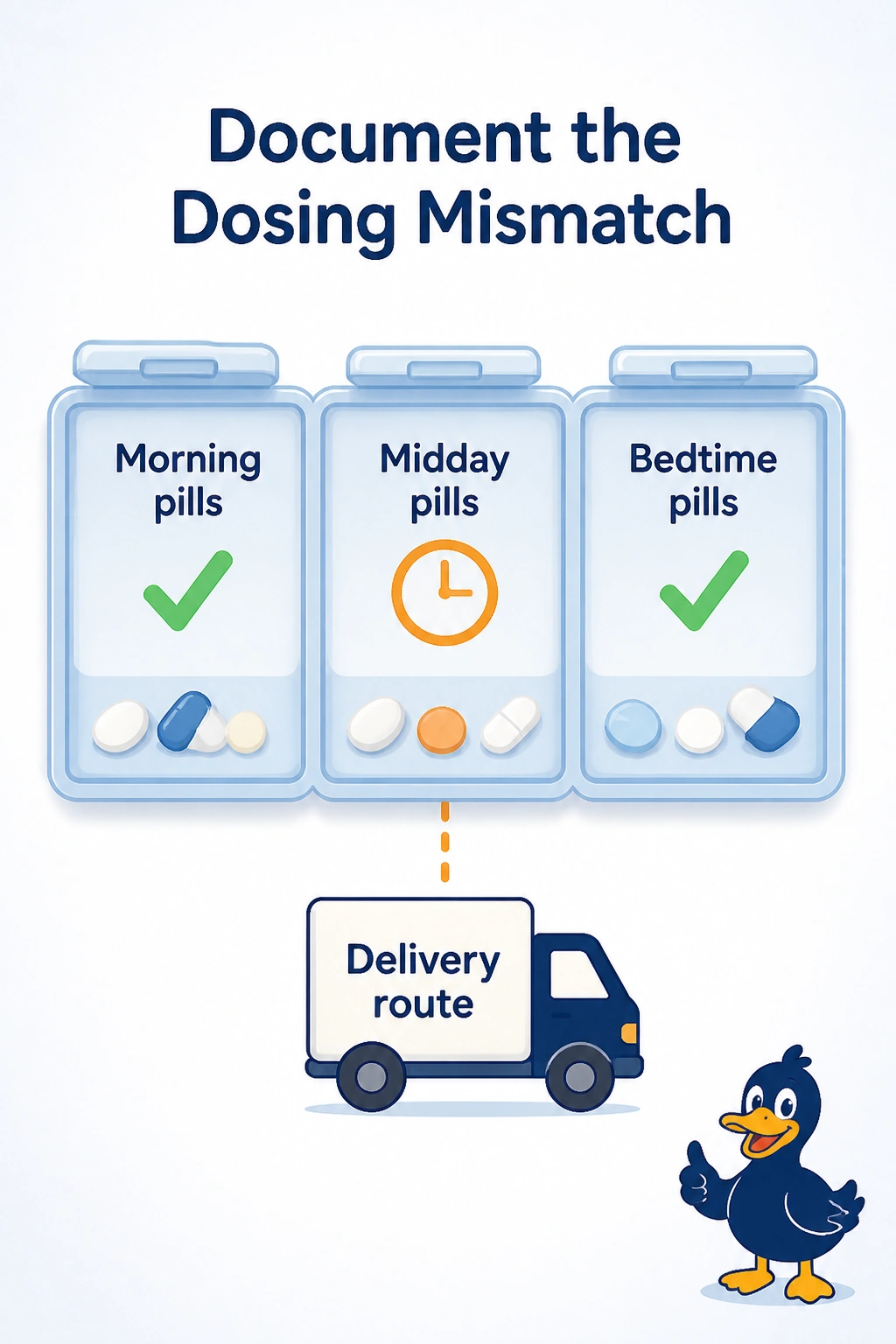
When someone hits their morning and bedtime doses like clockwork but misses midday pills, you are looking at a scheduling mismatch, not a memory problem. Documenting how a midday dose collides with driving routes gives the prescriber a clear path to simplify the regimen. The trap is labeling a practical work barrier as cognitive decline or poor literacy.
Full Explanation
Regimen complexity and midday dosing mismatch with his work schedule accurately captures the root barrier: the patient adheres reliably when at home but struggles with a midday dose during unpredictable driving shifts, which supports discussing regimen simplification with the prescriber. Suspected cognitive decline affecting his ability to recall any medication doses is unsupported because he consistently takes his morning and bedtime medications without confusion. Intentional medication refusal driven by fear of hypoglycemia does not fit his report that missed doses stem from lack of a predictable midday break rather than fear of low glucose. Lack of basic health literacy regarding how oral diabetes pills work misattributes a logistical occupational barrier to knowledge deficit without evidence of misunderstanding. Caveat: always verify whether cost or meal timing also contributes to missed midday doses before recommending regimen changes. Operational check: review his typical daily route times and share a concise summary with the prescriber to explore once-daily or twice-daily alternatives.
Prefer to study offline? Printable PDF study book + test engine ($7.50, unofficial). These questions stay free here.