
During a private annual diabetes assessment, a 52-year-old man with type 2 diabetes for eight years and mild hypertension hesitates when asked about overall well-being, then mentions new difficulty maintaining erections over the past six months. Which assessment step should the diabetes care and education specialist prioritize?
Select an answer to reveal the explanation.
Short Explanation
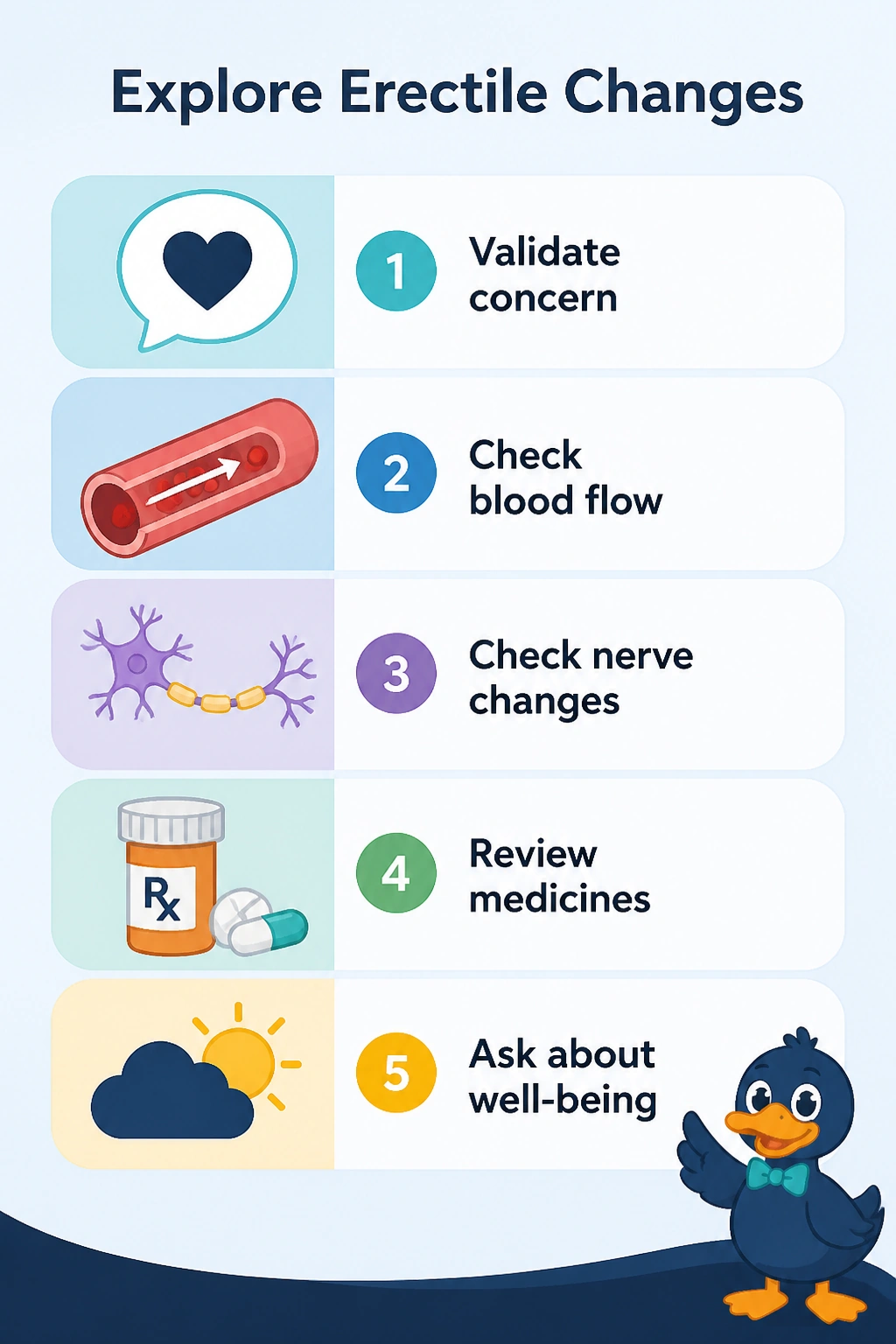
You can support him by validating his concern and exploring vascular, neuropathic, medication, and psychosocial contributors. Avoid attributing the difficulty to performance anxiety alone, focusing only on antihypertensive effects, or delaying the sexual-health assessment until the next annual visit.
Full Explanation
Erectile dysfunction in diabetes can reflect endothelial dysfunction, microvascular disease, autonomic neuropathy, medication side effects, or diabetes-related distress. Exploring vascular, neuropathic, medication, and psychosocial contributors while validating his concern supports person-centered care and gathers useful information for the interprofessional team. Attributing the problem to performance anxiety without reviewing medications or vascular risk oversimplifies a multifactorial symptom and may miss medication causes and cardiovascular risk. Focusing only on antihypertensive adverse effects overlooks neuropathic, vascular, and psychosocial contributors. Addressing glucose targets first and postponing the sexual-health assessment until the next annual visit delays evaluation and wrongly suggests that glycemic control alone resolves erectile dysfunction. As a clinical caveat, new erectile dysfunction warrants communication with the primary care clinician because it can signal underlying cardiovascular disease or hypogonadism. As a practical check, document the symptom timeline, review current antihypertensives or antidepressants, and coordinate follow-up with his prescriber.
Prefer to study offline? Printable PDF study book + test engine ($7.50, unofficial). These questions stay free here.