
A 76-year-old woman with type 2 diabetes who lives alone after her spouse died is starting basal insulin, and she mentions she rarely sees neighbors or family. Which psychosocial assessment priority should the diabetes care and education specialist address first?
Select an answer to reveal the explanation.
Short Explanation
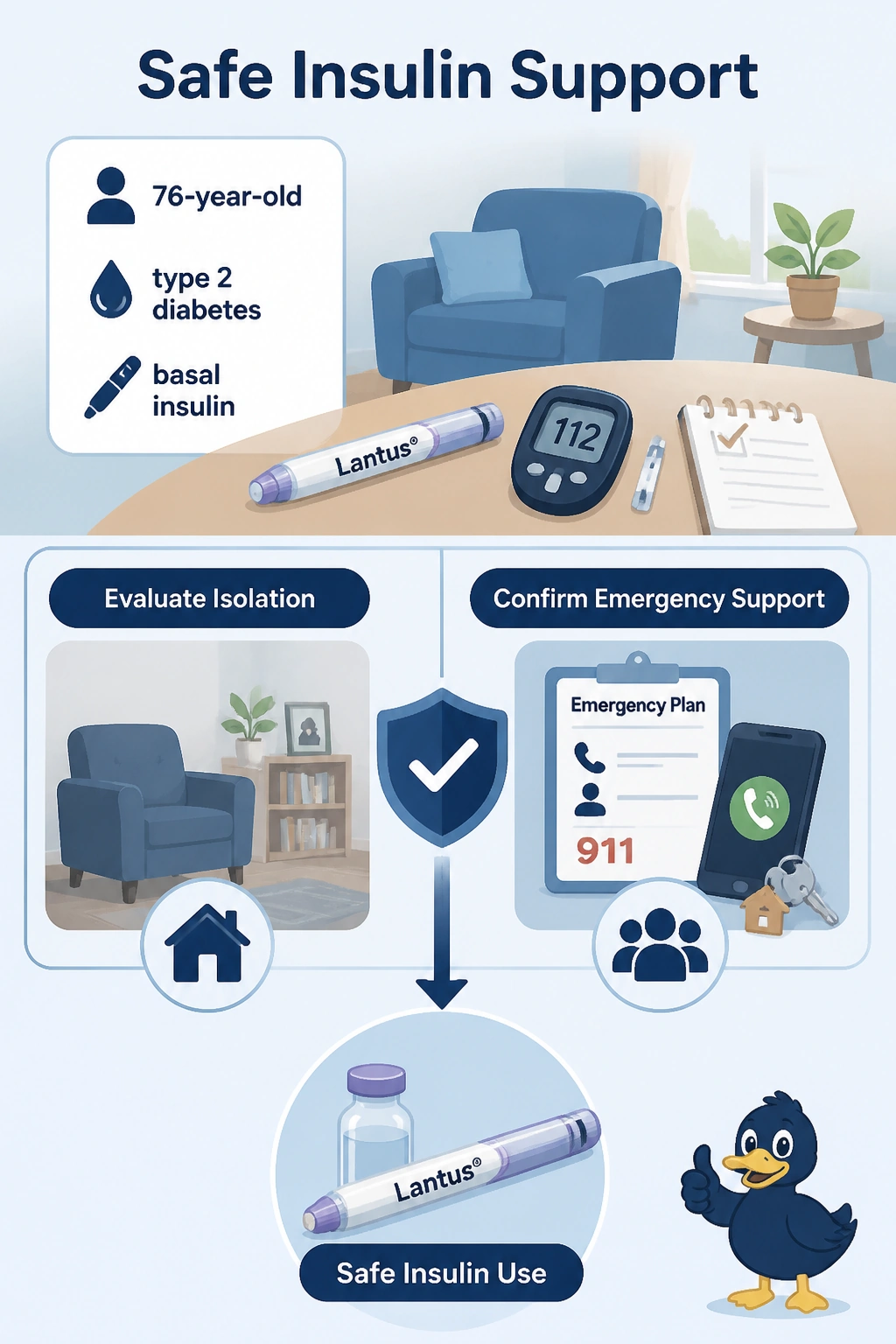
When you start basal insulin while living alone, knowing who can check on you matters for safe care. Make social isolation and emergency support your first priority, so you have a plan if hypoglycemia leaves you unable to seek help.
Full Explanation
Evaluating social isolation and emergency support for safe insulin use is the priority because person-centered assessment considers social determinants of health and hypoglycemia safety in older adults. Bereavement and living alone increase the risk of unrecognized severe hypoglycemia, missed doses, and depression, so identify emergency contacts, community check-ins, and an accessible rescue plan before therapy intensifies. Measuring her serum vitamin B12 level before her first basal insulin dose relates to long-term metformin use, not immediate insulin safety at home. Exploring meal preferences before identifying who could assist during hypoglycemia puts nutrition details ahead of urgent safety planning, although dietary input will matter later for overall care. Assessing long-term weight goals before discussing emergency support at home emphasizes a future outcome rather than the immediate need for someone to check on her during a low. As an exam caveat, explore social isolation gently without assuming an older adult cannot live independently. As a practical check, ask whom she could call in an urgent situation and document a concrete emergency contact and follow-up check-in schedule.
Prefer to study offline? Printable PDF study book + test engine ($7.50, unofficial). These questions stay free here.