
A 57-year-old man with type 2 diabetes arrives for an initial education visit with an A1C of 8.8%, elevated blood pressure, daily cigarette use, and knee pain. He looks overwhelmed by the long referral list and says he does not know where to start. What should the diabetes care and education specialist assess first?
Select an answer to reveal the explanation.
Short Explanation
When someone feels buried under four clinical problems at once, handing them a giant checklist only adds weight. The trap is letting the chart dictate the opening move instead of listening to the person in front of you. Assessing his top priority first builds momentum and trust.
Full Explanation
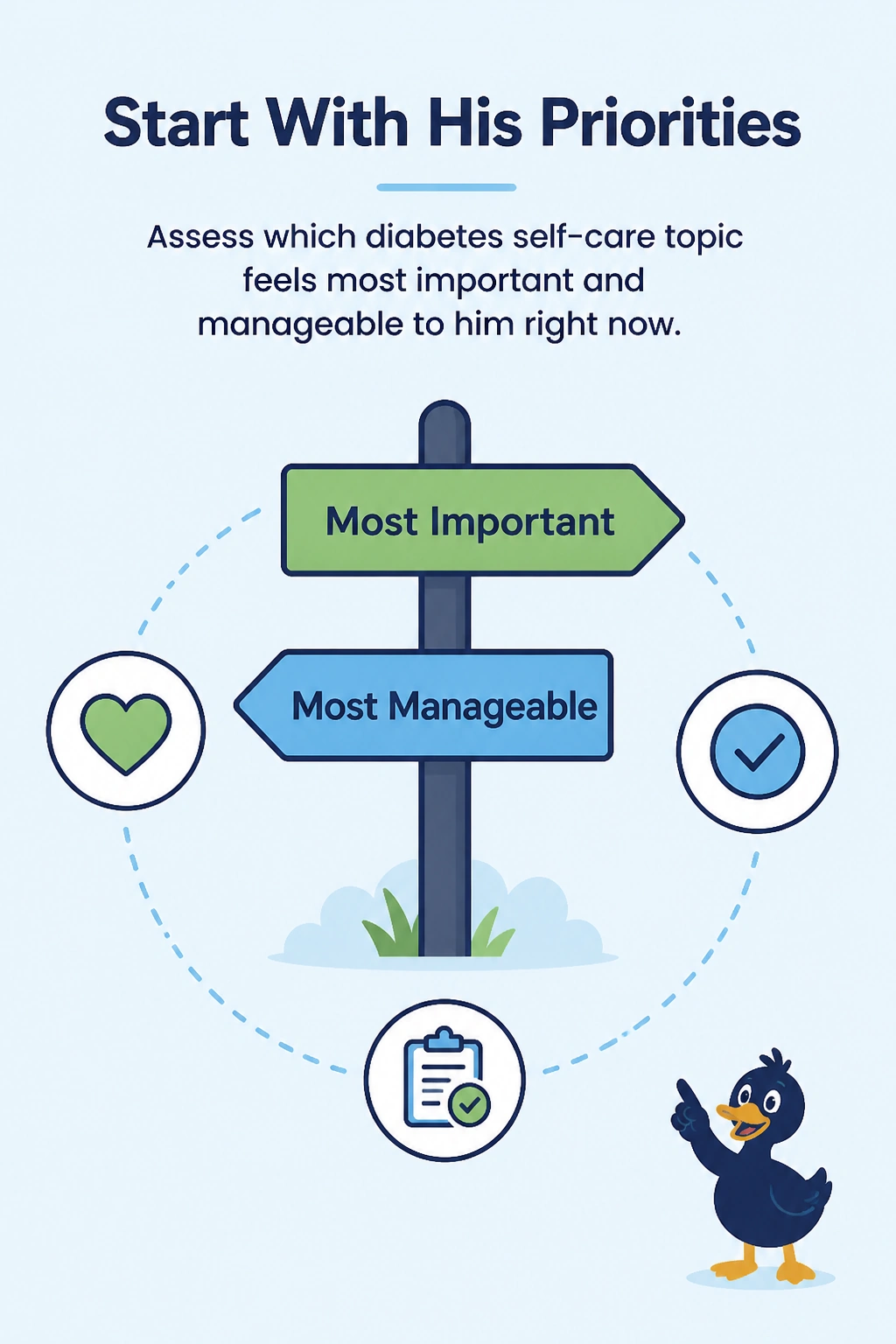
Person-centered diabetes education starts by assessing which diabetes self-care topic feels most important and manageable to him right now, because collaborative agenda setting reduces overwhelm and increases follow-through. Relying solely on which single clinical metric the referring clinician marked as highest priority on the chart ignores the patient's readiness and lived barriers, often leading to disengagement. Choosing which topic can be taught fastest before asking about his priorities prioritizes educator convenience and speed over relevance, which undermines motivation and person-centered collaboration. Pushing which clinical target can be made most stringent before assessing readiness imposes intensity without understanding capability and burden, risking overwhelm and nonadherence. As a clinical caveat, if an urgent safety risk such as severe hypoglycemia or acute foot infection is present, the specialist must address that safety issue immediately while still honoring his voice. As an operational check, use a visual agenda-setting menu to identify one primary focus and schedule a follow-up to revisit remaining topics.
Prefer to study offline? Printable PDF study book + test engine ($7.50, unofficial). These questions stay free here.