
A 62-year-old woman with type 2 diabetes and an A1C of 7.9% visits an outpatient clinic wanting to become more active, noting she works at a desk all day and feels stiff in the mornings. Before co-creating a physical activity plan, what should the diabetes care and education specialist assess first?
Select an answer to reveal the explanation.
Short Explanation
Think of starting an exercise plan like planning a road trip: you always check the car and the starting point before mapping the route. The trap is jumping straight to equipment or intensity formulas before checking baseline movement and safety. Assess current habits, joint limits, and medical clearance needs first.
Full Explanation
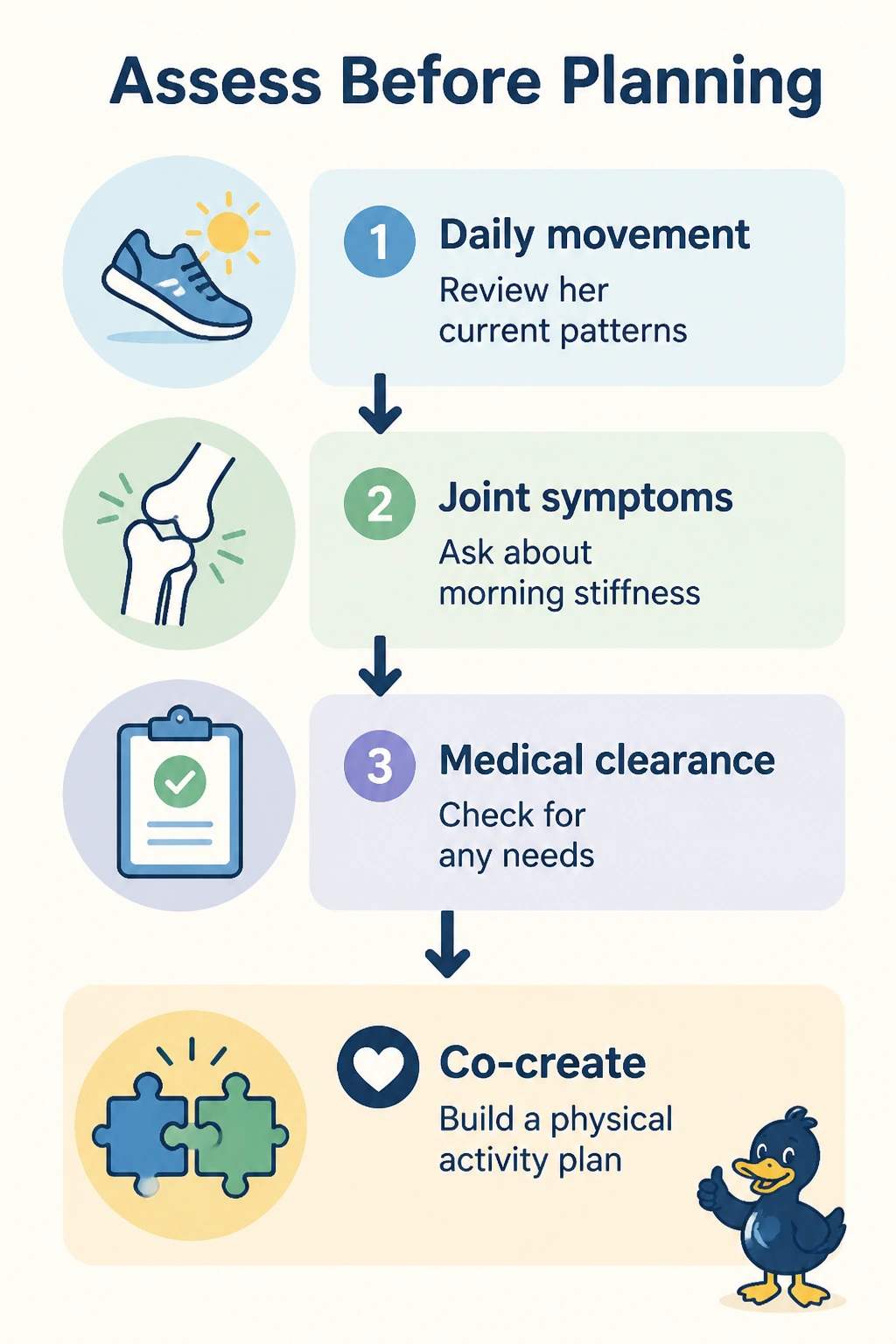
A safe, sustainable activity plan begins by assessing her current daily movement patterns, joint symptoms, and any medical clearance needs so the specialist understands her baseline fitness, morning stiffness, and potential cardiovascular or microvascular precautions. Calculating her maximum heart rate target using a standard age-based formula is premature and can be misleading if she takes heart-rate-lowering medications or has autonomic neuropathy. Focusing on her willingness to purchase a home treadmill or stationary bicycle jumps to costly equipment before exploring low-barrier options like walking or chair exercises. Reviewing her post-dinner carbohydrate intake from the previous seven days addresses nutrition rather than physical readiness and functional safety. As a clinical caveat, adults with diabetes who have symptoms, neuropathy, or proliferative retinopathy may need clinician clearance before vigorous activity, though light-to-moderate walking is usually safe. As an operational check, document her baseline active minutes, stiffness triggers, and clearance status in the assessment record before setting a collaborative movement goal.
Prefer to study offline? Printable PDF study book + test engine ($7.50, unofficial). These questions stay free here.