
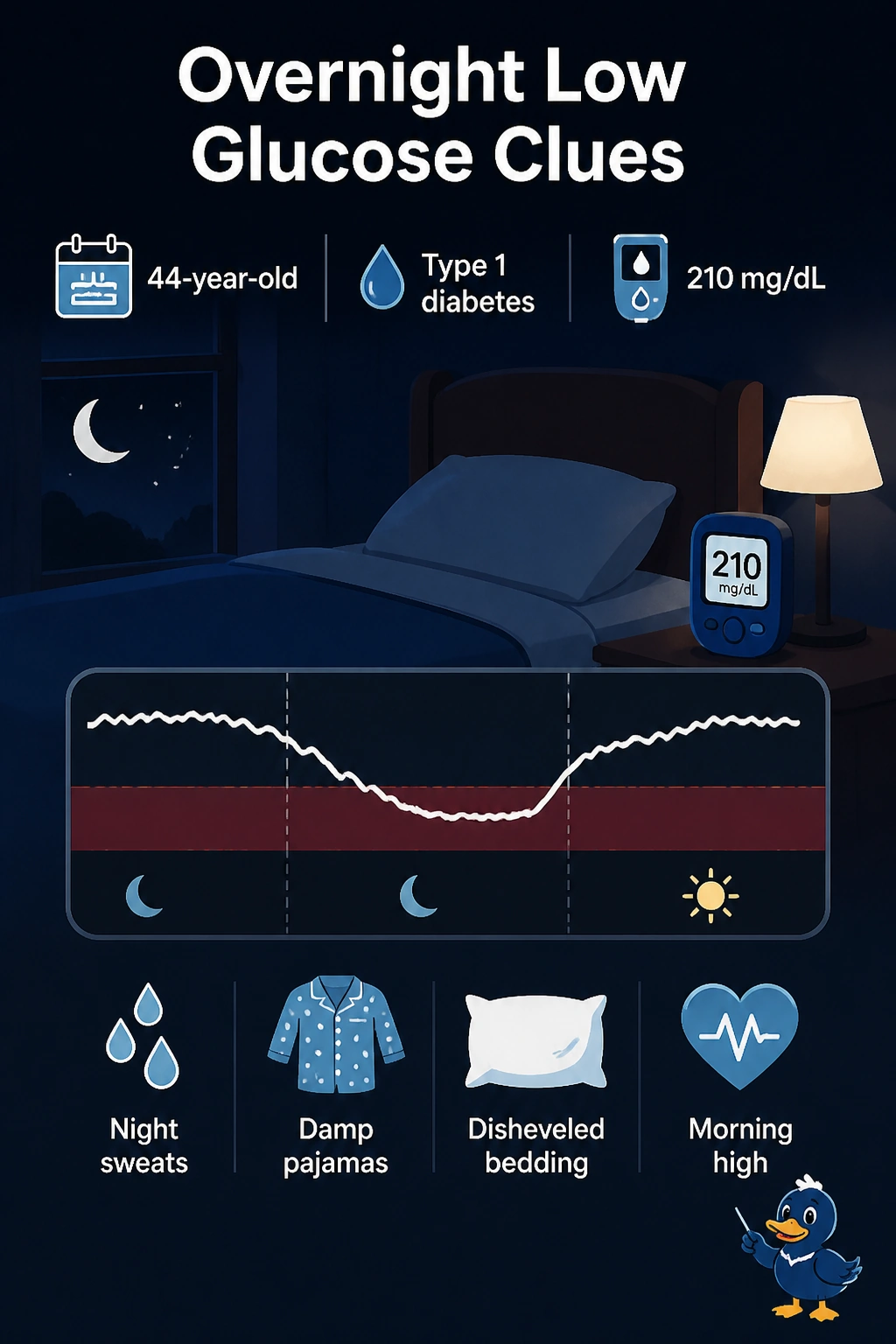
A 44-year-old man with type 1 diabetes using a blood glucose meter reports waking up with headaches, damp bedsheets, and morning readings around 210 mg/dL. Which clinical possibility should the diabetes care and education specialist assess first?
Select an answer to reveal the explanation.
Short Explanation
Waking up high can tempt you to add more bedtime insulin, so pause before you change anything. Night sweats and morning headaches mean you should check for overnight lows first before chasing that 210 mg/dL.
Full Explanation
Assessing unrecognized nocturnal hypoglycemia with overnight symptom clues prioritizes safety in insulin-treated diabetes. Night sweats and morning headaches warrant checking for overnight lows, but morning hyperglycemia alone does not establish nocturnal hypoglycemia or a Somogyi mechanism. Verification with bedtime and occasional 2:00 to 3:00 a.m. fingersticks—or discussion of diagnostic continuous glucose monitoring—for a few nights is essential before any basal increase, to avoid intensifying insulin when an overnight low may be present. Attributing the morning elevation to a late-evening meal or snack contributing to overnight hyperglycemia overlooks the autonomic clues of diaphoresis and headache and would risk increasing insulin without safety data. Attributing it to waning basal-insulin coverage before breakfast similarly jumps to under-insulinization without ruling out a low first. Attributing it to a dawn-related increase in hepatic glucose output describes a real cause of morning hyperglycemia, but it cannot be distinguished clinically without overnight data and does not explain night sweats.
Prefer to study offline? Printable PDF study book + test engine ($7.50, unofficial). These questions stay free here.