
A 24-year-old woman with type 1 diabetes for four years reports persistent fatigue, cold intolerance, and unexplained weight gain over the past three months despite unchanged insulin doses and an A1C of 7.1%. Which assessment priority should the diabetes care and education specialist address?
Select an answer to reveal the explanation.
Short Explanation
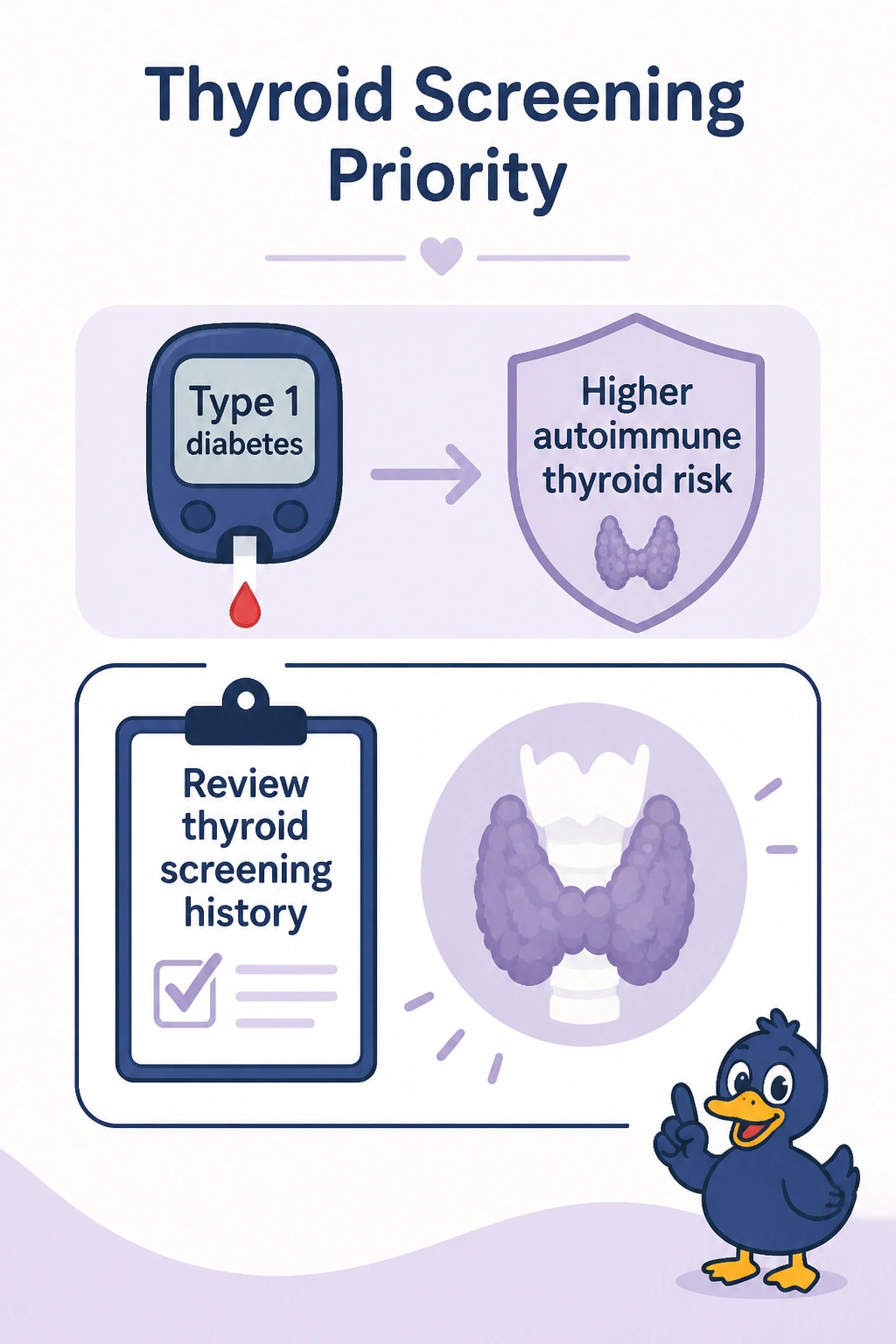
When one autoimmune condition shows up, another often travels in the same neighborhood. The trap is blaming every symptom like fatigue and weight gain on insulin or glucose alone when her A1C is steady. Always make sure you check her thyroid screening history promptly.
Full Explanation
Adults with type 1 diabetes have an elevated prevalence of autoimmune thyroiditis, so reviewing thyroid screening history due to higher autoimmune thyroid risk in type 1 directly addresses classic hypothyroid cues like fatigue, cold intolerance, and weight gain alongside a stable 7.1% A1C. Evaluating whether she has developed severe insulin resistance requiring oral therapy overlooks that her insulin doses and A1C have remained unchanged. Checking whether she is intentionally omitting basal insulin to lose body weight does not fit unexplained weight gain and an on-target A1C, as insulin omission typically causes weight loss and marked hyperglycemia. Assessing for acute diabetic ketoacidosis from skipped mealtime bolus injections is inconsistent with her three-month gradual course and stable glycemic control. Hypothyroidism can contribute to lower insulin requirements and hypoglycemia; starting levothyroxine may increase insulin or other medication requirements, so monitor glucose during thyroid treatment changes. As an operational check, review her recent laboratory panel for thyroid-stimulating hormone results and coordinate with her clinician if testing is overdue.
Prefer to study offline? Printable PDF study book + test engine ($7.50, unofficial). These questions stay free here.