
During a follow-up visit, a 36-year-old man using a mealtime insulin pen reports seeing a drop of insulin leak onto his skin right after withdrawing the needle, along with erratic post-meal glucose readings. Which technique detail should the diabetes care and education specialist assess first?
Select an answer to reveal the explanation.
Short Explanation
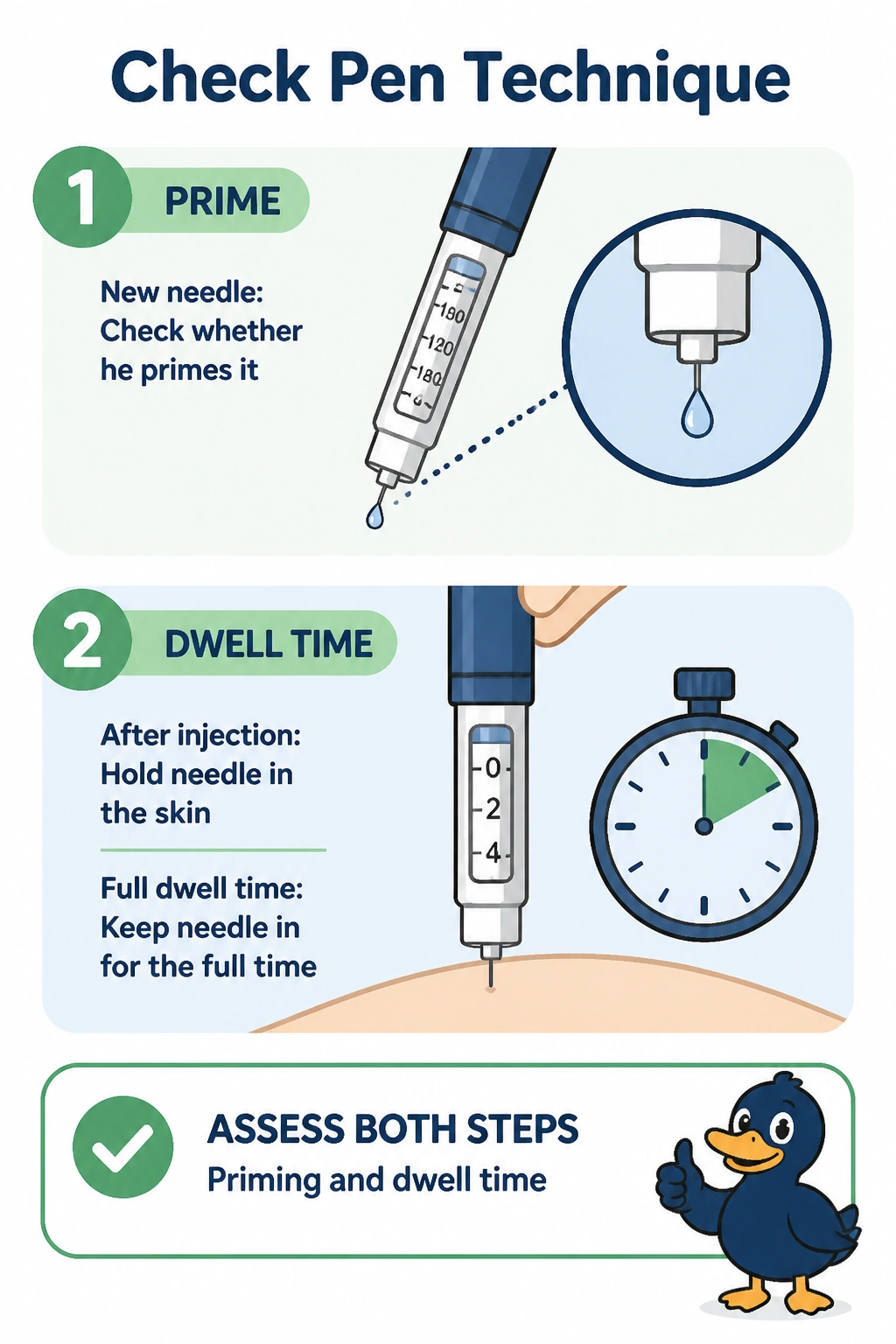
You can start with priming and dwell time: pen mechanisms and required hold times differ, so follow the specific pen’s instructions. Confirm that your client primes new needles and holds the needle in the skin for the full dwell time to address leakage and incomplete delivery. Shaking clear insulin or wiping the needle tip with alcohol misses the delivery problem and can worsen technique.
Full Explanation
Insulin pen needles require priming to clear air from the needle hub, and after you fully depress the dose button, a brief dwell time lets pressure equalize so the complete dose enters subcutaneous tissue. Pen mechanisms and required hold times differ, so follow the specific pen’s priming and dose-delivery instructions. Assess whether he primes new needles and holds the needle in the skin for the full dwell time; these steps directly address underdosing from air pockets and post-injection leakage onto the skin. Shaking a clear rapid-acting insulin pen is inappropriate because clear rapid-acting analogs do not require resuspension, and vigorous shaking can create air bubbles that worsen dosing inaccuracy. Wiping the needle tip with alcohol before each injection is unnecessary and can strip silicone needle lubrication, increasing injection discomfort without stopping leakage. Injecting into a different approved site at each meal addresses site rotation to limit lipohypertrophy, which supports absorption over time but does not correct backflow caused by poor priming or early needle withdrawal. As an exam caveat, scarred tissue can cause backflow even when dwell time is adequate, so inspect injection sites too. For a practical check, observe a live demonstration with a practice pad to verify priming and hold timing.
Prefer to study offline? Printable PDF study book + test engine ($7.50, unofficial). These questions stay free here.