
A 20-year-old woman with type 1 diabetes has been hospitalized three times in six months for diabetic ketoacidosis despite reporting regular clinic visits and adequate insulin supplies at home. During a private assessment, she expresses intense distress about recent weight gain; which underlying issue should the specialist screen for first?
Select an answer to reveal the explanation.
Short Explanation
When someone with type 1 diabetes lands in the hospital repeatedly with ketoacidosis despite plenty of insulin at home, the missing link is often behavioral rather than mechanical. You might be tempted to hunt for a hidden absorption problem, but weight distress is a classic red flag. Screen gently for intentional insulin omission before assuming an equipment or GI failure.
Full Explanation
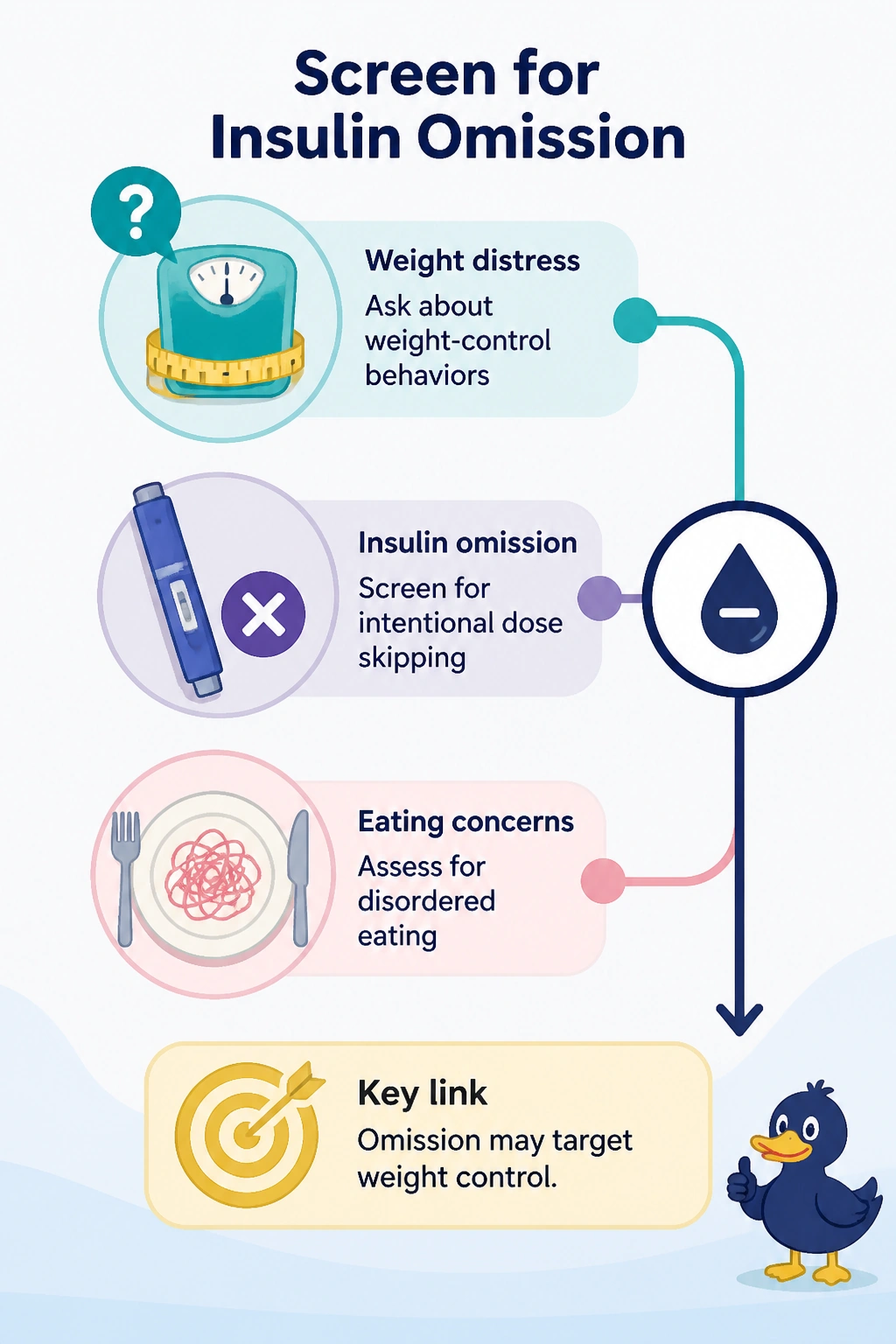
Recurrent diabetic ketoacidosis in an adolescent or young adult who has adequate supplies and expresses strong distress about weight gain warrants immediate, nonjudgmental assessment for Intentional insulin omission for weight control and disordered eating. Deliberately withholding or underdosing insulin induces glycosuria and calorie loss, which causes rapid weight reduction at the severe cost of hyperglycemia and ketogenesis. While Unrecognized insulin pump tubing occlusion during overnight basal delivery can cause acute ketoacidosis, the scenario notes adequate home supplies without mentioning pump use and specifically highlights weight-related distress across multiple episodes. Similarly, Unrecognized lipohypertrophy causing inconsistent insulin absorption can cause erratic glycemia and increased insulin needs, but does not explain recurrent ketoacidosis tied to weight distress across multiple episodes. Although Progression of asymptomatic celiac disease impairing oral carbohydrate absorption occurs more often in type 1 diabetes, malabsorption tends to cause unexplained hypoglycemia rather than repeated ketoacidosis. As a clinical caveat, direct confrontation often increases secrecy and shame, so open-ended, supportive screening questions are essential. As an operational check, use a validated diabetes-specific eating-disorder screening tool and coordinate early referral to behavioral health and a registered dietitian.
Prefer to study offline? Printable PDF study book + test engine ($7.50, unofficial). These questions stay free here.