
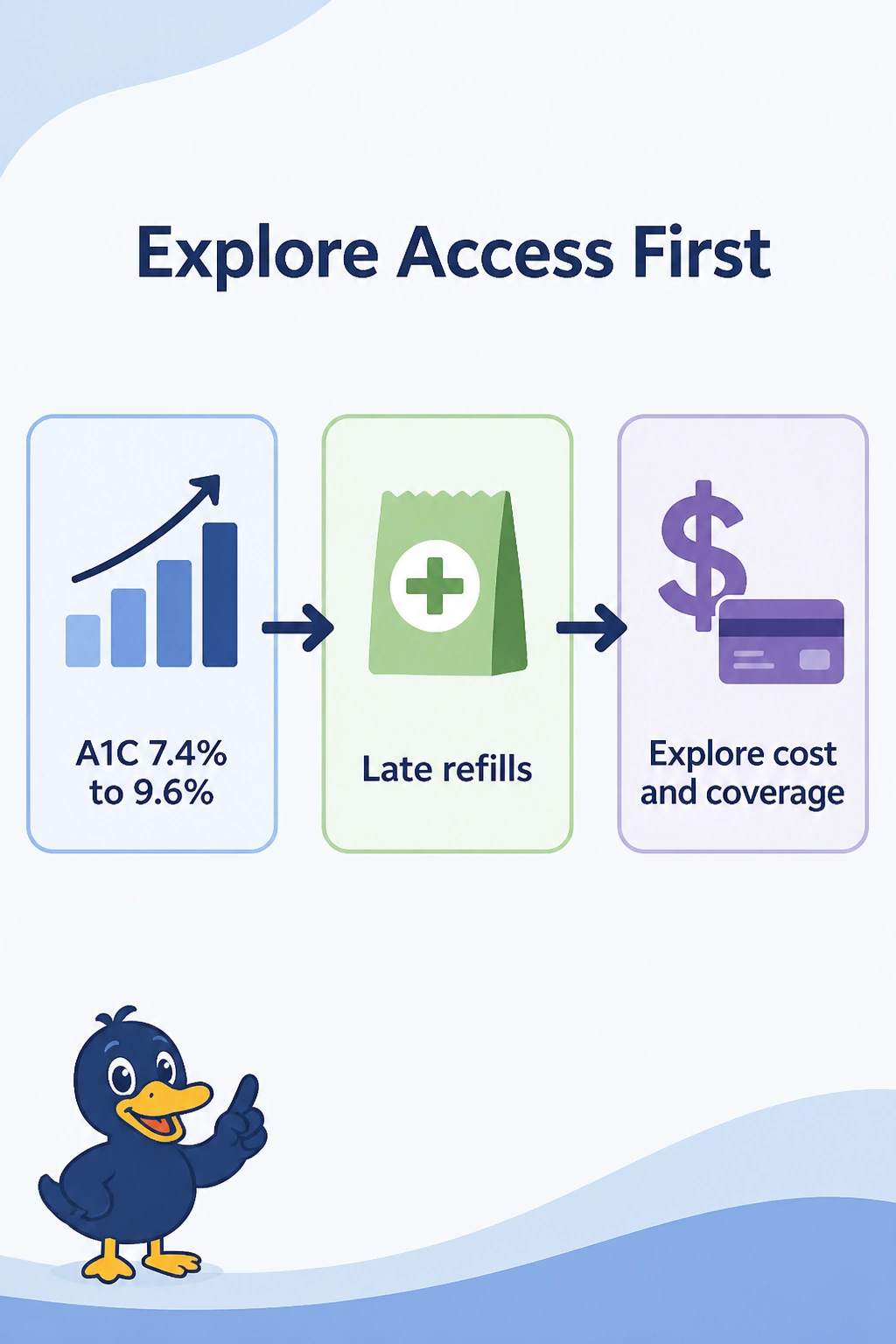
A 56-year-old woman with type 2 diabetes has an A1C that rose from 7.4% to 9.6% over six months, and pharmacy records show she has not refilled her basal insulin or GLP-1 receptor agonist on time. Which assessment area should the diabetes care and education specialist explore first?
Select an answer to reveal the explanation.
Short Explanation
When refill gaps line up with a rising A1C, cost may be getting in the way—not lack of effort. You can explore affordability and insurance barriers without judgment, then connect her with assistance before changing her regimen or reviewing meter settings.
Full Explanation
Financial barriers, insurance coverage, and possible medication rationing should be explored first because high out-of-pocket costs for basal insulin and GLP-1 receptor agonists can lead people to stretch doses or delay refills, helping explain the A1C rise from 7.4% to 9.6%. Identifying cost-related nonadherence early gives the care team a chance to discuss assistance programs, formulary alternatives, or social work referrals. Asking whether she prefers twice-daily premixed insulin over once-daily pens moves toward a regimen change without establishing why she stopped refilling her current prescriptions. Exploring injection-timing preferences before asking about delayed refills focuses on scheduling rather than the medication-access barrier suggested by the pharmacy record. Reviewing meter-download settings before assessing access addresses data retrieval, not medication availability, and does not explain overdue refills or the rising laboratory A1C. An exam caveat is that social determinants of health, especially medication affordability, are routine priorities in diabetes self-management education and support. For a practical check, ask nonjudgmentally whether medication costs have made it difficult to fill prescriptions on schedule.
Prefer to study offline? Printable PDF study book + test engine ($7.50, unofficial). These questions stay free here.