
A 60-year-old man brings his blood glucose meter to clinic after noticing readings jumping between 95 mg/dL and 290 mg/dL within minutes, even though he feels completely normal. Which factor should the diabetes care and education specialist assess first?
Select an answer to reveal the explanation.
Short Explanation
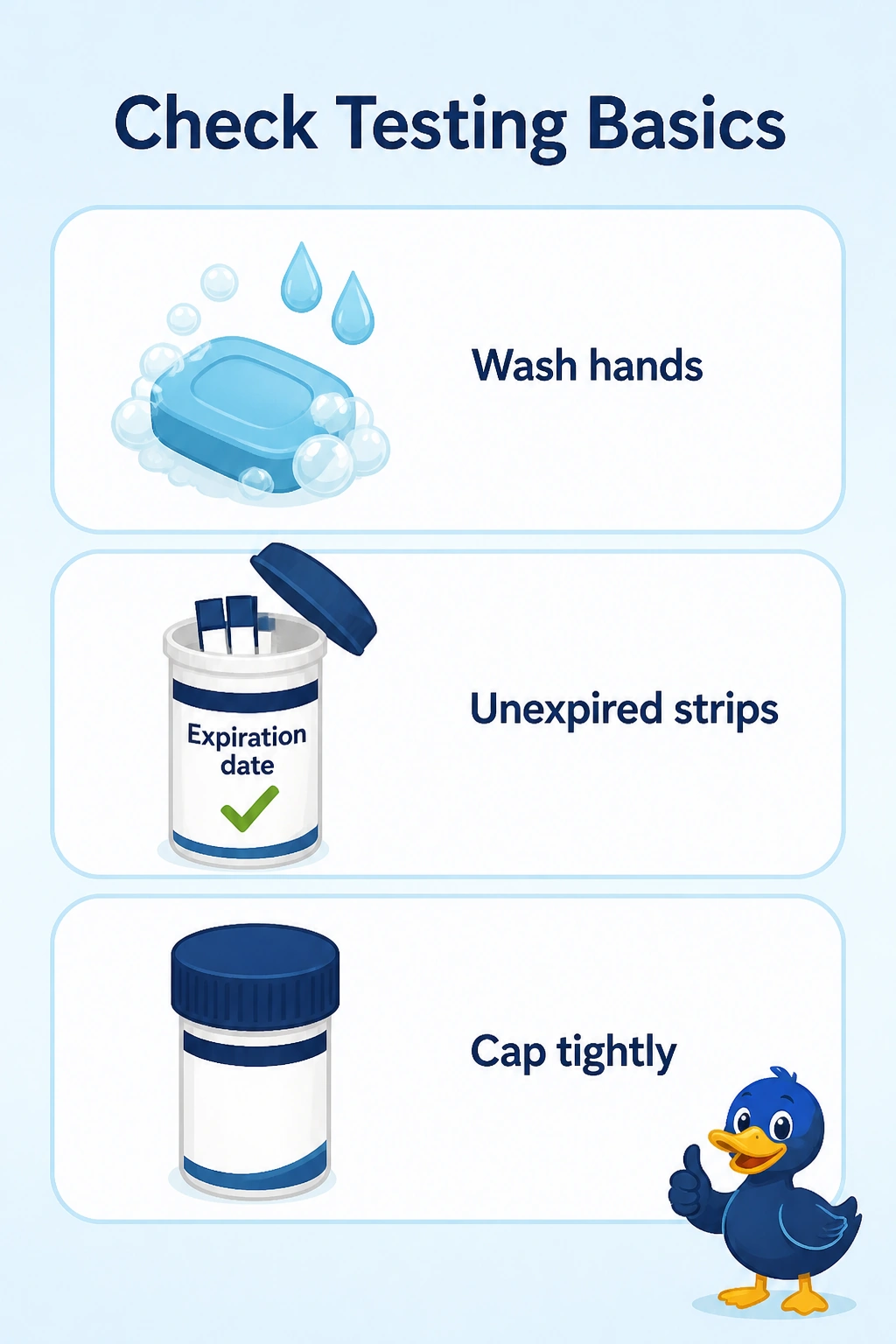
Before you chase phantom glucose swings, check whether your meter is reading glucose from a clean fingertip and properly stored strips. Assessing whether your hands were washed and your test strips are unexpired and tightly capped is the first check when readings jump but you feel normal.
Full Explanation
Sudden, wide discrepancies between consecutive fingerstick values that do not align with how you feel often stem from measurement errors rather than true physiologic swings. Assessing whether your hands were washed and your test strips are unexpired and tightly capped addresses common causes: residual food or lotion on the skin can contaminate a sample, and humidity or age can degrade strip chemistry. Asking whether your A1C lab was drawn at a different outpatient facility does not explain minute-to-minute meter variability at home. Asking whether you use the second drop of blood after washing with soap concerns sample technique; wiping the first drop and using a second may be appropriate in specified circumstances, but does not replace washing visibly contaminated hands. Asking whether you check glucose at the same time each morning evaluates routine timing, not acute measurement error. As an exam caveat, follow the meter’s sample instructions: a second drop is not a substitute for clean hands, and a different A1C facility does not account for abrupt home-meter swings. For a practical check, wash and dry your hands, then repeat the measurement with an unexpired strip from a tightly capped vial.
Prefer to study offline? Printable PDF study book + test engine ($7.50, unofficial). These questions stay free here.