
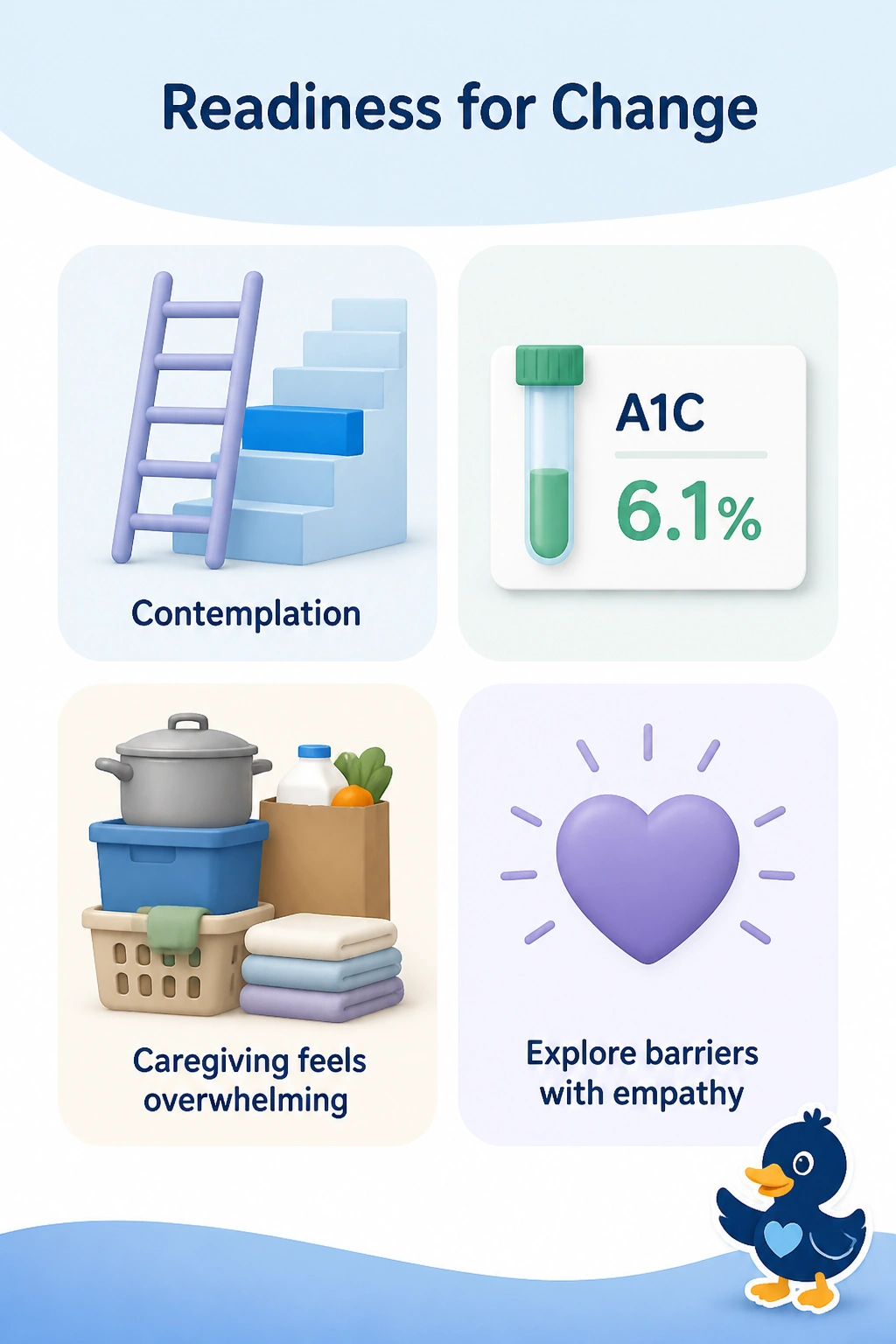
During a community health fair follow-up call, a 59-year-old man with prediabetes says he knows his A1C is 6.1%, feels overwhelmed by family caregiving duties, and is not ready to join a lifestyle program for at least several months. He is considering joining within the next six months but does not intend to start within the next 30 days. How should the specialist classify his readiness to change?
Select an answer to reveal the explanation.
Short Explanation
Trying to enroll someone who is overwhelmed by caregiving into an immediate class is like handing out running shoes to someone still catching their breath. You should recognize the contemplation stage and explore his barriers empathetically before pushing action steps. The trap is labeling any awareness of an elevated A1C as readiness for immediate enrollment.
Full Explanation
Classifying him in the Contemplation stage requiring empathetic barrier exploration accurately reflects the transtheoretical model of behavior change. Contemplation involves considering change within approximately six months; acknowledging risk without an intention to change does not by itself establish this stage. Here caregiving stress keeps him ambivalent and he states intent to consider joining within six months but not within 30 days, matching contemplation. Action stage of active behavior change applies only when a person has already initiated measurable lifestyle modifications. Maintenance stage of sustained routines describes someone who has consistently upheld new habits for an extended period. Preparation stage for immediate enrollment fits individuals intending to start concrete steps within the next 30 days rather than several months away. As a counseling caveat, pushing prescriptive enrollment onto someone in contemplation often triggers resistance, whereas motivational interviewing validates competing priorities and builds readiness over time. An operational check is to document his readiness stage in the outreach record, offer brief caregiver-friendly options, and schedule a low-pressure follow-up contact.
Prefer to study offline? Printable PDF study book + test engine ($7.50, unofficial). These questions stay free here.