
A 38-year-old man with newly diagnosed type 1 diabetes is referred to an outpatient diabetes clinic for mealtime insulin education. During intake, he mentions he prefers verbal instructions over written handouts and struggles to calculate percentages on nutrition labels. What should the diabetes care and education specialist assess before selecting teaching tools?
Select an answer to reveal the explanation.
Short Explanation
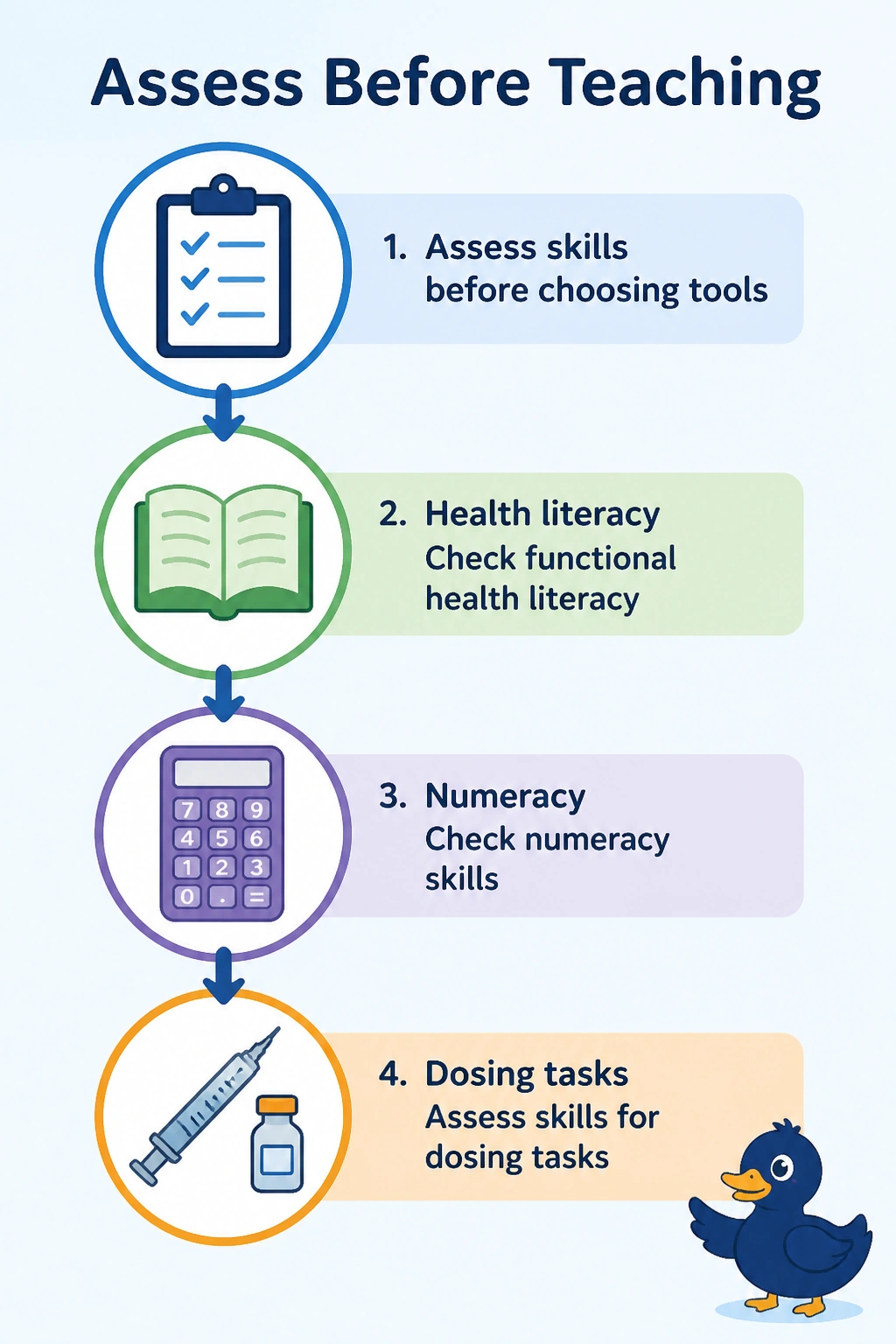
Teaching insulin dosing without checking math comfort is like handing someone a map in a language they cannot read. You must first assess functional health literacy and numeracy so your education plan matches how the person processes numbers and text. The trap is jumping straight into advanced nutrition science or technology before confirming basic reading and calculation skills.
Full Explanation
Selecting His functional health literacy and numeracy skills for dosing tasks ensures the diabetes care and education specialist tailors mealtime insulin instruction to the person's actual reading and math abilities. Safe insulin-to-carbohydrate dosing requires interpreting food labels, estimating portions, and performing basic arithmetic, so identifying literacy or numeracy barriers early guides the use of visual aids, color-coded charts, and simplified dosing guides. Assessing His baseline knowledge of complex carbohydrate metabolism and glycemic index skips foundational comprehension and introduces advanced physiology before confirming he can use written or numerical materials. Reviewing His daily caloric expenditure and preferred aerobic exercise schedule gathers helpful lifestyle context, yet it does not address why he avoids written handouts or struggles with label math. Checking His ability to afford a continuous glucose monitor through insurance addresses device access rather than how to communicate mealtime dosing concepts clearly. As an important caveat, limited numeracy or literacy does not reflect intelligence, and specialists should avoid assumptions based on appearance or formal schooling. An operational check is to ask the person to read a sample nutrition label or calculate a simple serving during intake and use teach-back to confirm understanding.
Prefer to study offline? Printable PDF study book + test engine ($7.50, unofficial). These questions stay free here.