
A 21-year-old college student with type 1 diabetes consistently has an A1C above 9.0% despite knowing how to count carbohydrates and adjust insulin doses accurately. During a nonjudgmental interview, she admits she keeps her pre-class glucose above 220 mg/dL so she never feels shaky in lectures. What underlying factor should the specialist document as the primary barrier?
Select an answer to reveal the explanation.
Short Explanation
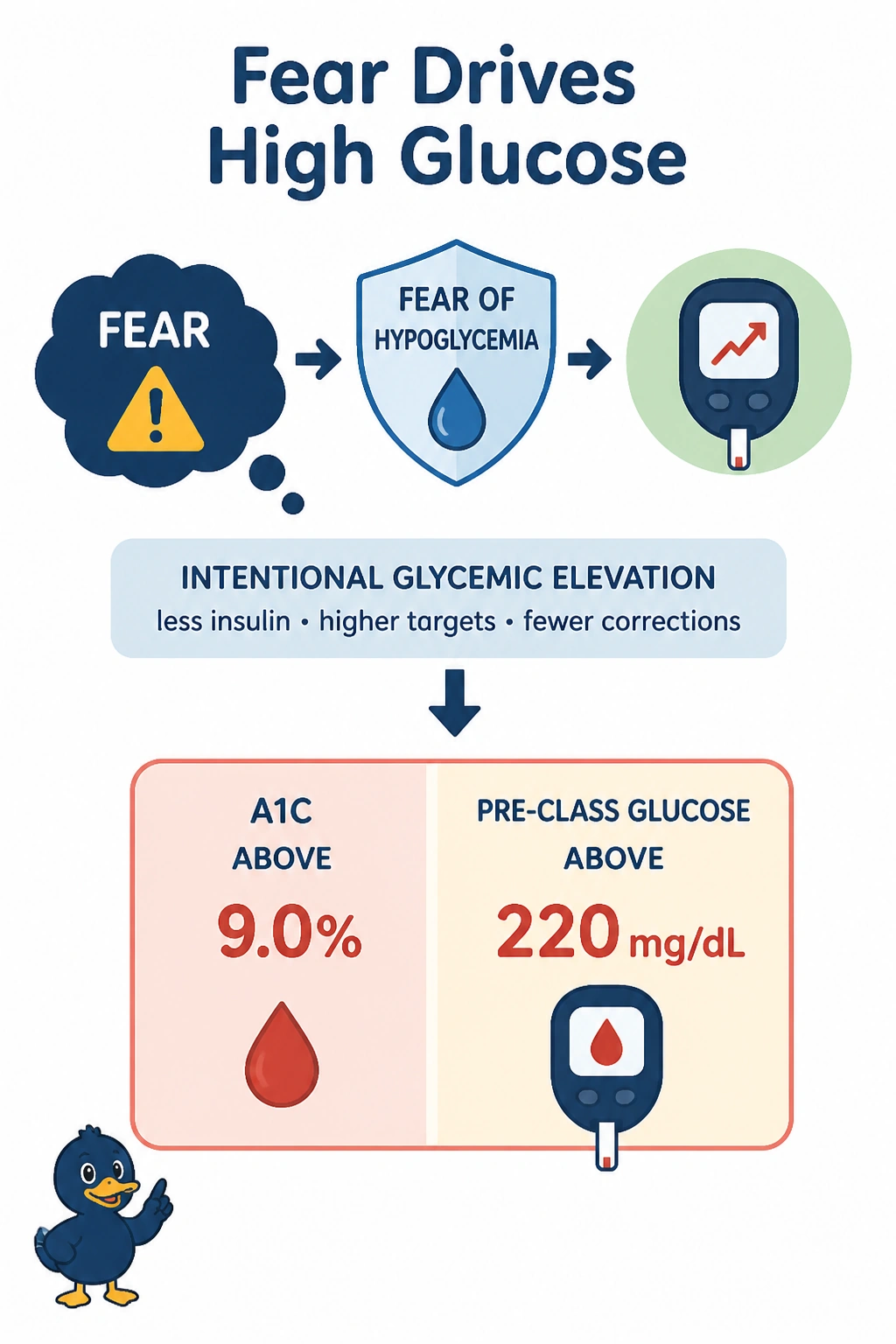
Keeping blood glucose artificially high to avoid a scary low is like driving with the parking brake on to keep from rolling downhill. You need to identify fear of hypoglycemia as the psychosocial barrier driving her elevated A1C rather than assuming a knowledge gap. The trap is re-teaching carb counting when she already knows the math.
Full Explanation
Documenting Fear of hypoglycemia driving intentional glycemic elevation captures the true behavioral and emotional driver behind her persistently high A1C. When a person experiences distressing or embarrassing lows in public settings like college lectures, they may deliberately under-dose insulin or over-eat to maintain a perceived safety buffer above 220 mg/dL. Lack of basic carbohydrate counting knowledge is ruled out because the scenario confirms she already counts carbohydrates and adjusts doses accurately. Inability to afford insulin pump supplies is an important socioeconomic factor to screen for in general care, but it does not explain her deliberate choice to target high pre-class readings. Cognitive decline affecting mealtime math contradicts her demonstrated ability to calculate insulin doses accurately. As a clinical caveat, lecturing about long-term complications can deepen shame and avoidance, whereas empathetic exploration and behavioral support build trust. An operational check is to document the specific settings triggering hypoglycemia anxiety and collaborate on a gradual target-lowering plan supported by reliable fast-acting glucose and continuous glucose alerts.
Prefer to study offline? Printable PDF study book + test engine ($7.50, unofficial). These questions stay free here.